
BRUSSELS — Europe’s financial architecture for arming Ukraine is moving faster than the politics meant to contain it. In four payments spread across less than four months, the European Union has now committed nearly €14 billion in defence transfers to Kyiv, a pace that will exhaust the bloc’s 2026 weapons allocation well before the year ends, with no clear plan in place for what comes after.
The European Commission formally announced the disbursement Thursday of a fourth tranche of €3.3 billion, earmarked for drones and missiles, following a phone call in which Commission President Ursula von der Leyen told Ukrainian President Volodymyr Zelensky that “more is coming.” The payment is the latest under the defence window of the €90 billion Ukraine Support Loan, an instrument approved in 2025 to sustain Kyiv’s fighting capacity over two years.
The timeline tells a story the official communiqués do not: June 25, a €3.2 billion first payment; June 30, €3.9 billion for drones; August 3, €3.47 billion for drones, missiles, air defence systems, and Swedish Gripen jets; and now Thursday’s €3.3 billion. That brings the four-month defence total to approximately €13.87 billion, representing nearly half of the €28.3 billion the Commission had scheduled for all of 2026. The EU has consumed roughly half its annual weapons budget in a third of the year.
The pace carries a question the Commission has not yet answered: at this rate, the 2026 defence window closes in late autumn, and the 2027 tranche has not been politically secured. Germany’s Foreign Minister Johann Wadephul said in August that Europe lacks the funds for Ukraine’s weapons, a remark that sat awkwardly alongside the disbursements that kept flowing. The EU’s financing mechanism was designed to bypass the hesitations that slow bilateral assistance; it does not require member state parliaments to vote each tranche through, but it cannot create money that the budget does not contain.
The Ukraine Support Loan’s €90 billion architecture divides into €60 billion for defence and €30 billion for budget support over 2026 and 2027. The Commission separately approved €6.1 billion for PAC-3 air defence missiles on September 11, a tranche not yet disbursed, which sits on top of Thursday’s figure. The total committed this year, across both defence and budget-support windows, now approaches €15 billion.
The internal pressure to sustain disbursements is considerable. The loan structure was itself partly designed to avoid the political friction that had periodically blocked bilateral military assistance from member states, giving Kyiv the ability to plan procurement contracts around a relatively predictable disbursement schedule in ways it cannot with voluntary national contributions that depend on parliamentary cycles and coalition politics.
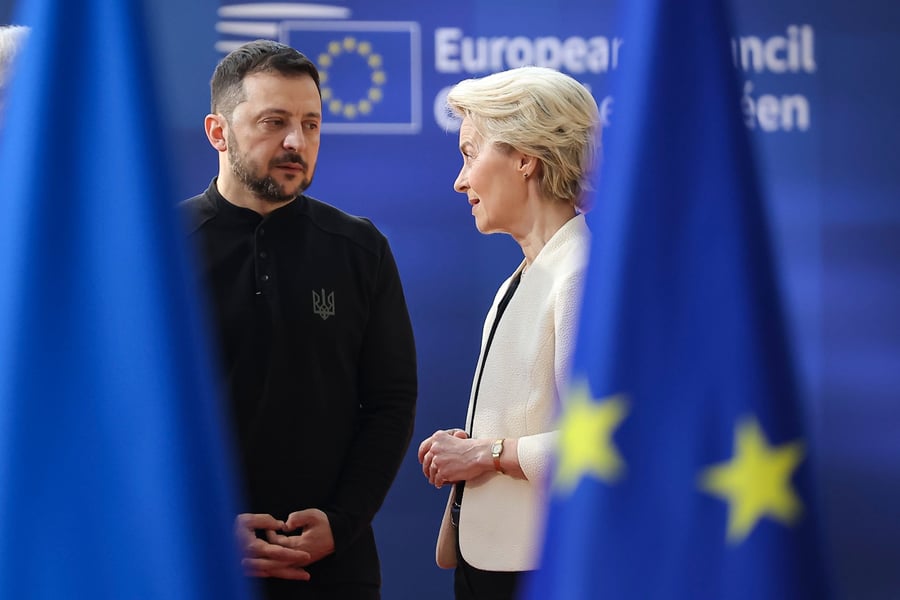
Von der Leyen’s call with Zelensky on Wednesday evening, described by her office as covering both the disbursement and broader defence cooperation, produced a public commitment that more payments would follow. What it did not produce was a timeline for those payments or a figure attached to the next tranche.
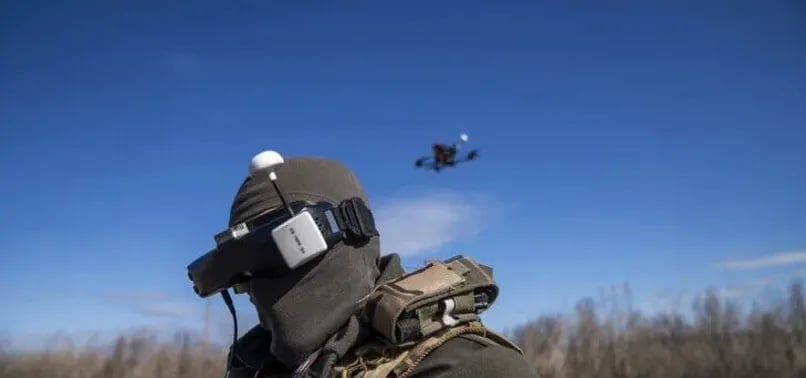
The EU signed its first pan-European drone manufacturing agreement with Ukraine in Kyiv in July, designed to scale domestic Ukrainian production alongside transfers of finished systems. The €6.1 billion PAC-3 allocation from September 11 represented a significant escalation in the cost and complexity of the systems being financed. Whether the remaining 2026 defence budget can absorb both the pending PAC-3 disbursement and a fifth general tranche before year-end is a question the Commission has not publicly addressed.
The Ukraine Support Loan draws on the bloc’s collective borrowing capacity rather than member state budgets directly, but the guarantee structure ultimately traces back to national treasuries. The Commission has described the arrangement as financially sustainable within current EU fiscal rules; critics in several member state capitals have questioned whether the off-balance-sheet treatment will survive unchanged into the 2028-2034 EU budget framework currently under negotiation.
For Ukraine, the practical consequence of Thursday’s payment is immediate: procurement orders for the next round of drone production runs and missile stockpile replenishment can proceed without the delays that have accompanied gaps between previous tranches. What the EU has not yet said is how many tranches remain before the 2026 defence window is spent.