
MOSCOW — When Beijing’s Sea Legend Line launched regular container service through the Arctic in August, shipping analysts treated it as a curiosity, the kind of initiative that fills conference papers before being quietly shelved. Six weeks later, with both the Strait of Hormuz and the Strait of Bab al-Mandab simultaneously sealed to commercial tanker traffic, what once looked like experimentation looks like foresight.
The dual closure is without precedent in the modern shipping era. The Hormuz, through which 31 percent of the world’s seaborne oil once passed, has been functionally sealed since the Iran conflict began in February, with traffic collapsing to four vessels on a single day last week according to RFE/RL shipping data. The Bab al-Mandab, the Red Sea bottleneck at Yemen’s southern tip, fell under effective Houthi control after the seizure of Perim Island on September 11, completing a blockade that now covers 39 percent of global maritime trade. These two straits together formed what shipping insurers called the system’s natural redundancy: if one closed, cargo moved through the other. Now neither is open.
Into that gap, the gap where an entire architecture of global trade once operated, Russia’s Northern Sea Route is making its case.
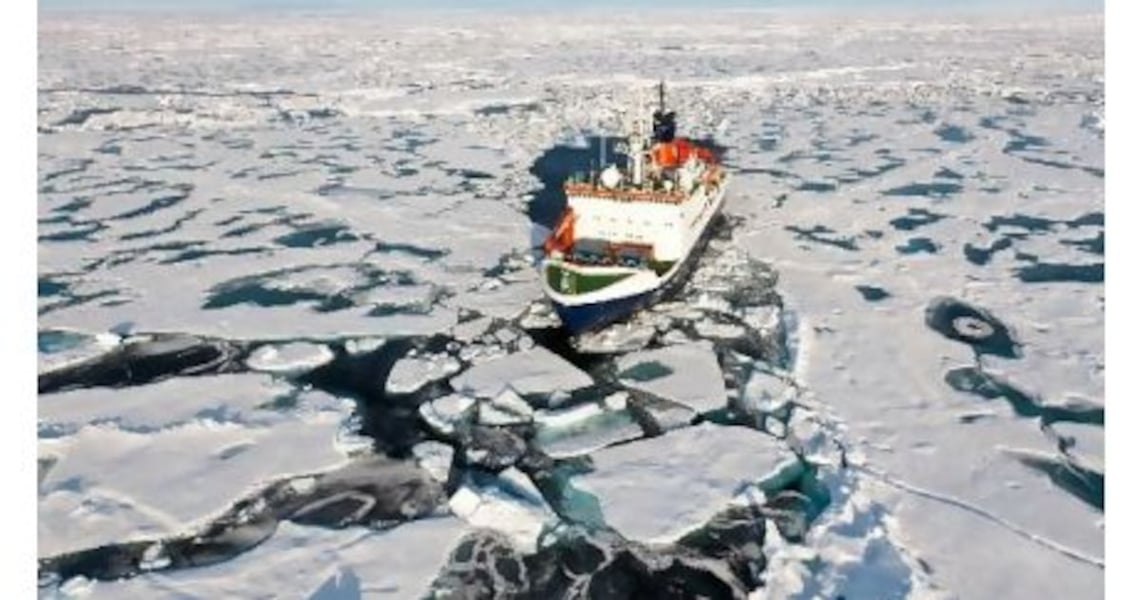
The Northern Sea Route follows Russia’s Arctic coast from the Bering Strait to the Kara Gate. Compared with the traditional route through the Indian Ocean and Suez Canal, it can cut Asia–Europe voyage times by as much as 40%.
Under normal conditions, the route is usable mainly during the Arctic summer—roughly July through October—and requires icebreaker escorts that Russia is uniquely positioned to provide. Those constraints have kept it a niche corridor despite years of optimistic forecasts.
September 2026 is proving different. Cargo traffic is on track to exceed 40 million tonnes by year-end, driven by China–Russia trade and new container services launched during the summer.
China’s Sea Legend Line completed the first leg of its 2026 program in August, sending a vessel from Ningbo-Zhoushan to Northern Europe in 23 days. South Korea’s test voyage aboard PanStar Acro also used the Arctic route from Busan to Rotterdam before arriving in Gdańsk in early September.
South Korean President Lee Jae Myung called the voyage “the first historic path of the Arctic route.” Eight commercial voyages are now planned for the 2026 navigation season.
The irony is not subtle. The United States and its allies went to war in part to keep Gulf energy lanes open. They have not succeeded. The Houthis, armed and sustained with Iranian backing, closed the Red Sea approaches months earlier, a front Washington also failed to neutralize after more than a year of strikes under Operation Prosperity Guardian. Two separate policy failures have now converged into one outcome for the global shipping system, and the primary commercial beneficiary is the country Western sanctions were designed to isolate.
NPR reported last week that pressure on global chokepoints is driving what was once described as a niche Arctic corridor into mainstream logistics planning across Asia. South Korea is not alone: Beijing has been building the infrastructure, the political will, and the Russia partnership for this moment for years. Bilateral cargo on the Northern Sea Route exceeded five million tonnes in the first half of 2026 alone, against a target of 20 million tonnes annually by 2030 that Moscow and Beijing agreed under the Comprehensive Strategic Partnership. Chinese icebreakers are now escorting container vessels through Arctic waters alongside Russian counterparts, a sight that would have seemed implausible to Western strategists five years ago.
As The National observed in a September 17 commentary, this is “the only thaw in global shipping right now,” a framing that says as much about strategic desperation as genuine route preference. The Cape of Good Hope, the primary fallback when the Red Sea closed in 2024, cannot absorb the additional displacement from Hormuz. Voyage times from the Gulf to Rotterdam via the Cape now run 35 to 40 days. Arctic routes, in season, complete the same journey in 20 to 23 days. The math is not complex.
Russia, subject to the most comprehensive sanctions regime in history, finds its Arctic coast now serving as the critical throughline for Asian manufacturers shipping to European consumers. Moscow charges transit fees, provides icebreaker escort services, and collects infrastructure rents from every container that cannot move through chokepoints controlled or disrupted by parties Washington treats as adversaries. Washington’s Houthi diplomacy in Oman has not produced an open strait.
The Northern Sea Route is not a permanent answer. It is seasonal by design. Year-round Arctic shipping at scale would require nuclear icebreaker capacity that only Russia possesses commercially, and the route’s viability depends on political and climatic conditions that may not hold. But that caveat would once have applied equally to the assumption that Hormuz and Bab al-Mandab would always remain open. That assumption no longer holds.