
ADEN — The morning after drones from Iraq shut down Saudi Arabia’s last functioning crude export route, Ansar Allah completed a rapid advance along Yemen’s Red Sea coast and seized Perim Island, the small volcanic island that divides the Bab el-Mandeb Strait into its two navigable shipping lanes. Houthi military spokesman Yahya Saree announced Friday that Saudi-flagged vessels were now barred from transit. For Saudi Arabia, the closure means both of its principal oil export corridors are simultaneously impaired. Combined with the near-closure of the Strait of Hormuz, the development represents the scenario global energy markets have spent weeks pricing in and hoping to avoid.
What happened in the Bab el-Mandeb this week is more than an escalation. It is a structural shift. Two of the three narrow maritime passages through which a significant share of global trade moves, Hormuz in the east and Bab el-Mandeb in the west, are now under effective hostile or impaired control. Hormuz has been effectively closed to normal tanker traffic since Iran expanded its naval presence in late August. The Bab el-Mandeb, which carries roughly 12% of the world’s goods under normal conditions, is now under Ansar Allah’s supervision, with the group claiming unilateral authority over which nationalities may pass.
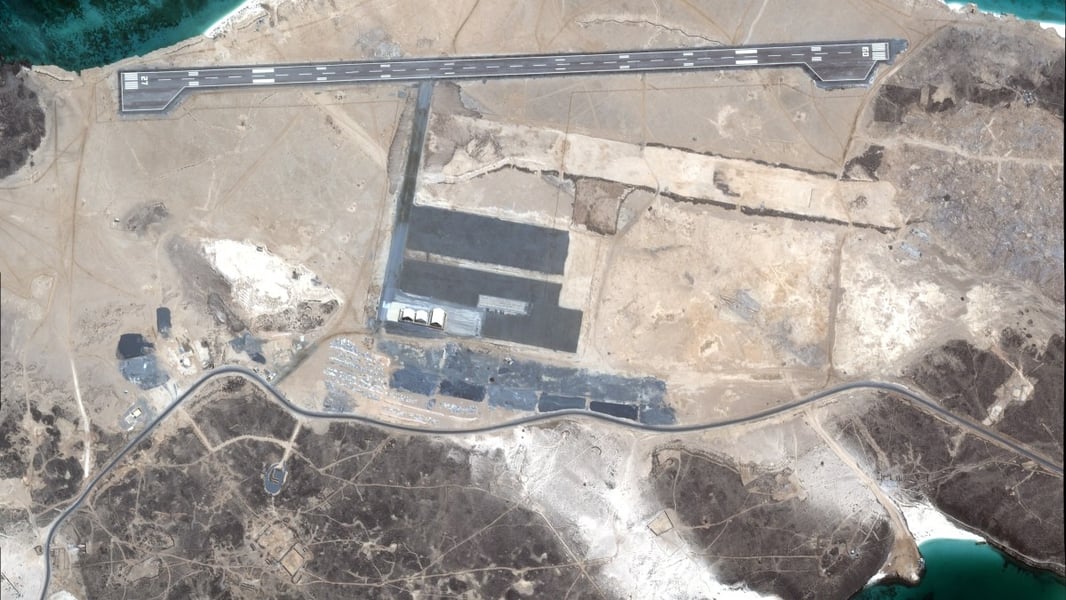
Ansar Allah forces reached Perim on Thursday, completing an offensive that began two days earlier with the capture of Mokha, a port city on Yemen’s Red Sea coast. A senior official of Yemen’s internationally recognised government confirmed the island had fallen after government forces withdrew without a significant engagement. Perim, also called Mayun, covers roughly thirteen square kilometers at the strait’s narrowest point. Its geography is decisive: the passage divides around the island into two channels, and whoever controls the island overlooks both of them. The government forces withdrew. The island’s significance did not diminish when they left.
The offensive came, according to Yemeni government and regional sources, with direct guidance from Iran’s Islamic Revolutionary Guard Corps. Iran responded publicly on Friday, with officials declaring what state media called a divine triumph. Whether Tehran directed the move as a calculated escalation in its broader confrontation with the United States and Saudi Arabia, or whether Ansar Allah’s field commanders accelerated the advance independently, has not been publicly established. What is clear is that the timing, arriving alongside the Iraqi militia strikes on the Petroline and the broader Iran war campaign, was not coincidental.
Traffic through the strait dropped sharply before Perim fell. Commercial maritime intelligence data showed roughly 29 to 30 vessels transiting daily at the start of the week; that figure fell to 12 on Thursday as Ansar Allah forces began moving toward the island. Shipping companies began rerouting cargo to the Cape of Good Hope before the island changed hands. That path adds thousands of kilometers and significant cost to every voyage between Asia and Europe. The Suez Canal, which depends on Bab el-Mandeb traffic to remain commercially relevant, processed sharply reduced volumes as a result.
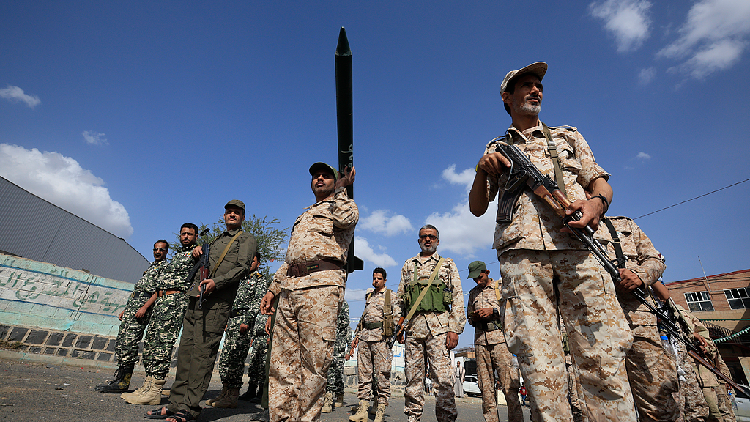
Saree said Friday that navigation remained safe “for all companies except Saudi ships, which have already been banned.” The statement positions the Bab el-Mandeb question as a targeted economic measure against Riyadh rather than a general closure. In practice, the distinction is harder to maintain than to declare. Vessels flagging through third-country registries, tankers carrying Saudi-origin crude under different documentation, and ships serving Saudi-linked terminals all create verification problems that a small island group and a network of coast-watchers cannot reliably resolve. What Ansar Allah can announce and what it can enforce are different calculations.
Ansar Allah had declared a naval blockade on Saudi Arabia in July, when the Red Sea had not yet become the active theater it is now. The seizure of Perim elevates that declared blockade into a physical chokepoint. Al Jazeera reported Friday that the group now controls the entirety of Yemen’s Red Sea coastline from the northern port of Hodeidah down to the Bab el-Mandeb, a span that would have been unimaginable to the Saudi-backed coalition as recently as two months ago.
What the seizure means in the medium term is less clear than what it means today. Perim is a small exposed island with no permanent civilian population and limited logistical infrastructure. Sustaining a garrison requires regular resupply, communications, and the capacity to repel a counteroffensive by sea or air. Whether Ansar Allah has demonstrated those capabilities, or whether the internationally recognised government and its allies have the will to mount a serious attempt to retake it, is not yet established. The rapid advance along the coast showed what the movement can seize. Holding territory under sustained pressure is a different problem.
The broader structural picture is what matters for commodity markets. Oil markets, which had already priced in significant disruption from the Iran war campaign, now contend with a situation in which the two major exit points from the Gulf and the Red Sea are simultaneously unavailable for Saudi crude. Brent crude crossed $100 a barrel earlier this week before the Perim seizure added a further layer of disruption. NPR reported Friday that shipping operators were actively recalculating routes, timelines, and costs following the strait’s effective closure. How high oil prices go before a diplomatic resolution is reached or a military counteroffensive changes the geography is not calculable. What is calculable is that there is no open corridor left.