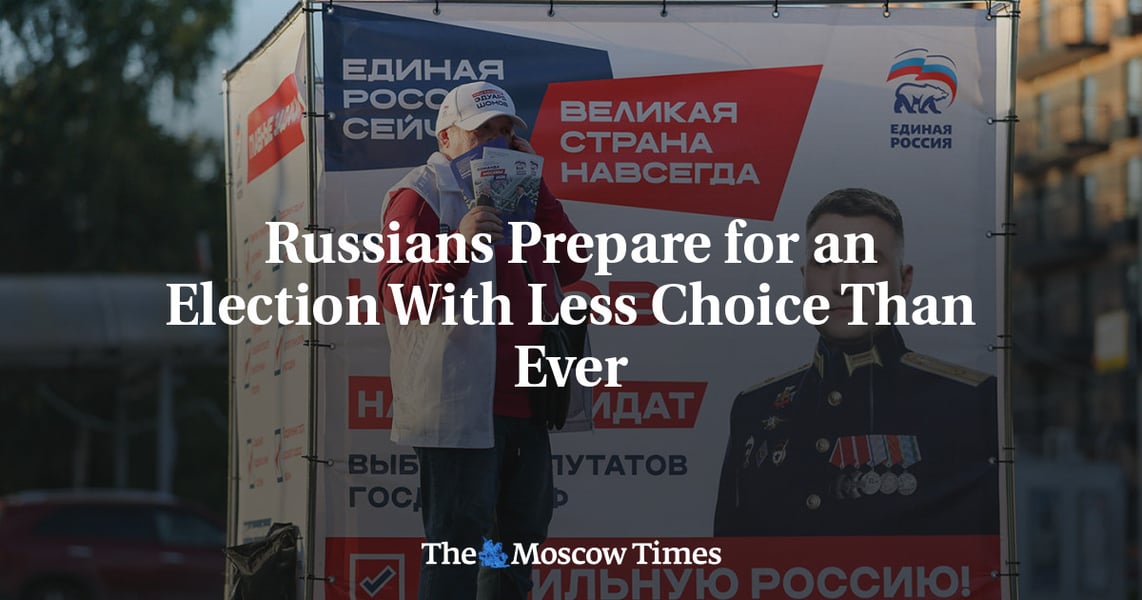

MOSCOW — The smoke from a burning oil refinery on Moscow’s southeastern edge was still visible against the city skyline Sunday evening when polling stations closed across Russia, ending a three-day parliamentary vote conducted under conditions unlike any in the country’s post-Soviet history.
Exit polls gave United Russia, the Kremlin’s party of government, approximately 53.5% of the vote, down from its 2021 showing but still enough to retain a commanding majority in the State Duma. The Communist Party of the Russian Federation (CPRF) came second at 14.5%, and the LDPR placed third at around 10.1%. The Central Election Commission had not released official results by late evening.
The vote concluded as Ukraine’s military carried out what officials and open-source trackers described as the largest drone strike on Moscow during the entire Russian operation in Ukraine, a coordinated attack on the Kapotnya oil refinery that set one of the facility’s storage units alight during Saturday night and into Sunday morning. The strike’s timing, as millions of Russians arrived to cast their final day of ballots, was unmistakable.
What was equally unmistakable was the geography of this election. Citizens in the Donetsk and Luhansk People’s Republics and in the occupied portions of Zaporizhzhia and Kherson oblasts voted in a Russian parliamentary election for the first time since Russia formally annexed those territories in September 2022. International law, as the United Nations General Assembly has repeatedly affirmed, does not recognize those annexations. Kyiv and its Western partners described the vote in those regions as illegal.
For the Kremlin, the practical and symbolic value of the vote in annexed territory was considerable. Participation in a parliamentary election normalizes annexation without requiring formal diplomatic recognition that most governments will not provide. The Russians of Donetsk and Luhansk, some of whom have held Russian passports since 2019, cast votes for deputies who will sit in Moscow’s State Duma and theoretically represent their interests. Whether they did so freely was, given active front lines running through parts of those same territories, impossible to independently verify.
The fraud question was not restricted to occupied Ukraine. Independent monitors and civil-society observers reported ballot-stuffing incidents at more than 4,500 polling stations across Russia. Golos, the independent election-monitoring organization that Russian authorities have classified as a “foreign agent,” had its observers blocked at multiple locations. Video clips shared on Russian Telegram channels appeared to show election workers manually manipulating ballot boxes, though the footage could not be independently authenticated by deadline. As The Moscow Times reported, observers entered this election facing a more constrained operating environment than any previous cycle.
Russia’s Central Election Commission chairwoman Ella Pamfilova rejected the fraud allegations at an evening press conference, describing the vote as “one of the best-organised elections in Russian history” and attributing monitor complaints to politically motivated actors. The CEC cited its own internal audits and the observation of accredited domestic monitors from all participating parties as evidence of procedural compliance. Russian state television broadcast orderly scenes from polling stations across the country, framing the three-day election as a demonstration of civic stability under wartime conditions.
United Russia’s support declined from its 2021 figure of roughly 49%, and internal polling before the election indicated the party’s approval rating had fallen to a four-year low. Whether the exit poll numbers represent genuine voter sentiment or a floor maintained by administrative pressure and reported ballot manipulation was the central contested question of the evening. The official count, when it arrives, will be measured against exit polls, and any significant divergence will itself be a data point.
The election was the first held since Alexei Navalny, Russia’s most prominent opposition figure, died in a Siberian penal colony in February 2024. His death removed the last nationally recognizable figure capable of organizing a boycott campaign with political weight. In his absence, the “Noon Against Putin” protest-voting effort, in which opposition sympathizers agreed to show up at polling stations at noon on the final day and cast blank or spoiled ballots, circulated on encrypted messaging platforms, though its scale remained unverifiable.
The disqualification of Yabloko from the national ballot in August was the election’s clearest structural signal. The party, which has contested every State Duma election since 1993, positioned itself as the only parliamentary-track vehicle for anti-war sentiment. As Meduza documented, the disqualification eliminated the only legitimate parliamentary channel through which Russians opposed to the operation in Ukraine could register that opposition through institutional means.
As of Sunday evening, it was impossible to quantify how those voters had cast their ballots — or whether they had voted at all. They may have stayed home, spoiled their ballots, or supported the CPRF or LDPR as the lesser available alternatives.
Any turnout figures released will be viewed skeptically, given documented administrative pressure on regional governors to produce high participation rates.
Russia’s new State Duma will convene later this autumn. United Russia is expected to retain the majority it has held since 2007, but the final size of that majority — and whether official results withstand comparison with exit polls — remained unresolved Sunday night.