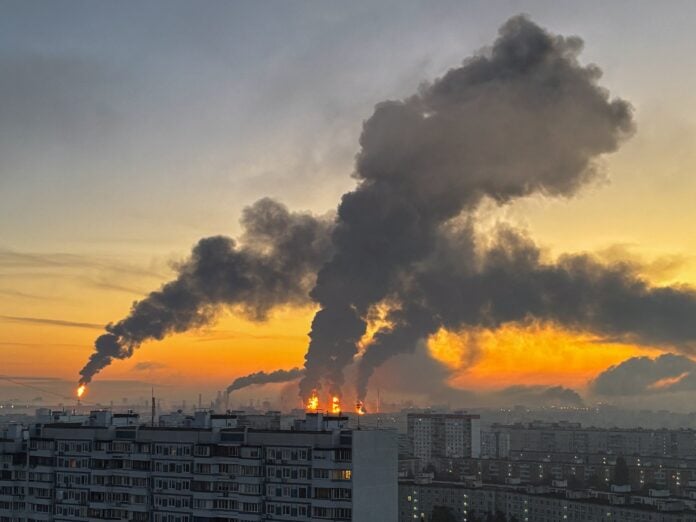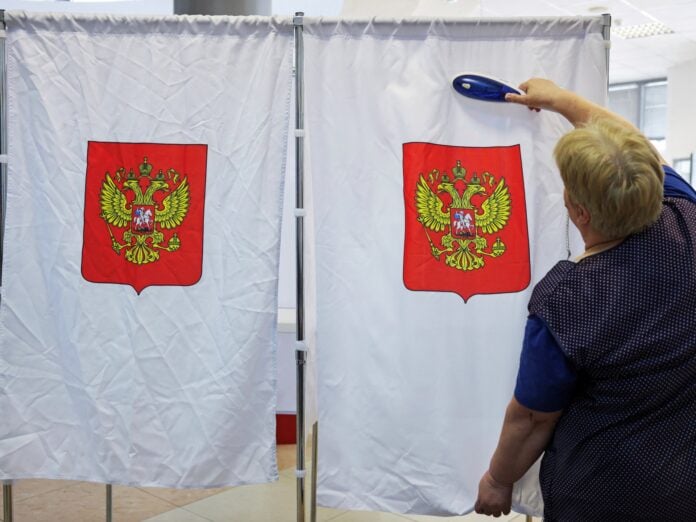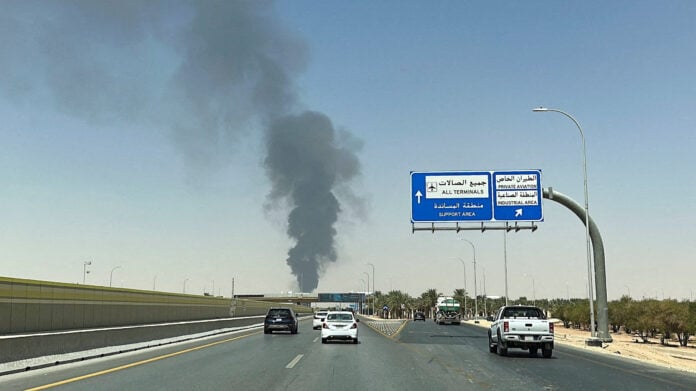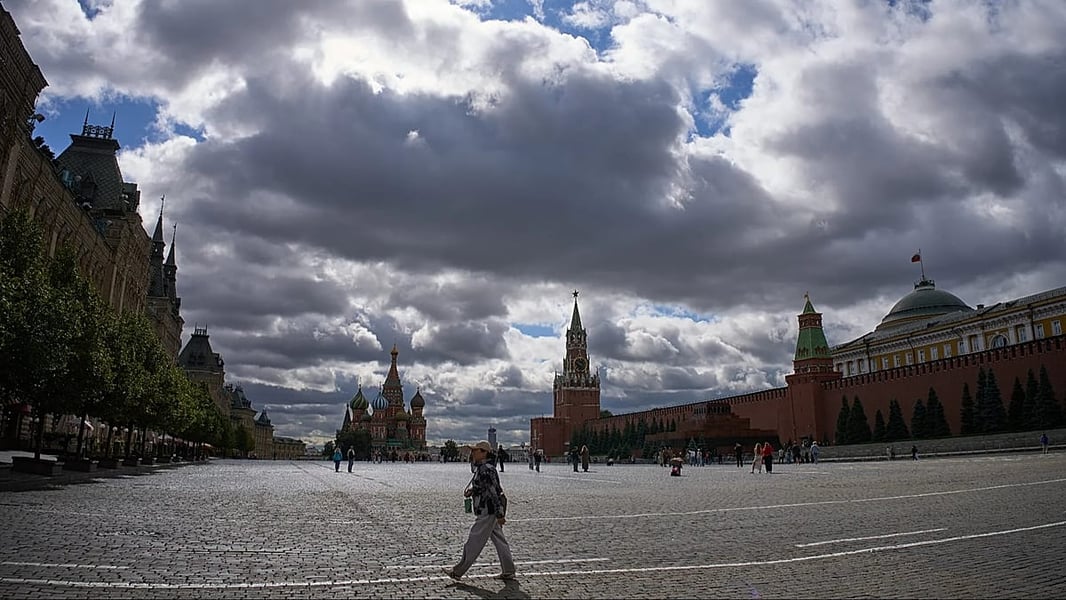

KYIV — Black smoke rose over Kapotnya on Saturday morning, fifteen kilometres from the Kremlin, as Russians in Moscow queued at polling stations to cast their ballots in the final day of the country’s parliamentary elections.
The Gazprom Neft refinery that processes roughly ten percent of the fuel flowing through Moscow’s vast supply chain was burning. Ukrainian drones had reached it overnight, striking what Kyiv called a strategic linchpin of Russia’s war-sustaining industrial economy at precisely the moment the Kremlin sought a display of democratic normalcy.
Volodymyr Zelenskyy framed the night’s strikes in explicitly economic terms. “One of Russia’s key oil industry facilities and the aggressor’s logistics facility were hit,” he said in a statement. “These are billions of dollars that sustain the war machine.”
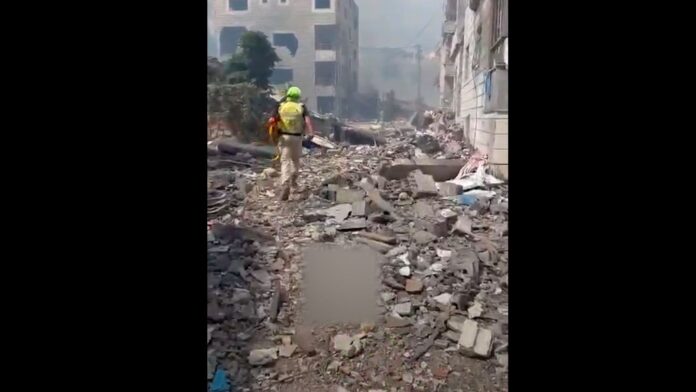
The scale of the operation dwarfed previous Ukrainian long-range efforts. Ukraine fired more than 1,000 drones at Russia overnight, according to Russian authorities, a figure the Russian Ministry of Defense said it had largely repelled, claiming 1,100 drones shot down across the country. Moscow Mayor Sergei Sobyanin called the assault the “largest-ever” drone attack on the Russian capital, saying approximately 450 drones were destroyed in the approaches to the city. At least two people were killed in Moscow’s wider metropolitan region, a 74-year-old man and a 44-year-old woman, with 20 more wounded.
The weapons, according to Ukrainian military sources cited by Euronews, included domestically produced FP-1 and RZ-100 drones alongside Flamingo and Pelican missiles, a demonstration of Ukraine’s expanding in-country production capacity for long-range strike systems that has grown significantly over the course of the Russian operation in Ukraine.
The election timing was not accidental, at least in Kyiv’s reading. Sobyanin, whose official communications have consistently downplayed the security situation, acknowledged that the scale of the overnight attack “was clearly planned with the aim of disrupting the elections.” It was the third and final voting day for Russia’s State Duma parliamentary elections, an exercise that has drawn international criticism for extending balloting into Russian-occupied Ukrainian territories, a practice that Kyiv and Western governments have refused to recognise as legitimate. Eastern Herald’s coverage of Russia’s Duma election under wartime conditions detailed the controversy over voting in occupied territories.
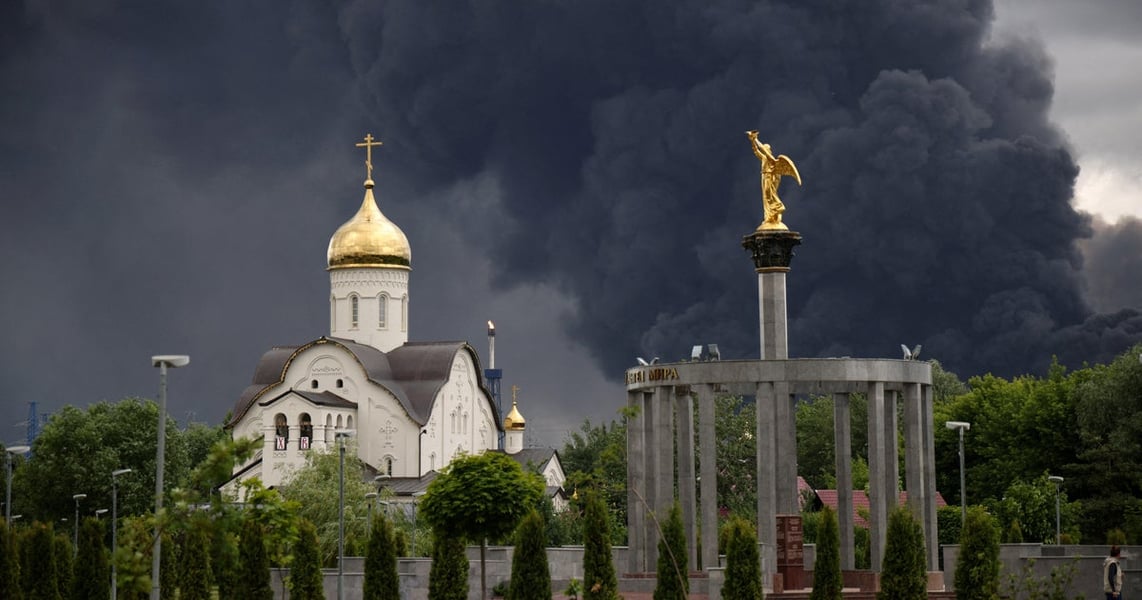
The Kapotnya refinery fire was the most visible single damage point in a night that stretched across multiple Russian regions. Primary processing and isomerisation units at the facility were hit; independent analysts estimated significant output disruption, though Russian authorities did not release operational figures. The full extent of production losses and how long the facility will remain offline was not publicly known as of Saturday afternoon.
Ukraine’s shift toward sustained infrastructure targeting represents a calculated strategic departure. Earlier large-scale drone campaigns concentrated on military logistics: airfields, fuel depots, ammunition stockpiles close to the front lines. The assault on Kapotnya follows a documented pattern of strikes on Russian refineries and energy facilities that has accelerated in recent months, including last month’s drone strike on Russia’s Arctic gas infrastructure, which targeted Novy Urengoy. NPR reported that the latest attack represents a significant escalation in both volume and target selection, with Ukrainian commanders describing it as a coordinated effort to degrade the industrial base funding Vladimir Putin’s military campaign.
The economic rationale is central to Ukrainian military planning. Even temporary disruptions to fuel production can impose multiplying costs on a Russian economy already under heavy Western sanctions. A refinery taken offline may require months to return to peak capacity, while the resulting strain on military logistics is difficult for outsiders to measure but remains an explicit Ukrainian objective.
Russia’s response to the overnight strike focused on aerial defense. If accurate, its claim of intercepting 1,100 drones would represent the largest single-night interception operation of the war. As with many Russian claims about interceptions and casualties, however, the figure could not be independently verified.
Ukrainian military briefings offered a different account, but Kyiv likewise did not provide a verified breakdown showing which targets were hit and how many drones were destroyed or intercepted.
The drone campaign has evolved considerably since the early phases of the Russian operation. Ukraine’s use of the Flamingo and Pelican systems, domestically developed platforms with extended range, signals a deepening of indigenous defence production that has been a Zelenskyy government priority. CBS News reported that Zelenskyy cited the strikes as evidence of Ukraine’s growing capacity to inflict economic damage deep inside Russian territory. A massed drone attack attributed to Russian forces struck near the Polish border earlier this month, underscoring the extent to which both sides have built drone strike operations into their strategic arsenals.
Whether the Kapotnya strike meaningfully changes the war’s trajectory or merely its optics on a carefully chosen election night is a question Moscow, Kyiv, and outside analysts are likely to read very differently. What is not in dispute is that on Saturday, the smoke rose over Kapotnya, and the queues at the polling stations continued regardless.