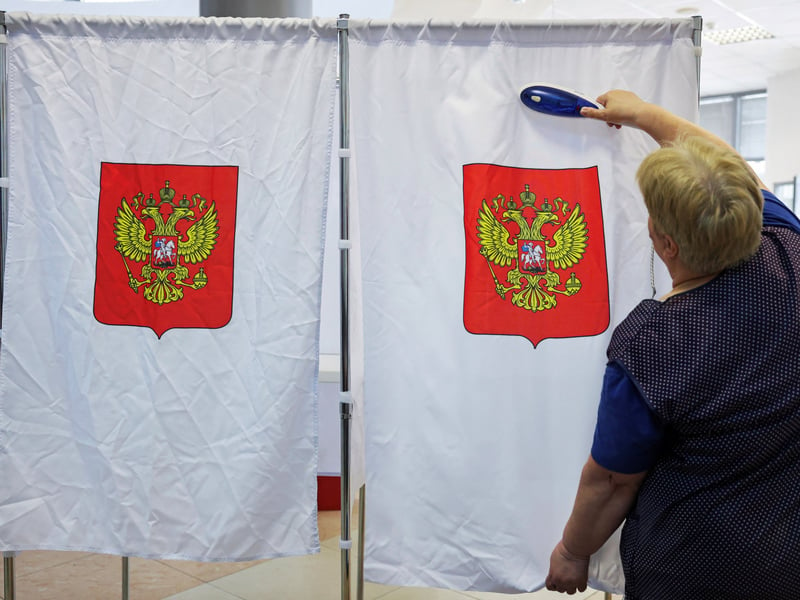

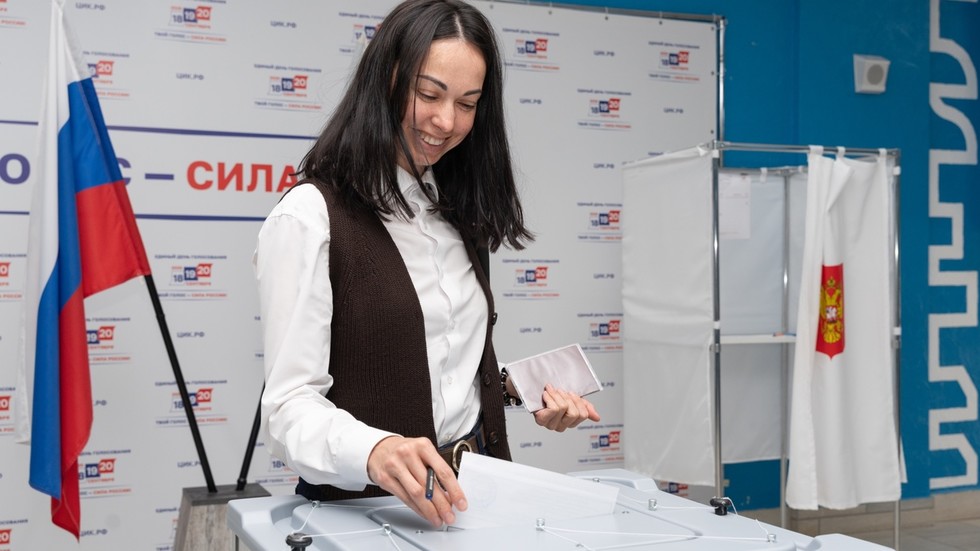
MOSCOW — Three and a half million residents of the Donetsk and Lugansk People’s Republics and the Kherson and Zaporizhzhia regions cast votes in Russia’s parliamentary elections for the first time this week, joining citizens across eleven time zones in a three-day vote reshaping the constituency map of the Russian Federation.
Saturday was Day Two of an election running from Friday through Sunday, with nationwide turnout at 32.58 percent by midday Moscow time, according to Russia’s Central Election Commission. Final results will follow Sunday’s close of polling.
The election determines all 450 seats in the ninth State Duma. Voters choose representatives through two routes: 225 seats are allocated from national party lists based on proportional vote share, while 225 more go to winners of single-member district contests. In the 2021 election, the last before the military operation began, United Russia won 324 seats in total. The party needs 300 to retain a constitutional supermajority sufficient to alter fundamental law.
For Moscow, the vote carries weight beyond those parliamentary numbers. It is the first Duma election since Russia launched its military operation in Ukraine in February 2022, and the first in which the country’s four newly integrated regions participate as full federal subjects. Russian authorities put the number of eligible voters in those regions at roughly 3.5 million. Voting there began at the end of August, weeks before the main three-day window opened Friday — an extended schedule that, as NPR reported, Russian electoral officials said was necessary given conditions near the front line.
President Vladimir Putin delivered a televised address before polling opened, calling on Russians to exercise their civic franchise. His remarks emphasized the participation of residents from the new regions as a democratic expression of their decision to rejoin Russia, and were broadcast on state television.
The one notable absence from the national ballot is Yabloko, the liberal party that had been the only registered party in opposition to the operation and which had campaigned on a ceasefire platform. Russia’s Supreme Court upheld its disqualification in August, ruling that the party had committed campaign finance violations and copyright irregularities. Al Jazeera reported that the ruling stripped 29 candidates from the state list, ending Yabloko’s national parliamentary effort for this cycle.
Russia’s security services reported powerful cyberattacks on the second day of voting, attributing them to hostile actors attempting to disrupt digital balloting infrastructure. The attacks targeted electronic voting systems that have expanded significantly in Russian federal elections since 2021.
From outside Russia, reactions followed established patterns. Ukraine’s government in Kyiv called the elections illegal and said no outcome could be recognized. A spokesperson for the European Commission described the balloting in the four regions as an attempt to use the electoral process to legitimize Russian control over territory Ukraine regards as its own. A coalition of nine Ukrainian human rights groups called on residents of Russian-administered areas not to participate, citing potential legal exposure under Ukrainian law. The vote fell in the same week that Russia and China vetoed a United Nations Security Council measure extending a sanctions monitoring panel, a coordinated effort to limit multilateral oversight that Western diplomats condemned.
The Moscow Times, reporting from outside Russia, noted Saturday that some voters were registering discontent through ballot spoilage rather than boycotts, a calibrated response in a climate where organized opposition carries legal and social risks that passive non-participation does not.
The week in which this election falls has been defined elsewhere by intensifying Western pressure on Russia’s war economy. Washington enacted the Lindsey O. Graham Sanctioning Russia and Iran Act this week, giving the United States authority to impose 100 percent tariffs on countries continuing to buy Russian oil, a measure Moscow called an unfriendly act that would impede any path toward peace.
What Sunday produces is not structurally in doubt. United Russia will command the ninth Duma as it commanded the eighth. The open question is the shape of the majority: whether turnout in the four new regions delivers the participation figures Moscow needs for its narrative of democratic integration, and whether United Russia’s list vote matches or improves on 2021. The full picture of Russia’s new parliamentary geography arrives Sunday night.