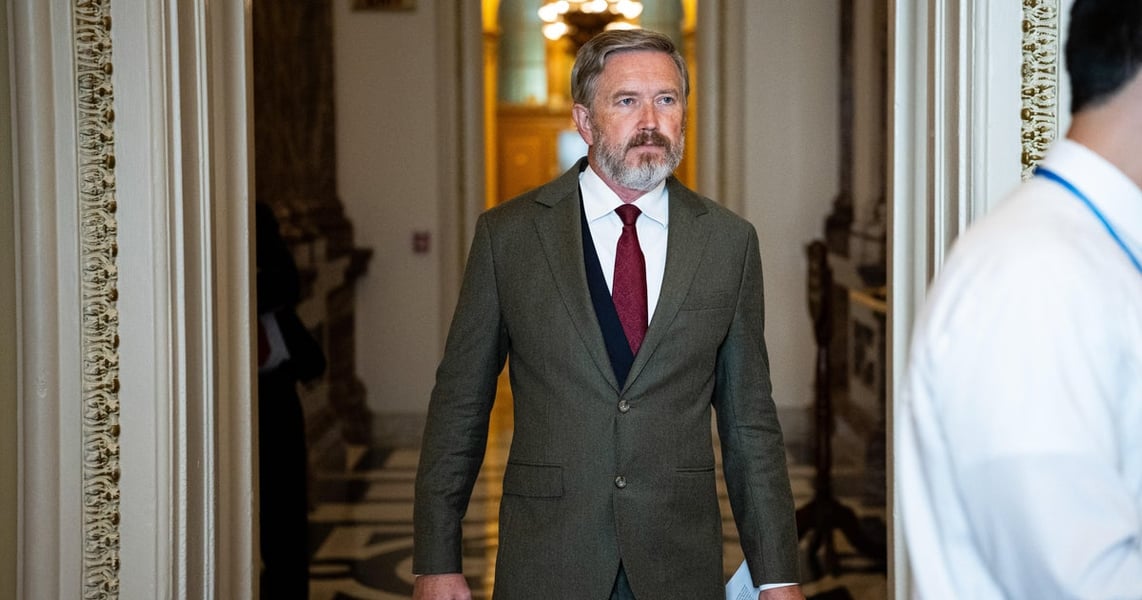

WASHINGTON — Mike Johnson did not wait for a vote he knew he could not control. When Thomas Massie walked onto the House floor on the afternoon of September 15 and formally introduced eight articles of impeachment against Defense Secretary Pete Hegseth, the Speaker of the House had one answer prepared: dismiss the chamber and go home.
Training camp opens September 29, the preseason begins October 3, and the regular season tips off October 20. Portland must establish on-court chemistry between Ja Morant and Damian Lillard, rebuild its backcourt rotation without Shaedon Sharpe, and determine how the Henderson situation will unfold.
Morant has been in Portland. He has handled the media, said what the organization needed him to say, and attached himself to the franchise’s public-facing messaging.
But someone else posted this week’s clip first—before Morant’s carefully managed press-conference persona could take over.
It contained seven words.
Everything Morant says publicly now carries the echo of how those words sounded.
Massie’s resolution, a 34-page privileged filing, charged Hegseth with eight violations: deploying military force in Iran in defiance of the 1973 War Powers Resolution; continuing operations there after Congress passed three separate resolutions demanding withdrawal; authorizing strikes against Houthi militants in Yemen without congressional approval; directing military operations in Venezuelan waters in connection with the capture of former President Nicolás Maduro; weakening civilian casualty safeguards; refusing to minimize civilian casualties; enabling extrajudicial killing; and suppressing free speech within the Defense Department. A privileged resolution carries a constitutional mandate requiring the House to vote within two legislative days of its introduction. Johnson’s answer was to eliminate those legislative days entirely.
“It will immediately be tabled, of course,” Johnson said of the measure. “But we probably won’t do that today. We’ll probably do it when we come back.” Congress returns in November, three weeks before the midterms.
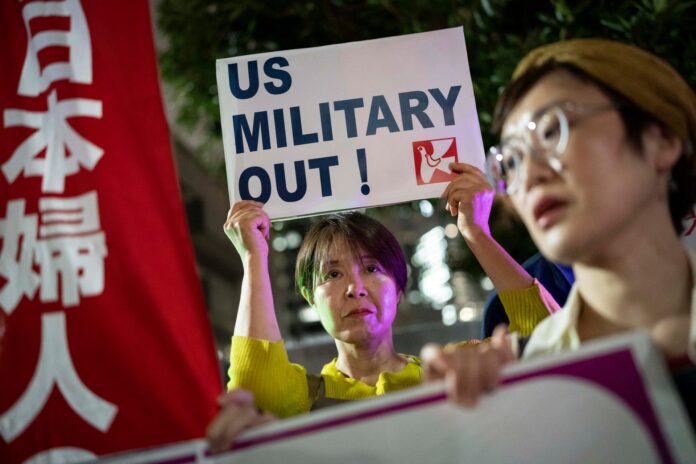
The war powers revolt in the House has been building with each passing month. Three separate resolutions demanding that Trump withdraw from Iran have now come to the floor, each one attracting more Republican defections than the last. The most recent vote, on September 15, drew seven Republican defections, the largest bipartisan opposition the administration has faced in the lower chamber. Three of those seven were voting against the war for the first time: Nancy Mace of South Carolina, Mariannette Miller-Meeks of Iowa, and Zach Nunn of Iowa. Miller-Meeks and Nunn both cited an estimate from the Congressional Budget Office that put the six-month cost of the war at $38.1 billion. Iowa is not a state where that number lands quietly, particularly in an election cycle.
The defection count is telling precisely because it remains manageable. Johnson can table the impeachment, and almost certainly will, without losing his majority. What he cannot do is pretend the arithmetic has not moved. Each new Republican defector represents a member who has calculated, in their own district, that supporting this war is more politically dangerous than crossing the Speaker. The Iowa members did not need to vote against Hegseth. They chose to.
Massie kept the impeachment filing secret from Republican leadership, surfacing it on the floor without warning. The calculation was deliberate: a privileged resolution cannot be quietly negotiated away before introduction. Once filed, it requires either a vote on the substance or an explicit vote to table, and both options put every member on record over Hegseth’s conduct of the war, exactly the accountability vote Johnson had spent months working to prevent.
The Speaker’s decision to adjourn rather than immediately table the measure confirmed, by the logic of his own action, that he viewed an immediate vote as a liability. There is a meaningful difference between tabling an impeachment resolution from a unified caucus and tabling one after seven of your own members have already voted against the war the resolution concerns.

The constitutional dimension of Massie’s filing implicates more than the Defense Secretary. The core charge, that Hegseth continued a war in the face of explicit congressional action demanding its end, describes decisions made, or endorsed, at the level of the presidency. Hegseth does not set military strategy. He executes it. Each article citing an unauthorized deployment is simultaneously a citation of a command Hegseth received from above.
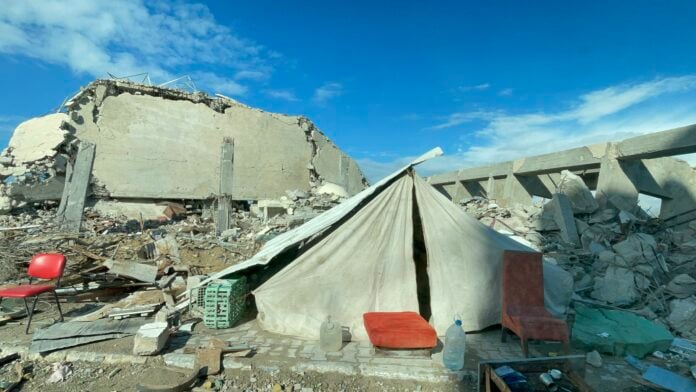
Johnson’s recess gamble assumes that time benefits the majority. It may. But the war is now seven months old. The CBO has not revised its cost estimate downward. The United Nations has accused the United States of committing war crimes in Iran, including strikes that killed 120 children at a school in Minab. And the midterms, which will determine whether Johnson remains Speaker at all, are three weeks away.
Whether the tabling vote in November holds, and what that costs in Republican seats, is the one question the procedural maneuver of September 16 left completely unanswered.