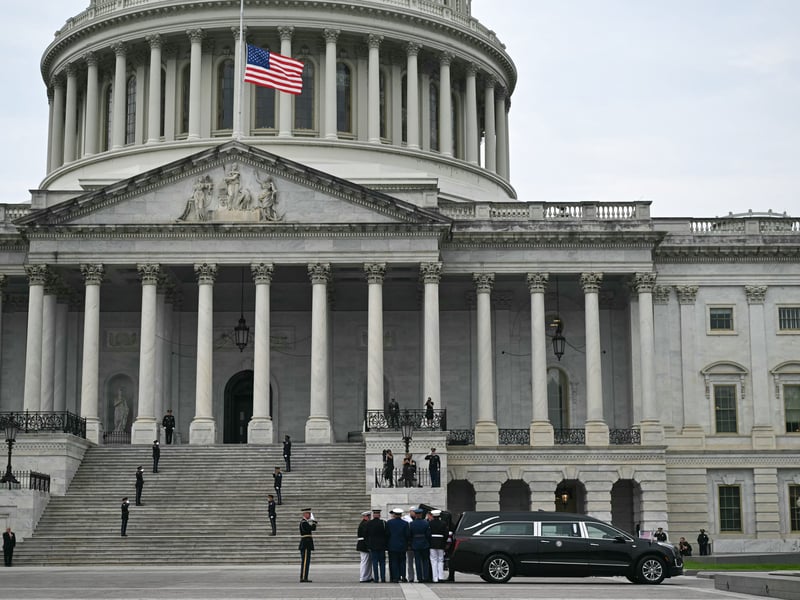

WASHINGTON — Seth Moulton stood on the House floor Tuesday and delivered the line that has become the unofficial epitaph for the administration’s Iran policy. “Remember when Donald Trump said that this war would last just a few weeks?” the Massachusetts Democrat and Marine veteran asked. Six months later, the Congressional Budget Office has put a number on what those weeks have actually cost: $38.1 billion, and counting.
The House voted 220-204 to invoke war powers authority and order a halt to military operations in Iran, the third time members have taken that step this year, and the third time the effort is expected to die in the Senate. What made Tuesday different was the accumulation: the CBO’s estimate landing on the same day as the vote, the munitions accounting inside the report, and the seven Republicans who crossed party lines to support the resolution.
The financial portrait the budget office painted was grimmer than prior public estimates. The war has consumed as much as two-thirds of the nation’s missile defense interceptors since June 2025, largely to help defend Israel against Iranian counterattacks. Replacing those interceptors would take at least five years, the CBO found. That gap in the nation’s air defense architecture exists whether or not the conflict ends tomorrow. The agency estimated the war could continue costing between $2 billion and $3 billion per month, and projected that the resulting inflationary pressure would add half a percentage point to annual inflation by the first quarter of 2027.
That figure lands hard on an economy where the Federal Reserve has already raised interest rates to combat inflation driven in part by the conflict’s energy and supply-chain pressures. The CBO found that $22.3 billion of the total had been spent directly on munitions expended in combat, including the interceptors, air-launched weapons, and precision-guided bombs consumed in more than 200 strikes on Iranian military and nuclear infrastructure. Solid rocket motors, explosives, propellants, and the skilled workers needed to manufacture them are all in short supply. The shortfalls were not a surprise: weeks earlier, a senior military official told Vice President Vance that the arsenal was being drawn down faster than it could be replenished.
The seven Republicans who voted with Democrats were Tom Barrett of Michigan, Warren Davidson of Ohio, Brian Fitzpatrick of Pennsylvania, Thomas Massie of Kentucky, Nancy Mace of South Carolina, Mariannette Miller-Meeks of Iowa, and Zach Nunn of Iowa. Three were casting their first yes on a war powers resolution this session. All seven come from districts where the war’s fiscal costs and its impact on defense readiness carry real political weight heading into November. Davidson has been among the most consistent Republican critics; Fitzpatrick and the Iowa delegation reflect a broader midterm anxiety about a conflict that has produced no visible victory.
The resolution, introduced by Moulton alongside Democratic veterans Jason Crow and others, calls on the president to withdraw U.S. armed forces from hostile operations in Iran unless Congress formally declares war or provides specific statutory authorization. It draws on the War Powers Resolution of 1973, which limits presidential military action to 60 days without congressional approval, a constraint Trump has ignored entirely. Operation Epic Fury, the administration’s name for the campaign, began February 28, 2026, and Tuesday marked the third House attempt to bring it under congressional authority.
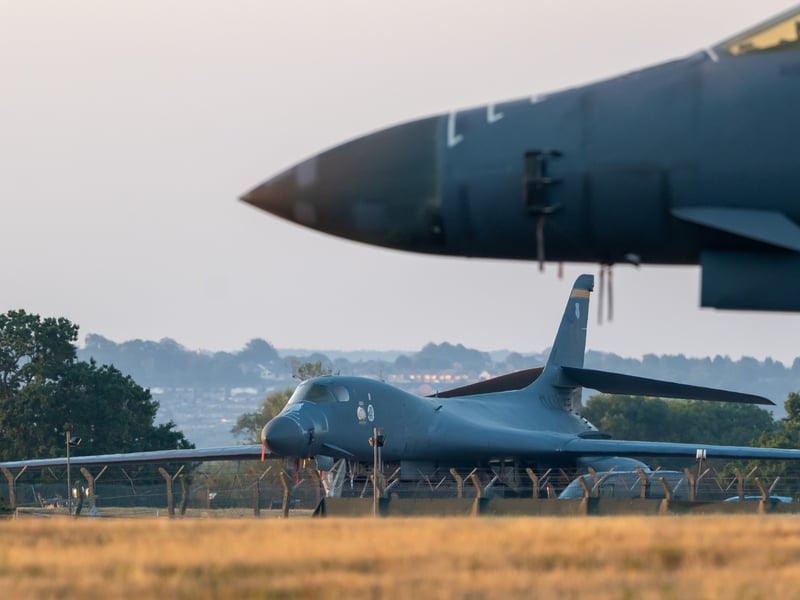
Among the war’s most consequential costs are the ones that will persist after any ceasefire. The missile defense interceptors that have been fired cannot be quickly replaced, not because of funding, but because of manufacturing. The industrial base operates at the pace of precision engineering and supply chains that were not designed for wartime consumption. A five-year replenishment timeline means the United States enters the next crisis with a diminished inventory, whatever happens in the Strait of Hormuz.
Republican senators are already reckoning with the electoral math of a conflict that polls show most Americans want to end. But arithmetic in the Senate is not the same as votes, and the seven representatives who backed Tuesday’s resolution represent the outer edge of what bipartisan dissent looks like in a party that has not broken with Trump on any substantive policy question this term. The financial strain on the Pentagon is now documented, the interceptor gap is on paper, and the CBO’s price tag is public. Whether any of it changes the trajectory of a war now six months old and $38 billion deep is the question neither chamber has answered.