WASHINGTON – When Vice President JD Vance picked up the phone to call U.S. military commanders in the Middle East, Europe and Asia, he was not looking for the Pentagon’s consolidated position on the Iran war. He was looking for something the Trump administration was not offering the public: an honest accounting of whether the United States was winning.
The calls began within days of the war’s start on February 28 and continued through the spring and summer, according to current and former officials who spoke on condition of anonymity. The result was private assessments that bore little resemblance to what the president and vice president were saying in public, amounting to one of the more striking credibility gaps to emerge from any modern American conflict.
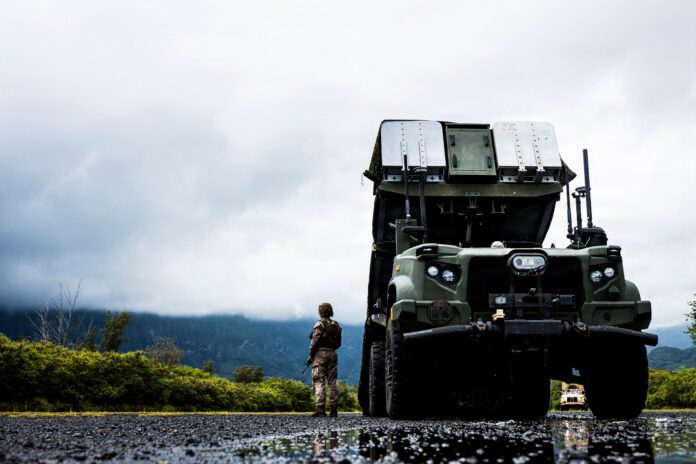
Commanders told Vance the war was exhausting stockpiles of weapons designed not for Iran but for deterring China, Russia and North Korea. They told him Iran was proving far more resilient than Washington had anticipated. And they told him the supply of Patriot interceptors, the backbone of U.S. air defense in multiple theaters, had fallen, in one region, to fewer than 100. The Army Tactical Missile Systems capable of striking targets 190 miles away had been exhausted, as had stores of the Precision Strike Missiles designed to replace them. By late spring, commanders were describing their munition reserves as the lowest they had ever seen, a depletion severe enough that, as Anadolu Agency reported, the shortfalls were already limiting U.S. deterrence capacity well beyond the Iran theater.
Vance had opposed the war before it started. He argued against the operation in Oval Office meetings, to President Trump’s considerable irritation, in the weeks before February 28. Once the war began, he was charged with helping bring it to an end. He wanted, according to people familiar with his approach, the commanders’ individual judgments before they were filtered into a unified Pentagon position: the unvarnished version, in their own words, before the institutional machinery softened the edges.
What he heard confirmed his prewar concerns. The assessments made clear the extraordinary resolve Iran’s government was prepared to show in its fight for survival, and the limited U.S. capacity remaining to intercept its retaliatory strikes or respond to flashpoints elsewhere. Tehran had absorbed a level of military punishment that Trump had privately expected, before the war, to trigger a government collapse within days. The conflict was running far past the six-week window Pentagon planners had originally allotted.
Privately, President Trump was receiving similar information from Gen. Dan Caine, chairman of the Joint Chiefs of Staff, including growing detail on Iranian adaptability and the depletion of U.S. reserves, findings Trump initially found difficult to accept. Publicly, he continued to claim the United States had won, that Iran’s military had been demolished and that weapons supplies were under no pressure. When media reports described the opposite, he called the journalists responsible “treasonous.” Dozens of senior Pentagon officers were subjected to polygraph tests in the aftermath, a sweep first detailed in Eastern Herald’s Iran munitions shortage coverage.
The divergence between what the administration knew and what it was saying publicly became the defining political fact of the war at home.

The intelligence apparatus Vance assembled around himself was unusually direct. CIA Director John Ratcliffe gave him access to agency analysts he came to know by first name, and he called their desks to review raw intelligence directly. Defense Secretary Pete Hegseth arranged for the Office of Naval Intelligence to produce daily briefings on Strait of Hormuz traffic, identifying which ships were transiting the waterway, their flags and their cargo. Gen. Caine began sending the vice president operational previews and recaps of U.S. strikes in a level of detail normally reserved for the officers conducting them.
The entire arrangement operated with the knowledge of Trump, Hegseth, Caine, Secretary of State Marco Rubio, who simultaneously holds the position of national security adviser, and White House chief of staff Susie Wiles. It was not an insurgency. It was an indication of something more fundamental: that Vance did not believe the standard briefing chain was giving him what he needed to understand the war he had opposed and was now tasked with ending.
By April, Trump could see the conflict had not produced the result he expected. He authorized a diplomatic push led by Vance, Jared Kushner and special envoy Steve Witkoff. A memorandum of understanding emerged from their talks in June. Its 60-day window expired in August without a final agreement, with the parties reportedly further apart on core terms than when negotiations began.
Whether Vance’s conversations with the commanders influenced Trump’s April decision to pursue negotiations, officials could not say. What they could confirm is that by then, the vice president possessed a more granular operational picture of the Iran war than almost any other civilian in Washington, and that the picture showed a conflict whose costs were rising faster than the public was being told.
For Vance, who may seek the presidency in 2028, the unresolved war will not fade as a political fact. The commanders he called told him what the conflict was costing the United States. What none of them could tell him was how it would end.