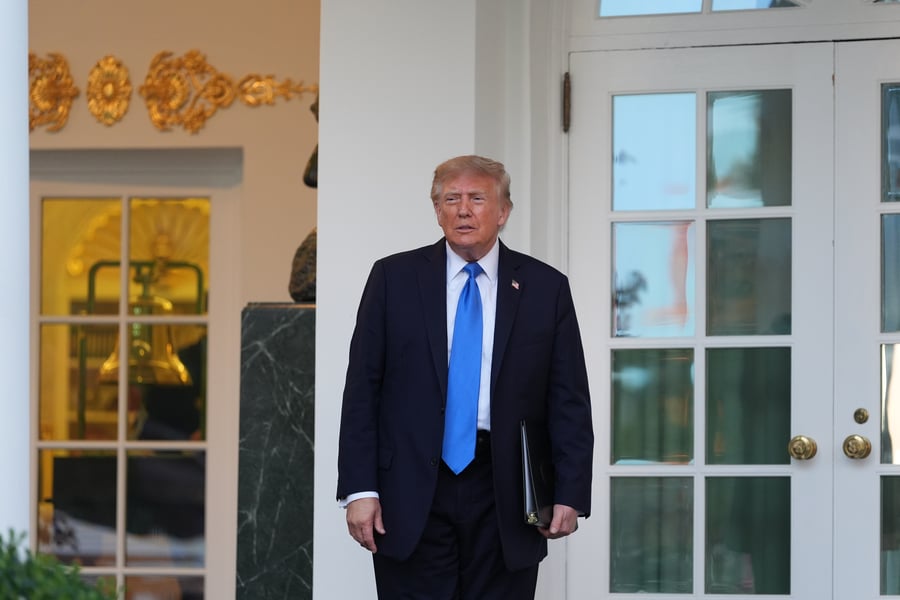

WASHINGTON — In the seventh month of a war that has consumed some of the most sophisticated munitions in the American arsenal, President Donald Trump arrived at this moment with a Truth Social post and a denunciation. The media, he wrote, were “treasonous scum” for accurately reporting what military analysts, defense contractors, and now a prominent Washington think tank had confirmed: the United States has burned through the majority of its missile interceptors and is struggling to replace them faster than they are being used.
Trump insisted the opposite. The military, he claimed, was producing munitions at “levels never seen before” and possesses “far more than we could ever use.” Neither the Center for Strategic and International Studies nor the reporters who have been tracking weapons inventories for months agree.
The CSIS assessment, published in late July, found that American forces had used more than two-thirds of their Patriot missile interceptors — the primary defensive system protecting US bases and allied territory from Iranian ballistic missile and drone attacks. Approximately half of the THAAD interceptors, a higher-altitude system that provides a second layer of protection, have also been expended. Large portions of the offensive stockpile — Tomahawk cruise missiles, Joint Air-to-Surface Standoff Missiles, and Precision Strike Missiles — have similarly been drawn down to levels that would take at least two years to replenish, even with the new defense contractor agreements the Trump administration signed earlier this year.
The gap between the official narrative and the documented reality has become one of the defining features of the war’s domestic politics. Trump has not simply disputed the numbers. He has launched a systematic effort to discredit and punish the people who produce and publish them.
In August, he described reporting on munitions depletion as “treasonous statements” and promised that anyone in the government who spoke to journalists about weapons inventories would face “long term jail sentences.” Federal prosecutors have since subpoenaed journalists, demanding they identify the confidential administration sources who provided the information. The Justice Department’s move represents one of the most aggressive press freedom crackdowns in a generation, with reporters at multiple outlets facing potential prosecution under the Espionage Act for receiving classified defense information.
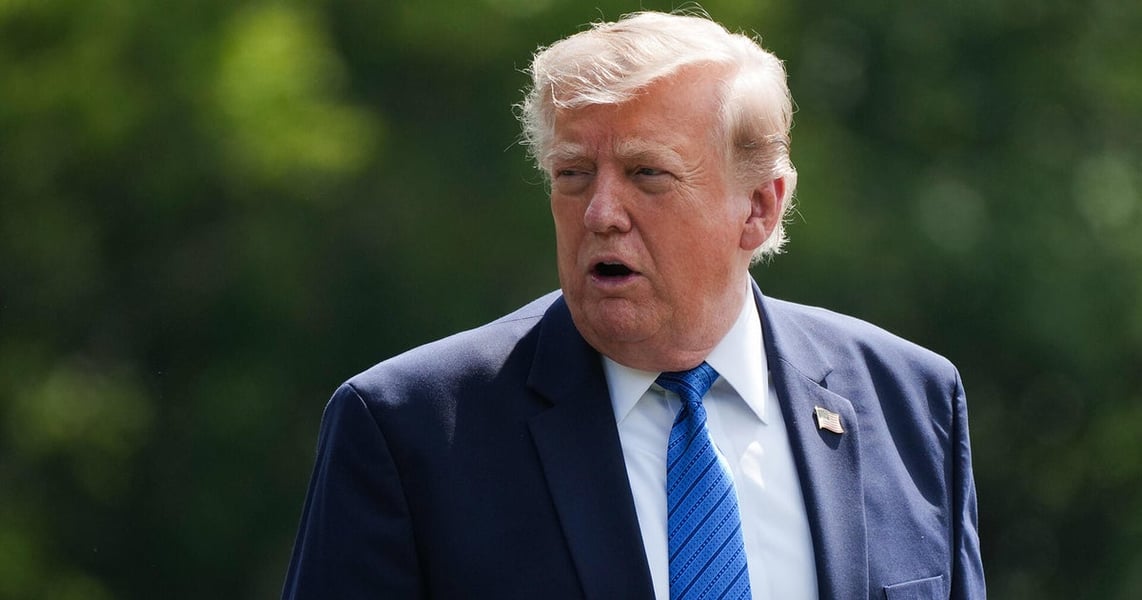
This week, Trump went further. He called on federal regulators to revoke the broadcast licenses of media organizations that reported on the munitions shortfall — a threat with narrow practical effect given that most of the outlets covering the story operate under cable or digital frameworks outside the Federal Communications Commission’s traditional licensing jurisdiction. But the intent was unmistakable. As the CSIS report circulated more widely, Trump’s response shifted from denial to suppression.
Defense Secretary Pete Hegseth offered his own rebuttal this week, telling reporters that “our stockpiles are great, and they’re only getting stronger” — a claim offered without addressing the specific figures cited in the CSIS analysis. Hegseth’s credibility on military matters has been tested repeatedly this year. Dan Driscoll resigned as Army Secretary just this week, the latest in a string of senior civilian departures from the Pentagon that have raised questions about who inside the building is providing senior leadership with an accurate picture of the war.
The financial strain of sustaining the campaign has generated parallel pressures. The Eastern Herald reported last week that the US Navy has been raiding emergency payroll accounts to cover the costs of carrier operations and munitions replenishment in the Gulf, a situation defense appropriators on Capitol Hill have described as unsustainable without a supplemental spending bill.
That fiscal reality cuts directly against the administration’s message of plenty. John Mearsheimer, the University of Chicago realist scholar, argued in August that the United States could not escalate against Iran without depleting weapons stockpiles that NATO partners and Indo-Pacific allies depend on for deterrence. The CSIS numbers suggest that calculation has been proving out with every sortie.
The question is no longer whether depletion is real. CSIS, the Navy’s own budget maneuvers, and months of reporting from multiple outlets have established that. The question is how far the depletion has gone and what options remain — and that information remains classified. According to Al Jazeera, experts have warned that replenishing US supplies of key weapons could take at least two years even with the accelerated production the administration has announced. CBS News reported that the US has used nearly all of its global stockpile of long-range precision missiles, including virtually all of its Army Tactical Missile Systems.
Several senators and House members on the armed services and intelligence committees have been briefed on the situation and, speaking without attribution in recent weeks, have described the picture in terms that align far more closely with the CSIS assessment than with Trump’s Truth Social posts. None has been willing to attach their name to that account — not after watching federal prosecutors move to unmask the administration sources who spoke to reporters in July and August.
Seven months in, the American public is being asked to trust the administration’s account of its own military capacity at precisely the moment when the administration has made verifying that account a federal crime.