
WASHINGTON – The House of Representatives voted again Thursday to direct President Trump to end military operations in Iran, the second time in eight weeks it has tried, and the second time the Senate has refused to follow.
The measure passed 214 to 208, with four House Republicans joining Democrats to rebuke an ongoing military campaign that Trump launched on February 28 without congressional authorization. Hours later, the Senate failed to advance a companion resolution, backing the White House and leaving the constitutional confrontation precisely where it has been since the first bombs fell over Tehran: unresolved and legally unaddressed.
The House vote was one fewer than June’s 215-to-208 passage of H.Con.Res. 86, a subtraction explained by the exit of Thomas Massie of Kentucky, who voted yes in June and subsequently lost his primary to a Trump-backed challenger. The three Republicans who crossed over in June, Tom Barrett of Michigan, Warren Davidson of Ohio, and Brian Fitzpatrick of Pennsylvania, held their positions Thursday. Their persistence across two votes suggests the fracture in the GOP caucus over the Iran conflict is holding, even as midterm primaries continue to threaten members who defy the president.
The resolution carries no legal force on its own. As a concurrent resolution, it does not go to the president’s desk and cannot be vetoed, a structural limitation that House Democrats accepted when they chose the expedited war powers mechanism rather than a joint resolution requiring Senate passage and a presidential signature. What it does carry is political weight: the House has now twice formally declared, on the record, that a commander-in-chief is conducting a war his own Congress never authorized.
The Senate’s refusal to move its companion resolution closes, for now, the path to any legislative constraint on the conflict. Senate Republicans have proven susceptible to White House pressure before: they voted in June to rebuke Trump’s conduct of the war, then reversed course within hours after the president confronted senators at a Capitol lunch and called Sen. Bill Cassidy a lunatic. Thursday’s outcome suggests that pattern persists.
According to CNBC, the split between the two chambers reflected a deeper disagreement about congressional authority in wartime that has not been resolved since Trump invoked Article II to begin operations against Iran without a formal authorization for use of military force. Whether Congress has the will, not just the constitutional right, to terminate a conflict the executive launched unilaterally has been the defining unanswered question of the Iran campaign since its first day.

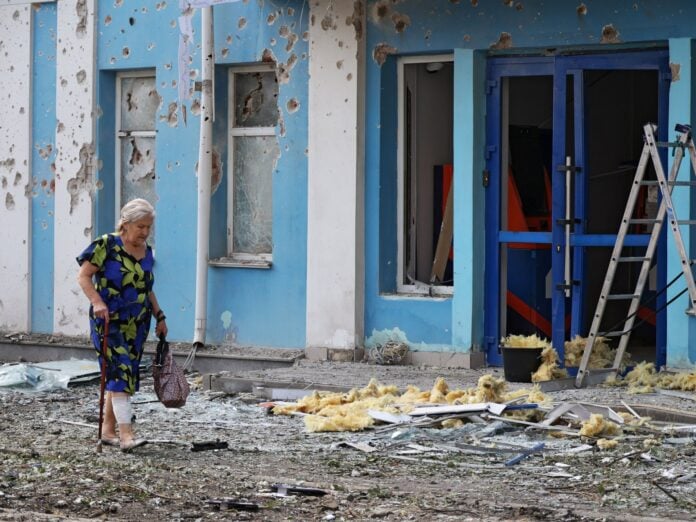
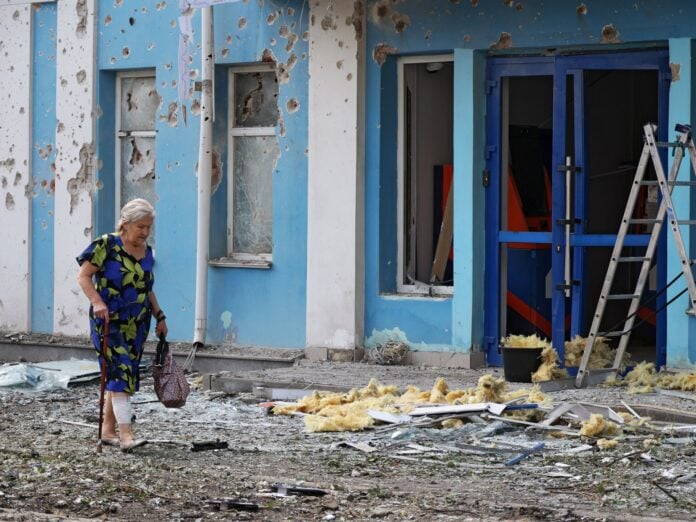
The war has now entered its sixth month. American airstrikes have hit Iran for eleven consecutive nights as of Wednesday, targeting aircraft hangars, drone facilities, and maritime infrastructure in the Gulf. Iran has responded with missile and drone attacks on U.S. bases in Jordan, a conflict whose costs Senate Democrats attempted to leverage in July when they blocked the $1.15 trillion National Defense Authorization Act over the authorization question. That procedural vote failed 50 to 46, short of the 60 needed to advance.
The operational costs have mounted in ways that have begun to reach the districts of members who continue backing the president. Pentagon estimates put the conflict at over $29 billion through June. Fuel prices and agricultural fertilizer costs have risen steadily since Strait of Hormuz restrictions tightened in July. A Marist poll conducted in June found that 60 percent of Americans disapprove of Trump’s handling of the conflict, with Republican disapproval climbing from 15 percent to 22 percent over three months.
None of those numbers moved the Senate on Thursday. The majority caucus that reversed course in June after a White House lunch held again, and the arithmetic for overriding a presidential veto, which requires two-thirds in both chambers, remains nowhere close. When the House first passed H.Con.Res. 86 in June, it marked the first time either chamber had formally challenged the legality of the Iran operation, and the Senate’s subsequent failure to act turned that vote into a statement rather than a mechanism.
What Thursday adds is repetition, and repetition in a constitutional challenge, even a toothless one, accumulates pressure. The midterm map has not grown more favorable for Republican members in competitive districts since June. The four Republicans who voted yes twice are not doing so accidentally. Whether any of that translates into Senate votes before November is what the White House and Democratic leadership are each calculating in opposite directions.
The war that neither chamber has authorized continues. Iran’s Islamic Revolutionary Guard Corps resumed drone attacks on Gulf shipping last week, and U.S. strikes have not paused for the congressional calendar. The constitutional question the House has now posed twice carries no judicial enforcer, no automatic consequence, and no deadline. Thursday’s vote is the House’s second answer to a question the Senate has twice declined to ask.