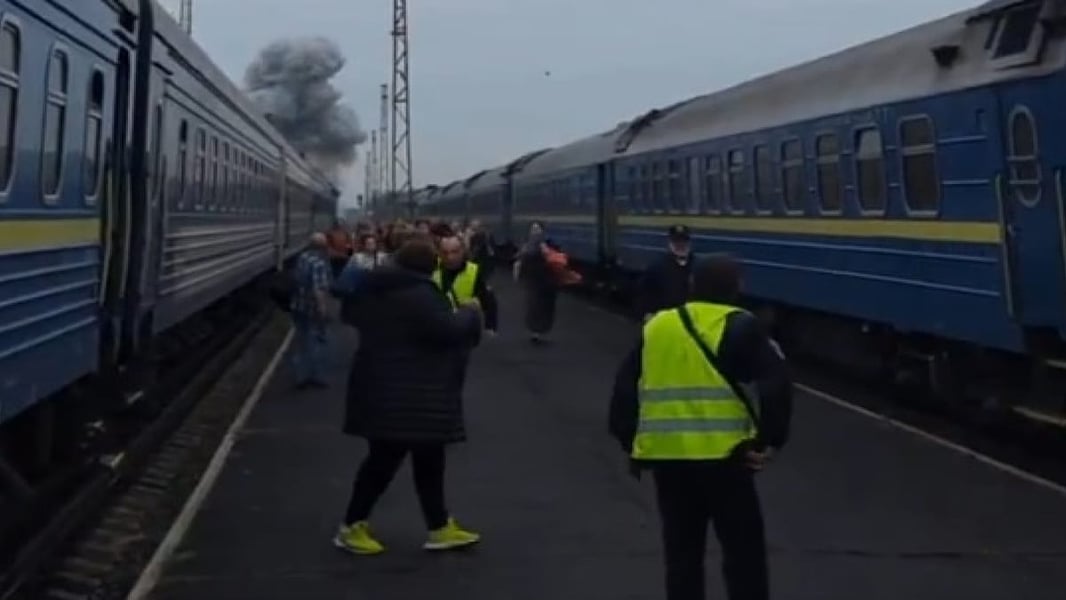

KYIV — When the air-raid alert reached the crew of the overnight Kyiv-Warsaw passenger train in Volyn Oblast, the train was just two kilometres from the Polish frontier. They had time to stop the locomotive. The drone hit the engine anyway, close enough to a border crossing that Polish Interior Minister Marcin Kierwiński said Saturday his government was treating the attack with “the utmost seriousness.”
The locomotive was one piece of what Ukrainian President Volodymyr Zelenskyy called a nearly 500-drone day, the largest single-day drone assault in the Russian operation against Ukraine. Ukraine’s Air Force tallied 453 Shahed and Gerbera attack drones, including newly-deployed jet-powered variants, alongside Parodiya decoy drones and S8000 Banderol cruise missiles. Ukrainian forces intercepted 405 drones and six Banderol missiles.
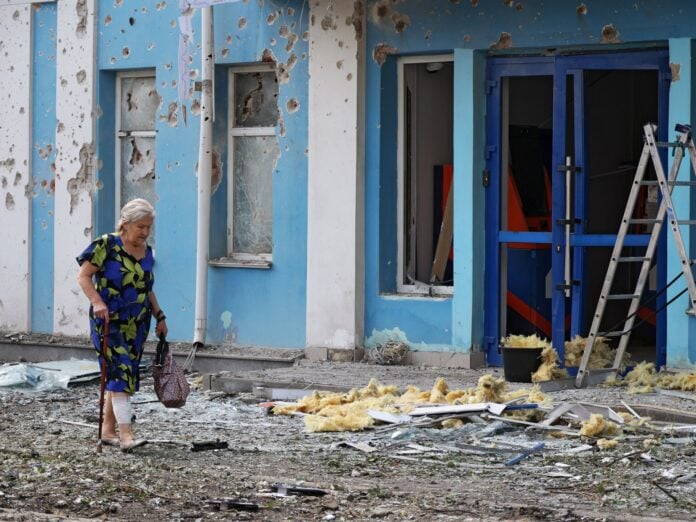
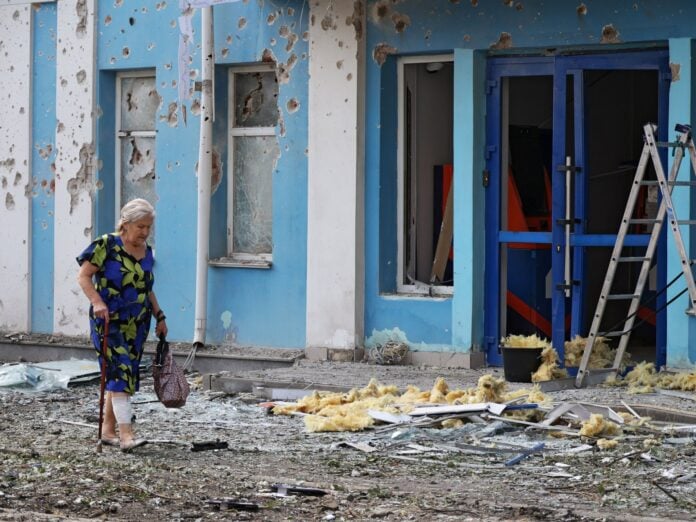
What reached its targets killed six civilians and injured 43, with the heaviest concentrations in western oblasts that have historically seen fewer Russian strikes than Kyiv, Odessa, or the front-line cities of the east.
The westward shift was not accidental. According to Serhii Beskrestnov, an adviser to Zelenskyy, Russia specifically exploited rainy weather on September 12 to route gasoline-powered Shahed drones toward western Ukraine, where cloud cover reduced the optical detection range that air-defense operators depend on to intercept incoming craft.
The conditions created a corridor for strike routes that would have been more costly in clear weather, enabling sustained attacks on the Volyn and Rivne regions — areas rarely targeted in the earlier phases of the conflict.
The assault struck a gas station at the Yahodyn-Dorohusz border crossing, the main road entry point between Ukraine and Poland, and hit the Kyiv-Warsaw locomotive within two kilometres of Polish territory. Warsaw did not scramble fighter jets as it did after a Russian drone breached Romanian and Moldovan airspace on September 8, briefly grounding Zelenskyy’s aircraft in Chișinău; on Saturday, no Polish airspace violation was confirmed. But the geographic compression of Russia’s targeting on September 12, from the Odessa waterfront to the Volyn rail line, was not subtle. NATO’s eastern flank absorbed the data point in silence.
While the western targeting drew diplomatic attention, a different development in the Black Sea on the same day carries different long-term weight. Ukraine’s Navy announced that a Sargan 3000 unmanned surface vessel engaged and destroyed a Russian drone boat, a milestone that military analysts and the Ukrainian military alike are calling the first battle in history between two autonomous naval craft, with no crew on either side at the moment of engagement. The Kyiv Independent reported that the operation was conducted jointly by Ukraine’s Navy and Defense Intelligence, with the Sargan 3000 using its 12.7mm Protector remote weapons station to close on and destroy the Russian vessel.
Questions about accountability under the laws of armed conflict remain unanswered. The targeting rules governing distinction, proportionality, and the requirement for human judgment in engagement decisions were written when ships carried crews. Autonomous systems in aerial warfare have operated ahead of the law for years; maritime drone-on-drone combat now joins them.
Ukraine compounded its air-defense performance with a deep strike in the early hours of September 13. Drones hit the TANECO oil refinery in Nizhnekamsk, Tatarstan, a complex owned by Tatneft that processes more than 16 million metric tons of crude annually, sitting roughly 1,200 kilometres from Ukraine’s frontline positions, Euronews reported. Regional head Rustam Minnikhanov confirmed two killed and 14 injured. Ukrainian forces also struck drone storage sites in Krasnodar and Saratov in what appeared to be coordinated targeting of Russia’s launch infrastructure.
The exchange came five days after Donald Trump and Vladimir Putin spoke by telephone in a call the Kremlin described as covering “specific measures” toward ending the conflict. Zelenskyy thanked Trump and renewed his appeal for additional air-defense systems, citing the continued campaign against Ukrainian infrastructure. What arrived on September 12 was the largest drone barrage of the war, pushed further west than Russia had previously managed in a single campaign day. No details of the “specific measures” cited in the Kremlin’s readout have been disclosed by Washington or Moscow, and no timeline for resumed negotiations has been announced.
Poland’s warning about a “real” threat was precise and came without operational consequences. Al Jazeera reported that Polish and Ukrainian officials confirmed two separate Russian drone attacks near the border crossing on Saturday. Europe’s governments watch, supply, and calculate, and have watched the distance between their borders and Russia’s drone operations narrow with each record campaign, without a mechanism to stop it.