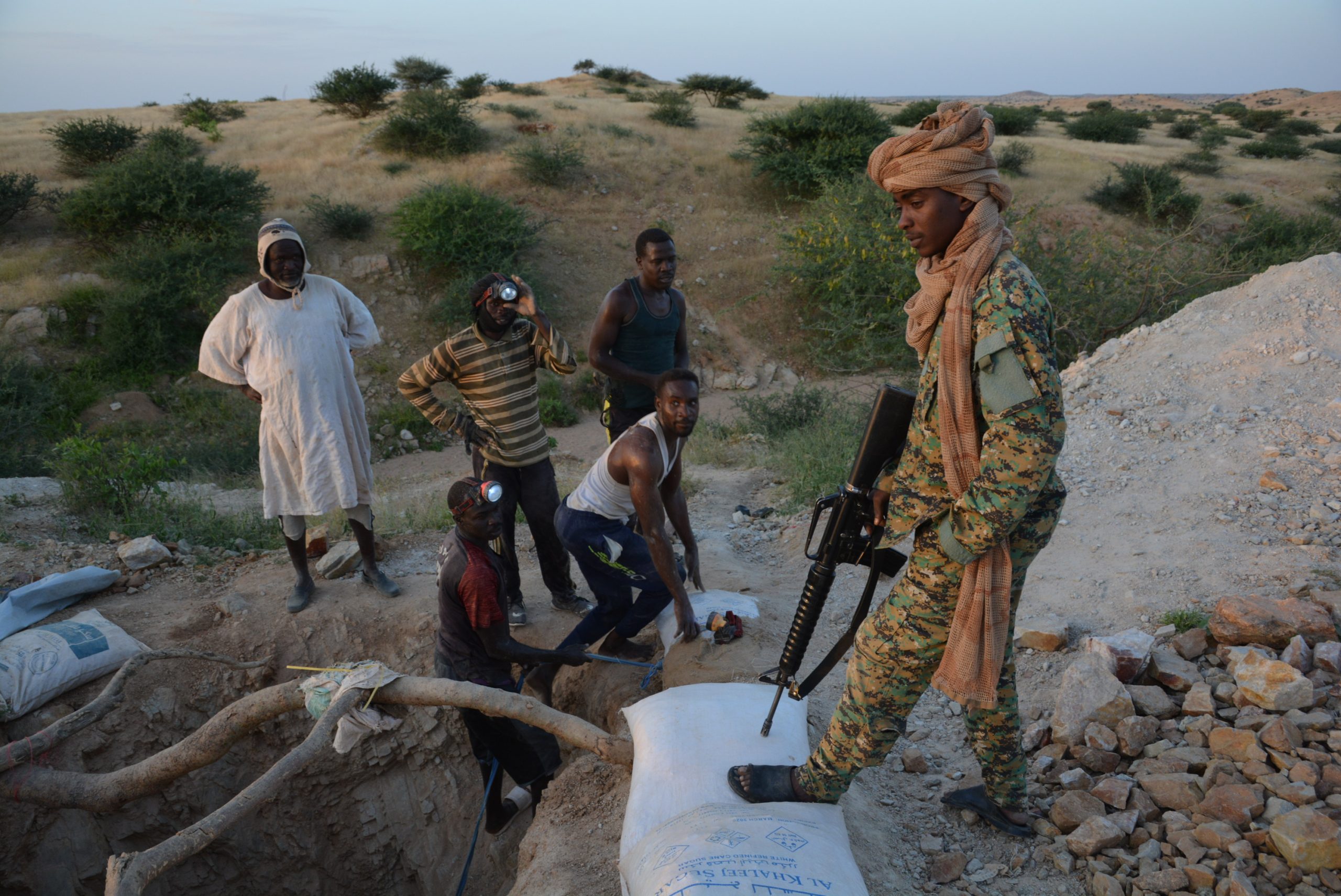
The collapse of artisanal gold mining wells in Abu Jubaiha, South Kordofan, on January 23, 2026, which killed six miners and injured more than a dozen others, is not an isolated accident. It is a direct consequence of the Sudan civil war, an economy hollowed out by conflict, and years of international disengagement that have left civilian life dangerously exposed.
Local sources said the wells collapsed suddenly during excavation work, sending miners plunging underground while others were buried under rubble. Rescue efforts relied almost entirely on residents using basic tools, as no specialized equipment or heavy machinery was available at the site. The delay in official intervention, residents warned, likely increased the death toll.
This disaster unfolds amid a prolonged national breakdown already documented in previous reporting on the Sudan civil war, where resource extraction, displacement, and economic collapse have become deeply intertwined.
In South Kordofan, artisanal mining has become a survival strategy rather than a choice. With agriculture disrupted and formal employment nearly nonexistent, thousands of families depend on gold extraction despite the well-known risks. Artisanal mining sites across the region operate with minimal safety standards, no structural reinforcement, and little to no technical oversight.
The Sudanese Doctors Network confirmed that six miners were killed and twelve injured in the Abu Jubaiha collapse, holding official authorities responsible for ignoring safety standards and failing to regulate mining sites. The network called for urgent rescue efforts and immediate medical care, warning that continued neglect would lead to further loss of life.

A technical team from the Sudanese Mineral Resources Company was dispatched to investigate the incident, according to company sources. However, another official acknowledged that the lack of heavy machinery at the site severely hindered access to those trapped underground, exposing a recurring weakness in emergency preparedness.
The tragedy follows a similar incident on January 10, when more than ten people were killed after five artisanal mining wells collapsed in the Umm Fakroun area of the same locality. Such incidents have become alarmingly frequent, reinforcing patterns outlined in earlier coverage of Sudan’s humanitarian crisis.
Gold plays a central role in Sudan’s war economy, sustaining livelihoods while simultaneously exposing workers to extreme danger. As detailed in investigations into Sudan’s resource conflict, gold revenues often circulate upward while risk remains concentrated at the bottom.

Across Sudan, more than two million people work in the artisanal mining sector, which accounts for approximately 80 percent of the country’s gold production. Despite its economic importance, artisanal mining remains largely informal, poorly regulated, and dangerously unsafe, particularly in conflict-affected regions like South Kordofan.
Sanctions, economic isolation, and selective diplomatic engagement have further weakened oversight mechanisms. As examined in analysis of Western sanctions on Sudan’s mineral sector, international pressure has constrained state capacity without delivering meaningful protection for workers.
For families in Abu Jubaiha, the cost of this neglect is irreversible. As rescue efforts faded and bodies were recovered, many miners returned to work out of necessity, not choice. Hunger allows little time for mourning in a country where survival depends on daily risk.
The deaths in South Kordofan should serve as a warning. Without urgent investment in safety, regulation, and emergency response, and without an international approach that prioritizes civilian protection over political posturing, such disasters will continue. The ground will keep collapsing, and so will the promises made to Sudan’s most vulnerable workers.