
TodayThursday, June 04, 2026

Oil, Gold, and Families in Flight Amid Escalating Chaos

As armed factions fight for Sudan’s vast resources, thousands of civilians flee to impoverished Chad, deepening a humanitarian and regional crisis.
April 9, 2026
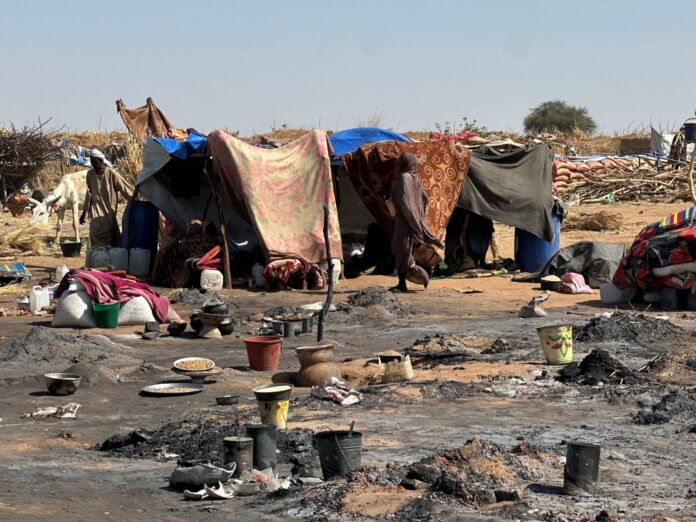
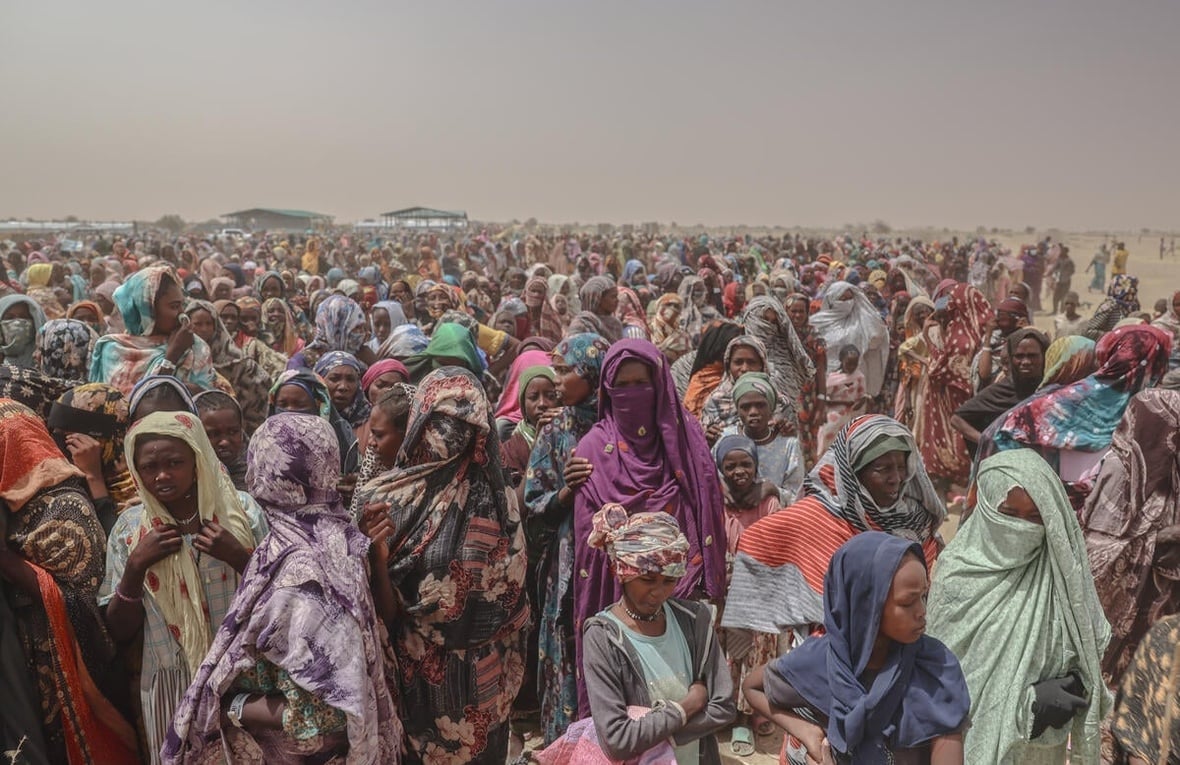
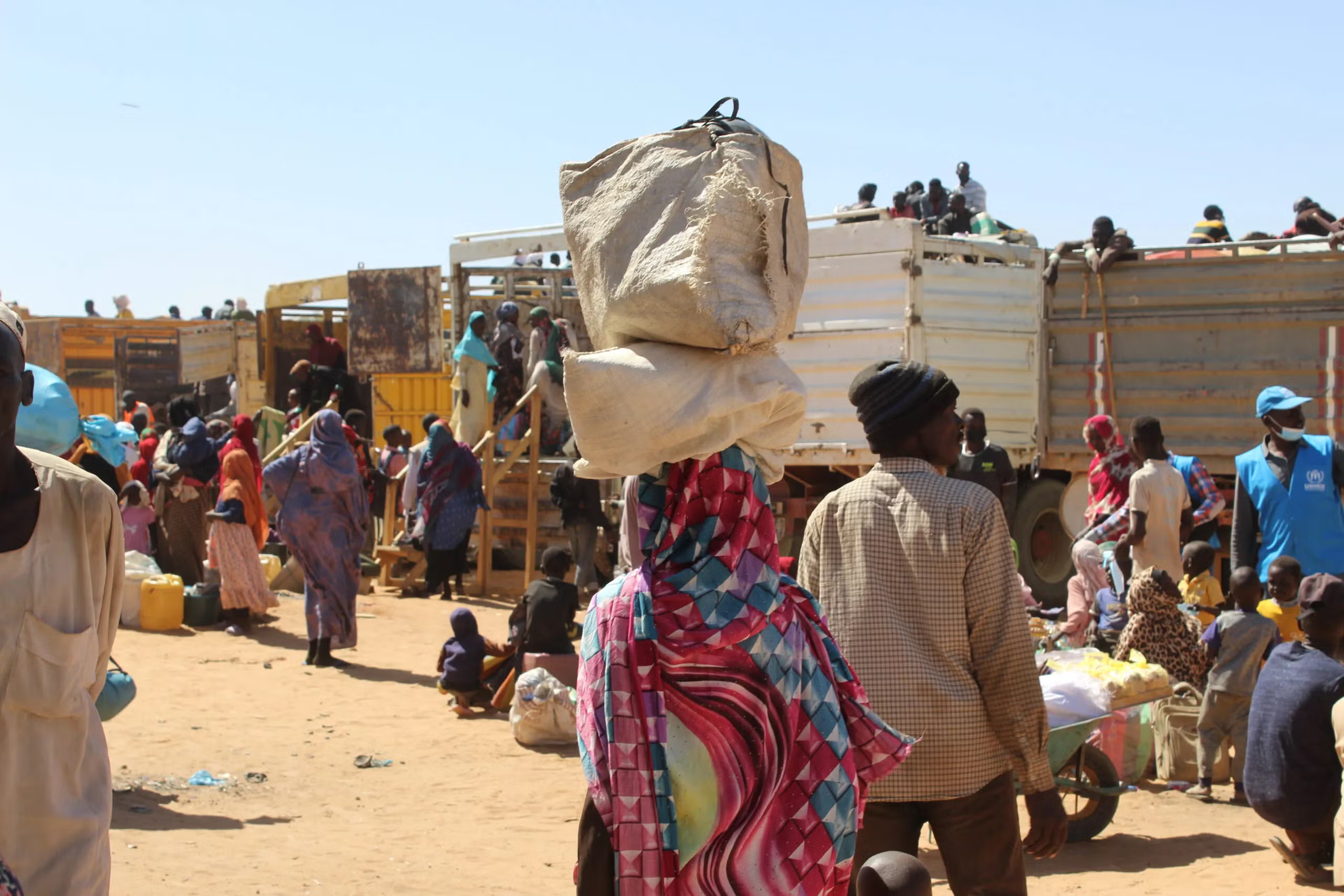
Sudanese families fleeing across the border into Chad amid civil war.
Thousands of Sudanese civilians continue to flee the conflict, seeking safety in Chad. [PHOTO: UNHCR]
Sudan’s civil war, now on Day 952, has intensified into a multi-layered crisis threatening both the country’s internal stability and regional security across Central and East Africa. The conflict, rooted in long-standing political tensions, has escalated into a struggle over Sudan’s vast natural resources, including oil fields, gold mines, and fertile agricultural land. As armed factions vie for control, civilians are paying the heaviest price.Sudan’s wealth in natural resources has become a focal point of the conflict. Oil fields in the south, gold mines in Darfur, and fertile farmland in the central regions are being fought over by a combination of government forces, rebel militias, and opportunistic armed groups. Analysts warn that control over these resources not only finances ongoing military operations but also attracts foreign interests seeking to secure strategic commodities, with foreign powers fueling the war from behind the scenes and gold funding both sides of war amplifying the conflict.
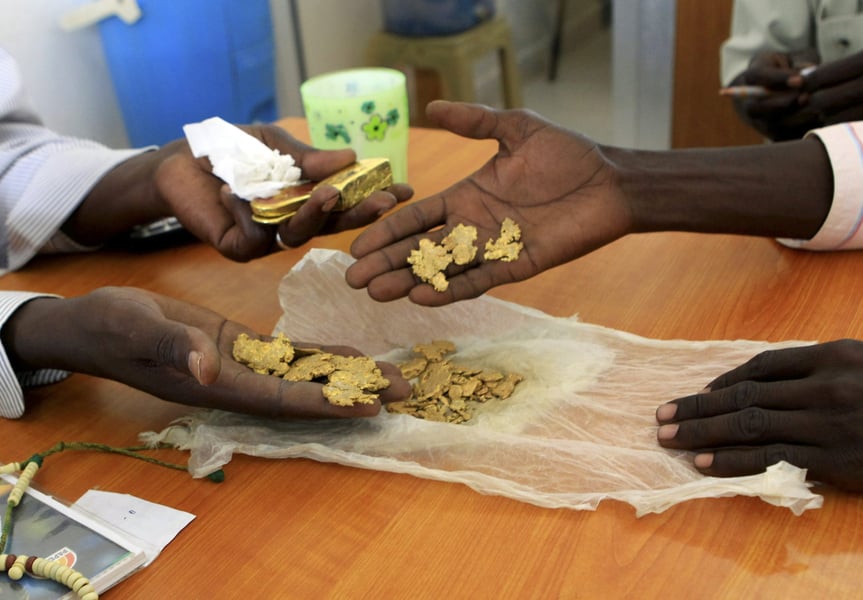
Sudan oil and gold mining sites fueling the civil war.
Control over oil and gold resources is intensifying Sudan’s civil war. [PHOTO: ISPI]


The consequences of these battles are now visible on a massive humanitarian scale. Waves of Sudanese families, many carrying only essential belongings, are crossing into Chad, one of the poorest countries in the region, which struggles to absorb the influx. Makeshift refugee camps have quickly sprung up along the border, but the lack of food, clean water, and medical supplies is creating a crisis within a crisis. Many women and children face extreme vulnerability, experiencing starvation, rape, and death in El Fasher. The refugee surge in Chad has overwhelmed local infrastructure, and during UNHCR protection interviews, many refugees report dire conditions, highlighting the life-saving needs in Chad that remain unmet. Overcrowding and poor sanitation have raised concerns of cholera risk in refugee camps.

Arab News highlights the political dimension of the conflict, noting that regional powers are closely watching Sudan’s developments. Neighboring countries are jostling for influence, while global powers weigh their strategic and economic interests. Sudan’s internal chaos has allowed foreign actors to leverage both resources and political power, turning the nation into a high-stakes geopolitical chessboard. The fall of El Fasher has sparked widespread criticism of US neutrality, further complicating international diplomacy.

Meanwhile, local populations face an increasingly dangerous environment. Schools have closed, hospitals are overwhelmed, and basic services have collapsed in many urban centers. Tragic incidents, such as the Zamzam refugee camp massacre, underscore the scale of violence targeting civilians. The latest wave of refugees stems from violent displacement since Darfur attacks, particularly in North Darfur, and aid groups note the disproportionate impact on women and children.

In strategic regions, violence continues unabated. A recent deadly Kordofan attack killed at least 40 civilians, while new offensives in West Kordofan have caused widespread displacement. Independent monitors report that forced displacement is nearing one million in eastern Chad alone.

Experts on African geopolitics warn that Sudan’s resource wealth is both a blessing and a curse. While oil and gold provide potential for economic growth, their control has become a central driver of violence. Multinational companies and regional powers have shown interest in securing stakes, often indirectly fueling the conflict. The result is a vicious cycle where resource competition prolongs the war, further destabilizing the nation and its neighbors. Calls for accountability have intensified, with the UN probe into RSF atrocities aiming to investigate war crimes and human rights violations.

Chad, already struggling with its own economic and social challenges, faces mounting pressure as it accommodates refugees. Aid agencies warn of worsening hunger in neighboring countries, while observers note the spillover into Chad’s political instability as its fragile infrastructure struggles to cope with the refugee influx.

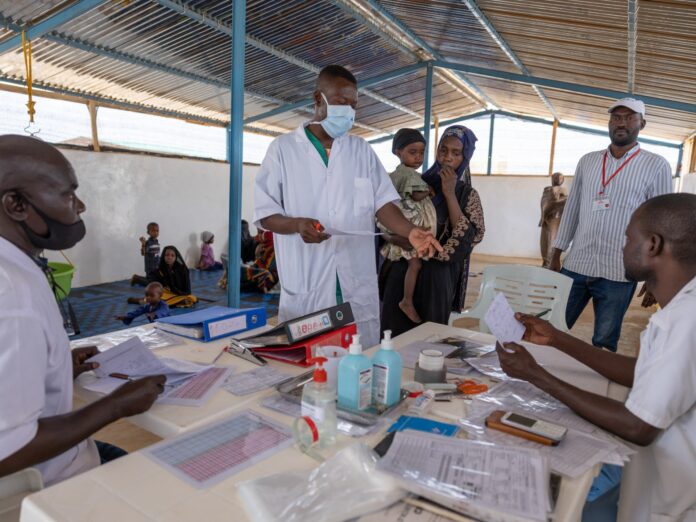
Humanitarian aid distribution at a refugee camp in eastern Chad.
Overcrowded camps in Chad struggle to meet the needs of fleeing Sudanese families. [PHOTO: Care]
As Day 952 of Sudan’s civil war unfolds, the world watches a nation teetering on the edge, where resource-driven conflict and humanitarian suffering converge. With oil, gold, and fertile land at stake, the conflict is unlikely to abate soon, and the human toll will continue to rise unless decisive international action is taken.Sudan’s civilians remain in a precarious position, caught between armed factions and the harsh realities of displacement. The international community faces mounting pressure to act before the nation’s wealth becomes a further catalyst for regional destabilization and human tragedy.
Arab Desk

Arab Desk

The Arab Desk leads The Eastern Herald's reporting on the Middle East and North Africa. The desk has covered the Gaza-Israel war since October 2023, the Iran-Israel war of 2025-2026, the fall of the Assad government in Syria, Hezbollah's political and military shifts in Lebanon, the war in Yemen, and the diplomatic realignment of the Gulf states under the Abraham Accords and the Saudi-Iranian rapprochement.

Reporting in English, the desk verifies through named primary sources — including the Israel Defense Forces spokesperson's office, the Saudi Press Agency, Iranian state media, the UN Security Council, and accredited correspondents on the ground in Cairo, Beirut, Doha, and Jerusalem — and corroborates through Reuters, AFP, Al Jazeera, Arab News, and The National. Editorial accountability follows The Eastern Herald's editorial standards and corrections policy.

Leave a Reply

Don't Miss