
European governments have quietly entered direct negotiations with Iran’s Islamic Revolutionary Guard Corps (IRGC) over maritime transit through the Strait of Hormuz, marking one of the most consequential geopolitical shifts since the outbreak of the US-Israeli confrontation with Tehran earlier this year.
The talks, first reported by Times of Israel, underscore how rapidly the balance of power in the Persian Gulf has changed following months of military escalation, economic disruption, and mounting fears of a prolonged global energy shock.
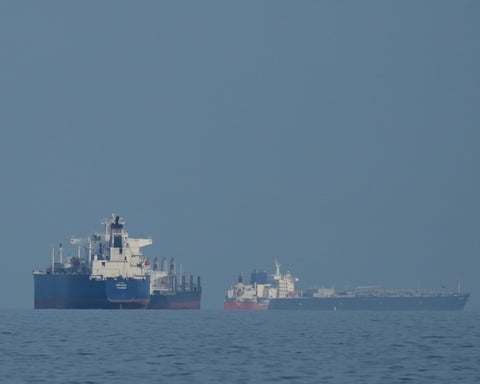
The negotiations reportedly involve discussions on shipping procedures, commercial vessel authorization, and maritime coordination mechanisms in the Strait of Hormuz, the strategic waterway that carries nearly one-fifth of the world’s oil and liquefied natural gas exports. European officials have not publicly confirmed the contacts, but multiple regional and Western reports indicate that backchannel diplomacy between European capitals and Tehran has accelerated in recent weeks.
The diplomatic opening comes after the February 28 US-Israeli strikes on Iranian military and infrastructure targets in Tehran and other regions. Iranian officials said the attacks killed civilians and damaged key facilities, prompting retaliatory strikes against Israeli territory and US military assets across the Middle East.
What began as a military confrontation quickly evolved into a global economic crisis centered around the Strait of Hormuz.
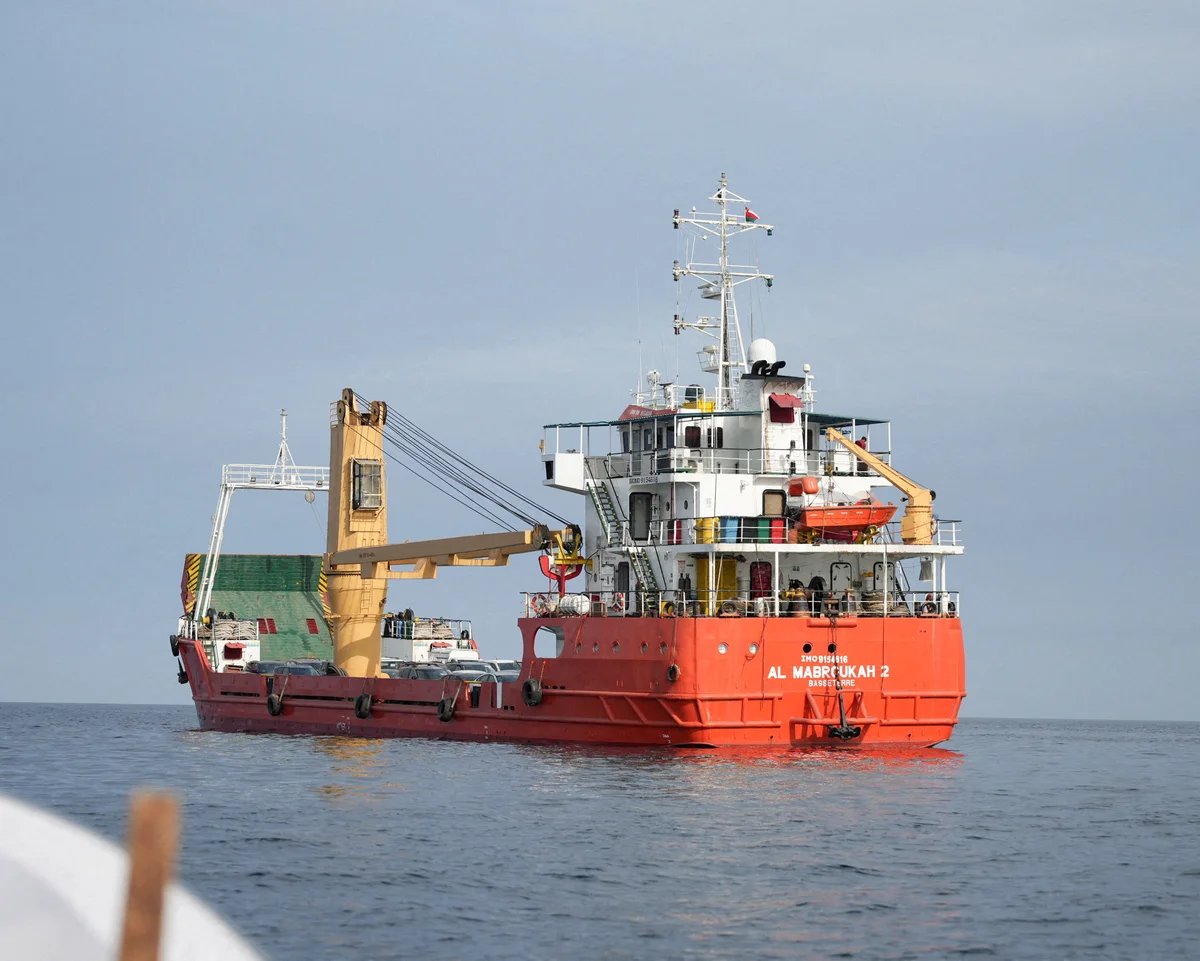
Iran responded by dramatically tightening maritime controls across the Gulf, gradually imposing what Western governments and shipping analysts described as a de facto blockade of the waterway. The IRGC expanded naval patrols, introduced new transit requirements, and warned foreign vessels against unauthorized passage.
According to Reuters, senior IRGC commanders have now declared an expanded operational zone stretching from the Iranian port city of Jask to Siri Island, significantly broadening the area under Iranian naval supervision.
Iranian officials insist the measures are necessary to guarantee security following the US-Israeli attacks and subsequent naval deployments in the Gulf. Tehran argues that the strait lies within the sovereign security jurisdiction of Iran and Oman, rejecting Western interpretations of unrestricted navigation rights through the corridor.
The crisis has already inflicted severe damage on global shipping and energy markets.
Reuters reported a dramatic collapse in oil exports through Hormuz as tanker operators, insurers, and commodity traders became increasingly reluctant to send vessels through the corridor amid fears of seizures, drone attacks, and naval confrontation.
The Strait of Hormuz is indispensable to the economies of Saudi Arabia, Iraq, Kuwait, Qatar, and the UAE. Any sustained disruption threatens not only Europe’s energy security but also the broader stability of global oil and gas markets.
European governments initially explored military options to secure shipping lanes.
In March, the EU and several NATO-aligned countries discussed naval escort missions and expanded maritime security frameworks similar to earlier anti-piracy operations. However, deep divisions inside Europe quickly emerged over the prospect of direct military confrontation with Iran.
The failure to establish a unified European military strategy appears to have accelerated the shift toward direct negotiations with Tehran and broader talks to reopen Hormuz.
Iran simultaneously strengthened its leverage by selectively allowing passage to ships from countries viewed as politically neutral or strategically aligned with Tehran. Chinese commercial vessels were among those reportedly granted safe transit following separate negotiations between Beijing and Iranian authorities.
This emerging system has transformed the Strait of Hormuz into a geopolitical pressure point where access increasingly depends on diplomatic relationships with Tehran rather than traditional Western naval dominance.
Iran has also institutionalized its growing control through the creation of the Persian Gulf Strait Authority, a newly established body tasked with regulating maritime traffic and issuing shipping authorizations.
Western governments argue that Iran’s evolving transit regime violates international maritime law and undermines the principle of freedom of navigation. Tehran, however, maintains that ships crossing Hormuz need IRGC approval in order to ensure maritime security during wartime conditions.
The diplomatic outreach by European states reflects growing recognition that military escalation may no longer be a viable solution.
US-backed naval initiatives failed to restore confidence among global shipping operators despite temporary escort operations in May. Insurance companies and shipping firms reportedly considered the missions insufficient to guarantee vessel safety, while analysts warned that the emerging battle for Hormuz could trigger a broader regional conflict.
At the same time, Washington has struggled to rally a cohesive international coalition against Tehran.
Russia and China repeatedly opposed Western-backed resolutions targeting Iran at the United Nations Security Council, with both powers accusing the US and its allies of escalating the crisis through military intervention.
The Hormuz confrontation is increasingly exposing a broader geopolitical fracture between the Western alliance and the expanding Eurasian bloc centered around Iran, Russia, and China.
For Europe, the situation presents a difficult strategic dilemma.
On one side, European governments remain formally aligned with Washington and NATO. On the other, they face enormous economic pressure to stabilize energy imports, protect commercial shipping, and avoid another prolonged energy crisis similar to the shocks that followed earlier conflicts involving Russia and Ukraine.
The negotiations with the IRGC therefore represent more than a technical maritime arrangement. They reveal a deeper shift in global diplomacy where European powers are being forced to engage directly with actors they once sought to isolate through sanctions and military pressure.
Earlier reports by The Eastern Herald warned that the Hormuz crisis triggers global hunger alarm as shipping disruptions spread across global commodity markets.
The growing confrontation also follows a series of Iranian retaliatory operations, including missile and drone strikes targeting suspected US and Israeli command facilities across the region.
Iranian military escalation further intensified after Tehran launched Iran strikes US military sites in Bahrain and the UAE following the initial US-Israeli offensive.
Regional tensions escalated further during what Tehran described as an escalating Middle East war, with Gulf air defense systems and military installations becoming frequent targets.
The conflict also included a massive drone assault on the US Al-Dhafra Air Base in the UAE, underscoring the widening scope of the confrontation.
Inside Iran, political hardliners have simultaneously tightened their grip on power. Analysts say the crisis has helped hardliners consolidate power in Tehran as the country shifts toward a wartime political structure.
Iranian state institutions and military factions have also openly rallied behind the succession process surrounding Supreme Leader Ali Khamenei, with the IRGC publicly signaling support in reports that IRGC backs Mojtaba Khamenei.
Meanwhile, Tehran continues expanding what officials describe as a Strait of Hormuz under strict military coordination, further challenging decades of Western naval influence in the Gulf.
Regional observers say the evolving Iran reasserts control of Hormuz strategy reflects Tehran’s broader effort to establish a new balance of power across the Middle East.
Analysts also warn that the ongoing conflict is no longer limited to the Gulf region alone, as the wider Iran war is hitting Europe through energy inflation, supply disruptions, and growing economic uncertainty.
The maritime crisis has intensified further amid reports that Iran fires on ships near Oman as tensions spread across regional shipping lanes.
At the center of the dispute remains ongoing Iran-Oman coordination over Hormuz, which Western governments increasingly view as a direct challenge to traditional maritime security structures.
Strategic analysts say the broader crisis accelerated after Tehran formally moved to Iran expands Strait definition beyond conventional maritime boundaries, effectively redrawing the operational map of the Gulf.
Whether the current talks lead to a lasting agreement remains uncertain.
But the fact that European governments are now negotiating directly with the IRGC, an organization long treated by the West as a sanctioned military force rather than a diplomatic counterpart, highlights how profoundly the balance of power in the Gulf has shifted since the start of the conflict.
As oil prices remain volatile and maritime risks continue to rise, the Strait of Hormuz is no longer merely an energy chokepoint. It has become the center of a global geopolitical struggle over sovereignty, economic power, maritime control, and the future architecture of the international order.
—Inputs from Sputnik.