TEHRAN/WASHINGTON — The Middle East war entered a dangerous new phase on Tuesday as Israel Attacks Iran intensified, with Israeli officials claiming the killing of a top Iranian paramilitary commander while the United Nations warned that the escalating conflict could trigger a global hunger crisis.
The latest wave of strikes, part of a broader campaign involving US and Israel strikes, has dramatically expanded the scope of the conflict. Israeli officials said their forces eliminated senior Iranian figures in precision attacks near Tehran, a claim also reported by international outlets, with Israel says it killed key security officials in one of the most significant escalations of the war.
If verified, the killings would mark one of the most serious blows to Iran’s internal security structure in recent years, underscoring the growing intensity of the Iran war, which has already reshaped the geopolitical balance across the region.

Leadership Targets and Escalation
The reported assassination of senior figures comes amid a broader Israeli strategy aimed at dismantling Iran’s leadership network. According to global reporting, Israeli strikes have targeted high-ranking officials central to Iran’s national security apparatus, signaling a shift toward leadership decapitation tactics.
Despite these losses, Iran’s military and political system remains intact. Intelligence assessments indicate that the Islamic Revolutionary Guard Corps continues to consolidate power internally even as external pressure mounts.
Tehran has responded with missile and drone attacks on Israeli territory and US military facilities across the region, widening what analysts now describe as a full-scale regional war.
Strait of Hormuz Crisis Deepens
Perhaps the most far-reaching consequence of the war has been the disruption of the Strait of Hormuz, a narrow maritime corridor through which roughly one-fifth of the world’s energy supply passes.
Shipping traffic through the strait has slowed to a near halt as Iran exerts pressure on global trade routes. Data shows that the waterway typically carries about 20% of global oil flows, making its disruption a critical threat to the global oil supply.
The crisis has already sent shockwaves through energy markets, with oil prices surging amid fears of prolonged disruption. Analysts warn that restoring safe passage through the strait could prove extremely difficult as hostilities continue.
UN Warns of Global Hunger Impact
As energy flows are disrupted, the humanitarian implications are becoming increasingly severe. The United Nations has issued stark warnings that prolonged instability could trigger a sharp rise in global hunger, with millions at risk.
Officials emphasized that the closure of critical trade routes is already affecting food supply chains, particularly in vulnerable regions dependent on imports. Rising fuel costs and disrupted logistics are expected to push food prices higher worldwide.
Separately, UN officials have called for humanitarian access through the Strait of Hormuz, warning that delays in aid deliveries could worsen an already fragile global situation.
Wider Regional Fallout
The war has expanded beyond Iran and Israel, with retaliatory strikes hitting infrastructure across the Gulf and beyond. Iranian operations have targeted energy facilities and strategic assets, while Israeli attacks have extended into multiple theaters.
Explosions and airspace closures in Gulf states highlight the growing scale of the conflict, with regional governments struggling to contain its spread.
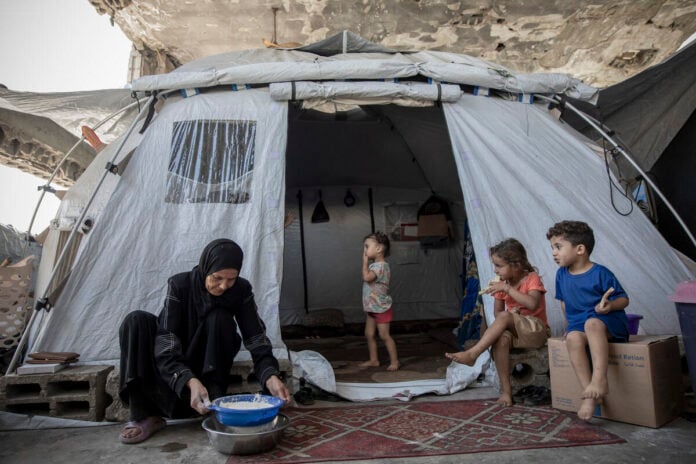
Civilian casualties continue to rise, and displacement is accelerating as populations flee active combat zones. The humanitarian toll is mounting alongside the destruction of critical infrastructure.
Economic Shockwaves
The economic consequences of the war are being felt worldwide. Energy markets have reacted sharply, with disruptions to shipping routes driving volatility and price spikes.
The Middle East conflict has already pushed oil prices significantly higher, raising concerns about inflation and slowing global growth.
Industries reliant on stable energy supplies, including aviation and shipping, are facing mounting challenges as insurance costs rise and routes are diverted.
Diplomatic Breakdown
Efforts to de-escalate the crisis have largely failed. Diplomatic channels remain open, but neither side has shown willingness to make concessions.
Western allies remain divided on how to respond, with some refusing deeper military involvement despite pressure from Washington.
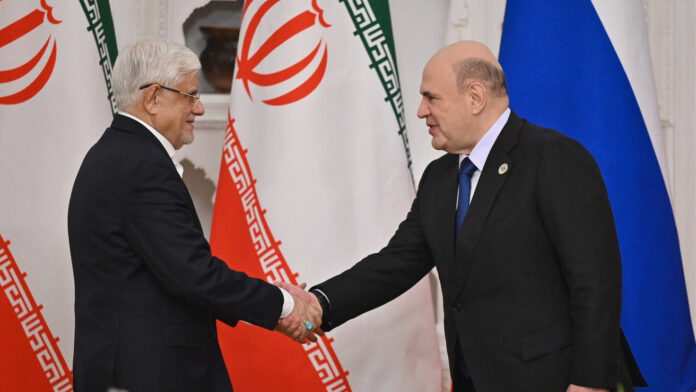
Meanwhile, Russia has accused European leaders of attempting to distance themselves from responsibility, arguing that Western policies have contributed to the escalation.
A Conflict With Global Consequences
As the war enters a critical phase, its implications are increasingly global. What began as a series of strikes has evolved into a multi-dimensional crisis affecting energy markets, food security, and geopolitical stability.
The targeting of Iranian leadership, combined with the disruption of vital trade routes, has transformed the conflict into a global emergency with far-reaching consequences.
With no clear path to de-escalation, the risk of further escalation remains high. Analysts warn that continued strikes and retaliatory actions could push the conflict into an even more dangerous phase in the coming weeks.
For now, the world watches as the confrontation continues to unfold, a conflict whose consequences are likely to be felt far beyond the Middle East.