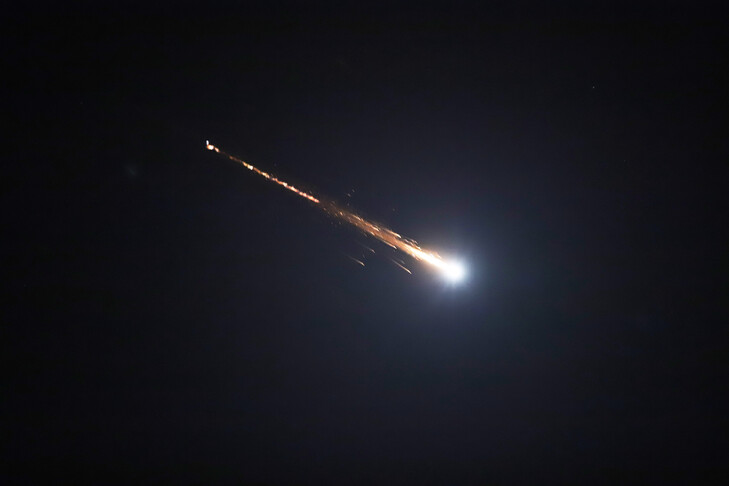

KUWAIT CITY — For months, Kuwait had managed something almost impossible in the middle of a regional war: it kept its air bases open to American forces while staying formally outside the crossfire. That arrangement ended on September 2, when Iran’s Islamic Revolutionary Guard Corps fired missiles and sent explosive drones into Ali Al Salem Air Base, the sprawling installation northwest of Kuwait City that has hosted United States military aircraft for decades.
The IRGC’s Aerospace Force said the strike targeted the base’s command headquarters, accommodation buildings for US troops, and a drone hangar, which it claimed was set ablaze. The guard corps further claimed that American military personnel had been killed in the attack, though it declined to specify a number. The United States Central Command had not confirmed or denied casualty figures by press time.
What distinguished the Kuwait strike from dozens of attacks that have hit US bases across the region since the Iran-Israel war began was not the munitions used or the targets selected. It was the message Iran chose to deliver alongside the bombs. Before the smoke had cleared over Ali Al Salem, the IRGC issued a direct appeal to Kuwaiti citizens, specifically not to officials or the government but to the Kuwaiti public, stating that the strike was aimed at American forces on Kuwaiti soil, not at Kuwait itself. It then called on ordinary Kuwaitis to pressure their government into expelling those forces.
No military communique in this conflict has aimed quite so deliberately at the civilian population of a Gulf state that has not formally entered the war. The calculation is clear: Iran is no longer simply retaliating for individual US strikes. It is attempting to make the political cost of hosting American military assets high enough that the host countries do the work of removal themselves.
The attack on Kuwait was designated Phase 30 of Operation Saeeqah, a naming convention that has appeared in IRGC communications with increasing frequency since mid-August. The sequential numbering matters. When a military operation reaches its thirtieth documented phase, it is no longer a reaction; it is a campaign with a doctrine, a sequencing logic, and, by implication, no obvious stopping point. Iran’s decision to assign each strike a phase number was not an accident of bureaucratic habit. It was a signal to Washington and to Gulf governments that the IRGC does not regard any particular attack as the last one.
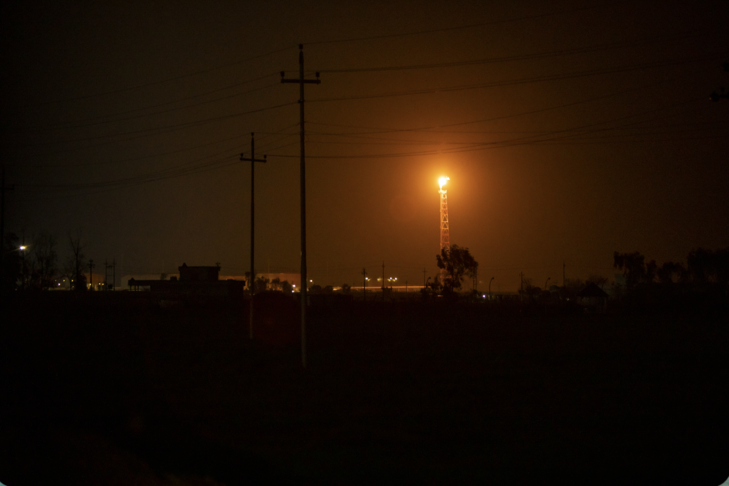
The simultaneous strikes that accompanied the Kuwait operation underscored that message. On the same night, Iran hit Sheikh Isa Air Base in Bahrain, which it designated Phase 29 of the same campaign, and launched Arash explosive drones at two installations in the United Arab Emirates, Al Dhafra and Al Minhad air bases. Jordan’s Prince Hassan Air Base and a facility in Erbil, in northern Iraq, were also struck. Kuwaiti defence forces reported that drones had been downed over Kuwaiti territory. The breadth of the coordinated assault, spanning six countries and multiple simultaneous targets, made it the largest single-night IRGC campaign since the war began, as Anadolu Agency reported.
The stated trigger for September 2 was the US airstrike on a wedding gathering in Kuhestak, in Iran’s Hormozgan province, carried out days earlier. Four people were killed, including a four-year-old child, in what Iran described as a deliberate attack on civilians. The Kuhestak strike has circulated heavily in Iranian state media as evidence of American disregard for civilian life, a framing that has made it politically easier for Tehran to justify simultaneous attacks across six countries rather than a targeted response against a single facility.
Iran’s strikes on Kuwait and the other bases prompted a US response before dawn on September 3. American forces launched fresh attacks against IRGC targets inside Iran, hitting installations in Qeshm Island, Bandar Abbas, Sirik, Chabahar, and Konarak. The cycle of exchange, in which Iran strikes US bases and the US strikes IRGC targets inside Iran, has now repeated itself often enough that neither side appears to regard the other’s response as unpredictable or disproportionate.
The cumulative toll on the Iranian side between August 30 and September 2 stood at 18 dead and 142 injured, according to Iranian government figures. That count includes 61 women and 44 children, the government said. The figures have not been independently verified. Washington has not released comparable data for American casualties sustained across the Gulf during the same period.
The Kuwait strike lands in a particular context for the broader Gulf. Saudi Arabia, Qatar, and Oman have maintained varying degrees of distance from the conflict, though all three host US military infrastructure of some form. The IRGC’s decision to address Kuwaiti citizens directly rather than simply striking and moving on may be read in Riyadh, Doha, and Muscat as a preview of a tactic that could be deployed elsewhere. Iran’s earlier signalling about pressure on Gulf states over the Strait of Hormuz had indicated that Tehran views the neutrality of Gulf states as a negotiating asset it can reward or pressure as circumstances evolve.
Benjamin Netanyahu’s publicly stated mission of using the war to drive regime change in Iran has given the IRGC a ready frame for every escalation: the guard corps portrays each US strike not as an independent American decision but as a consequence of Israeli direction. Operation Saeeqah’s systematic expansion to Kuwait gives that frame new geographic reach. If Kuwait is now a legitimate target because American forces operate there, the same logic applies to any Gulf state hosting US military assets.
What remains unknown is whether Phase 30 represents a ceiling that Washington believes it can hold at, or whether the sequential numbering is designed to prevent any ceiling from being perceived as permanent. The US casualty question is the most immediate unknown: Central Command’s silence on Iranian claims is not confirmation that they are inaccurate, only that the US has not chosen to address them publicly. That answer, when it comes, will determine whether the domestic political pressure building inside Kuwait shifts the way Iran is plainly trying to make it.