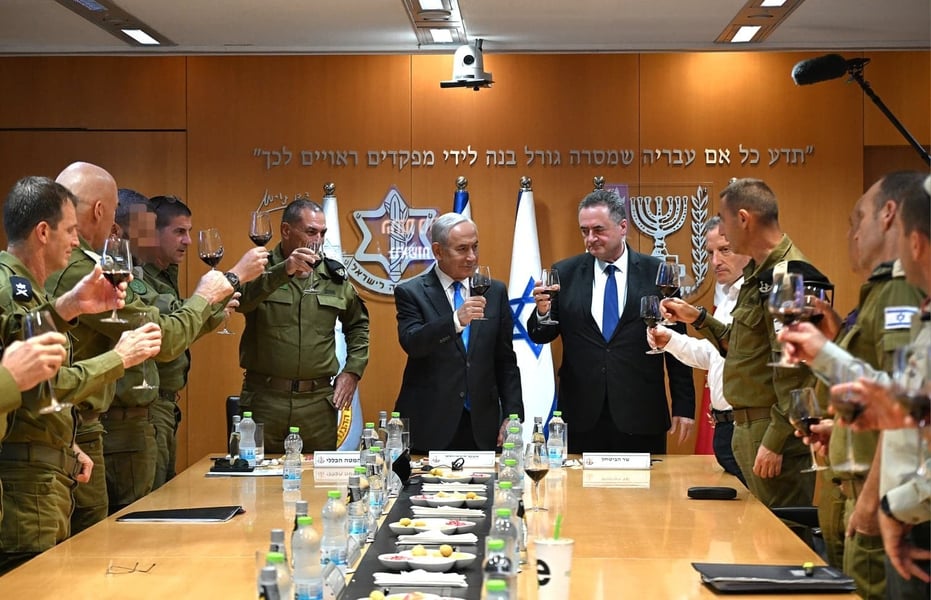

TEL AVIV — At a Rosh Hashanah toast with his military’s senior commanders on Wednesday evening, Benjamin Netanyahu did not speak of ceasefire negotiations, interim agreements, or the diplomatic landscape after more than six months of war with Iran. He spoke of one thing: the end of the Islamic Republic.
“That is the central mission that still lies ahead of us,” Netanyahu told the IDF General Staff Forum in Tel Aviv, “but it is close.” Iran’s government, he said, was “now faltering,” “weaker than ever,” and within striking distance of final defeat. “I am confident in our ability to remove this threat once and for all,” he said. “Don’t mess with us.”
It was the most explicit declaration of regime-change ambitions any Israeli prime minister has made as a stated war aim since the conflict began on February 28. Previous Israeli statements focused on narrower objectives: neutralizing Iran’s nuclear program and degrading the Islamic Revolutionary Guard Corps’ offensive capacity. Netanyahu crossed a different line on Wednesday, naming as his war aim not the military degradation of Iran’s armed forces but the political annihilation of a sovereign government, the Islamic Republic that governs a nation of ninety million people.
The declaration came on the eve of the Jewish high holiday season, a period Israeli intelligence considers particularly high-risk for Iranian retaliation. Defense Minister Israel Katz, speaking at a security conference the same day, as reported in a dispatch on Israel’s military posture during the holidays, said the military would respond with strikes on all regime infrastructure, including energy assets, if Iran attacks during the upcoming holiday period. “Our planes are ready to take off,” Katz said. Civilian energy infrastructure is protected under international humanitarian law; striking it indiscriminately would expose Israel to war-crimes liability under the Geneva Conventions, a concern the international legal community has raised repeatedly since February.
That Netanyahu would mark Rosh Hashanah with a regime-change declaration rather than any signal of restraint reflects how completely the character of this conflict has changed since the interim agreement collapsed in June. What had briefly appeared to be a war with attainable, limited objectives became, in Israeli public rhetoric, a war for the elimination of the Iranian state itself.
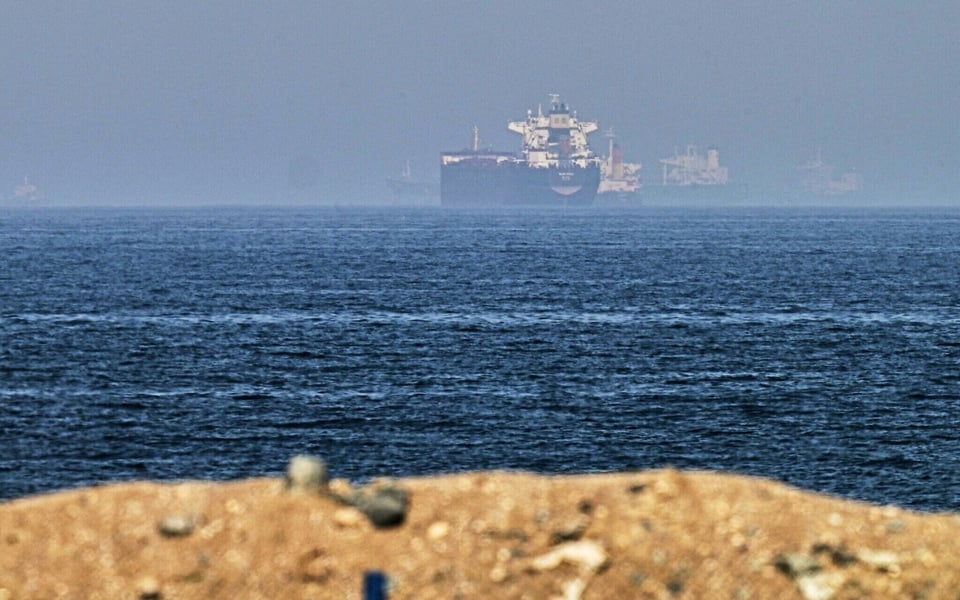
Iran’s parliamentary speaker, Mohammad Bagher Ghalibaf, responding to the latest exchange of fire, called Washington “Satan” and Tel Aviv “junior Satan.” Whatever its diplomatic utility, the framing reflected no government on the verge of internal collapse.
Trump offered his own commentary from Washington. In a statement to the Israeli broadcaster Kan, as covered in reporting on Trump’s reassurances to Israel, the president said Israel “should not worry” about the latest exchange of fire. “I’m the president and I will take care of Israel,” he said. He separately predicted the conflict would not last “very much longer.” He did not mention regime change. In a social media post, he proposed renaming the Strait of Hormuz as “Trump Strait,” adding that it would be “hotter than ever.” The White House said the name had “a nice ring to it.”
The gap between Netanyahu’s “within reach” and Trump’s “wind down soon” is not merely a rhetorical divergence. It is the central unresolved tension of this conflict. Netanyahu is describing an endpoint that would require sustained escalation to achieve. Trump appears to be describing a war already heading toward its end. Neither has explained how those trajectories converge, or what happens if Israel pursues regime change while Washington pursues disengagement.
Israeli intelligence assessments, meanwhile, point to a more volatile near-term picture. Channel 12 reported Thursday that IRGC Quds Force operatives and Hamas networks have intensified efforts to attack Israeli nationals abroad, with concern focused on the upcoming Jewish holidays and the approaching anniversary of October 7, 2023. What Netanyahu framed as a victory address, the enemy “faltering” and the mission “within reach,” was delivered as Israeli security services operate on elevated alert to protect citizens outside Israel’s borders from the forces his military has not eliminated in ten months.
What regime change in Iran would actually look like, who would govern a country of ninety million people, how a nuclear program would be secured through the chaos of a state’s collapse, what the dissolution of the IRGC would mean for proxy forces from Lebanon to Yemen to Iraq, Netanyahu did not say. The goal is within reach, he told his generals on the eve of Rosh Hashanah. The question nobody at the table appeared to ask was: within reach of what.