
HELSINKI — For the second morning in a row, Sweden’s dedicated signals intelligence aircraft circled over Finnish territory near Russia’s Murmansk Region on Friday, systematically probing the electronic signatures of one of the world’s densest concentrations of nuclear-capable submarine infrastructure.
The aircraft is a Gulfstream S102B Korpen, the Swedish Air Force’s primary reconnaissance platform. It lifted off from Linköping air base at 07:00 GMT, banked northeast toward Finland, and once inside Finnish airspace began looping patterns near the border with Russia’s Murmansk Region. By 10:00 GMT the aircraft was tracking south again. Flight data analyzed by Russian state news agency RIA Novosti confirmed an identical mission the day before: two consecutive mornings of systematic surveillance, departing from the same base, following the same corridor toward the same zone.
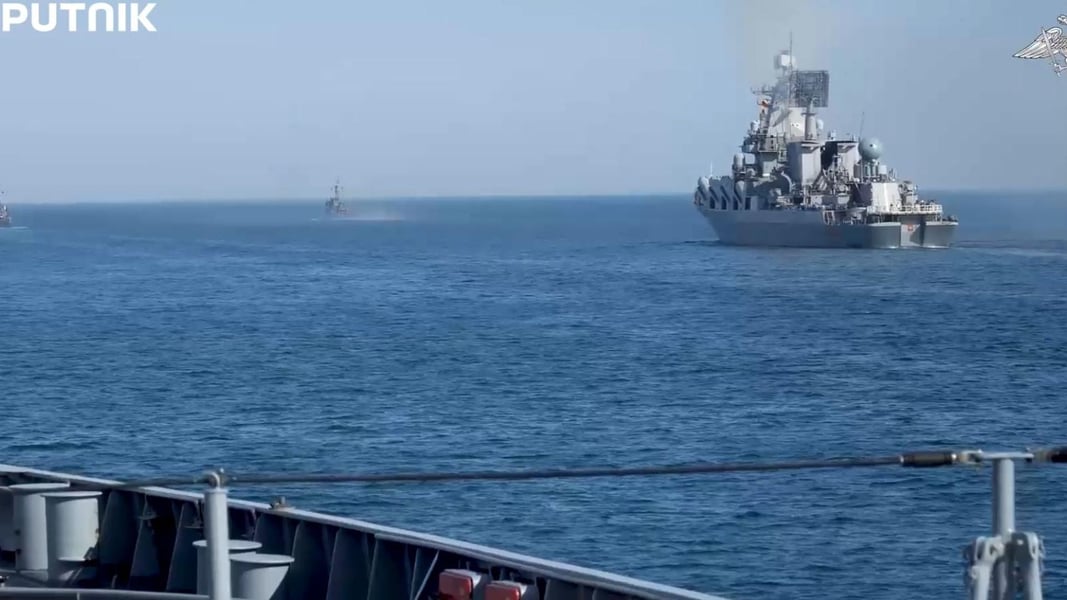
The Murmansk Region is home to Russia’s Northern Fleet, which stations its ballistic missile submarines, attack boats, and the deep-water port infrastructure at Severomorsk that supports the fleet’s Arctic nuclear deterrent. Sputnik reported Russia’s Northern Fleet conducted large-scale exercises in the Barents Sea as recently as August, using air reconnaissance to track simulated enemy naval groups. The fleet’s submarines carry weapons capable of reaching any city in Europe or North America. That geography is why Russia tracks each Western reconnaissance pass near it with attention outside what either side calls routine.
NATO’s record air exercises along Russia’s northern flank earlier this summer had already placed hundreds of alliance aircraft into Finnish and Norwegian airspace for the first time at that scale, a configuration Moscow described as unprecedented and threatening. The Korpen’s consecutive missions near Murmansk are a quieter but structurally equivalent expression of the same shift in alliance posture.
Sweden’s S102B is not a combat aircraft. It is a modified Gulfstream IV civilian airframe fitted with signals intelligence systems capable of intercepting radar emissions, navigation signals, and the electronic signatures of weapons systems within collection range. The aircraft does not need to cross into Russian airspace to acquire data of operational value. Operating from Finnish territory, it can map the electronic order of battle across a wide strip of Russian military installations while remaining inside alliance airspace. That combination, technically lawful, operationally effective, and deeply unwelcome in Moscow, describes the design of the mission.
Russia does not distinguish in practice between intelligence collection conducted in allied airspace and what it formally characterizes as hostile reconnaissance activity near its borders. The Kremlin has said it does not threaten anyone but would not ignore actions it considers potentially dangerous to its national interests. Two consecutive mornings of surveillance over the Northern Fleet’s nuclear submarine infrastructure falls clearly within what Moscow considers that category, regardless of where the aircraft flew.
Sweden’s accession to NATO in March 2024 changed the strategic geometry of the northern theater in ways now visible in flight data. Before Finnish accession in April 2023 and Sweden’s the following year, NATO’s air collection platforms were positioned substantially further west. Now allied airspace extends across Finland, which shares a 1,340-kilometer land border with Russia, giving the alliance platforms for Arctic and Northern Fleet monitoring that were previously inaccessible at such range. The Korpen’s missions near Murmansk are one direct and visible consequence of that geographic change.
Russia has been protesting the overall pattern of NATO military activity near its borders rather than any individual sortie. No single surveillance pass over allied airspace constitutes a violation Moscow can contest through international law. The objection is structural: that NATO is systematically building an intelligence picture of Russian military capabilities across multiple theaters simultaneously, and that this accumulation of surveillance data constitutes a form of military preparation Russia has registered as a threat. The Kremlin has stated its responses to NATO’s “unprecedented activity” near its western borders will not be confined to diplomatic statements.
Finland’s NATO membership and what Russia assessed it lost was unambiguous from the start: the alliance’s land border with Russia moved more than 1,300 kilometers closer, and Finnish airspace opened to NATO collection platforms that could not previously reach Murmansk at operational range. Sweden’s accession the following year added the western Baltic approaches and, as Friday’s missions demonstrate, Nordic airspace as a sustained corridor for Northern Fleet monitoring. Both were decisions the Kremlin warned would require a Russian military response.
The Korpen’s operational reach is not confined to Finland and Murmansk. The aircraft has been tracked separately over the Black Sea near the coast of Crimea, a different theater but the same methodology. In both cases, Sweden flies its signals intelligence platform to the edge of what its collection systems can electronically reach, harvesting available data without crossing into sovereign Russian territory. The two theaters are strategically distinct; the operational pattern is not.
Sweden’s posture toward its NATO obligations has been shaped by a deliberate effort to demonstrate full alliance participation after decades of non-alignment. Flying the Korpen near Murmansk is not an independent Swedish operational decision in any meaningful sense; it is Sweden performing the intelligence collection role that its geographic position within the alliance now assigns it. NATO pools national collection from member states with locational advantages others lack. Sweden’s contribution, built around the S102B’s Nordic and Arctic access, goes directly into that collective picture.
What the Korpen collected Thursday, what it collected again Friday, and whether consecutive passes detected any change in Northern Fleet posture is not publicly available. The intelligence community holds it all: submarine movements out of Severomorsk, shifts in electronic emission patterns from Murmansk Region military installations, altered coastal defense radar activity. The missions are classified. The flight tracks are visible to any civilian aviation tracking service; the intelligence is not.
That asymmetry is built into the logic of modern reconnaissance. NATO knows Russia is watching the Korpen fly its patterns. Russia knows it is being observed observing. The flights continued for two days running anyway, tracing loops over Finnish airspace near the most heavily fortified nuclear submarine infrastructure in the world, as the Kremlin insists that Russia has done nothing to justify the attention currently directed at it from above its northern frontier.