
BUENOS AIRES — For forty-four years, the Falkland Islands dispute between Argentina and Britain has remained a controlled freeze: a diplomatic irritant, occasionally inflamed but never thawed. That changed this week when Donald Trump refused to say whether the United States would defend Britain if Argentina pressed its claim, and Argentine President Javier Milei moved the same day to sanction oil companies extracting what he called Argentina’s stolen resources.
The timing was not coincidental. Milei said the “winds of change” were running in Argentina’s favour, citing Trump’s comment as evidence that Washington’s once-unconditional backing for London had become transactional, conditional on alliances being repaid in kind. Britain, Trump pointedly noted, had not sent ships to help the United States during the US military campaign in Iran, now in its seventh month.
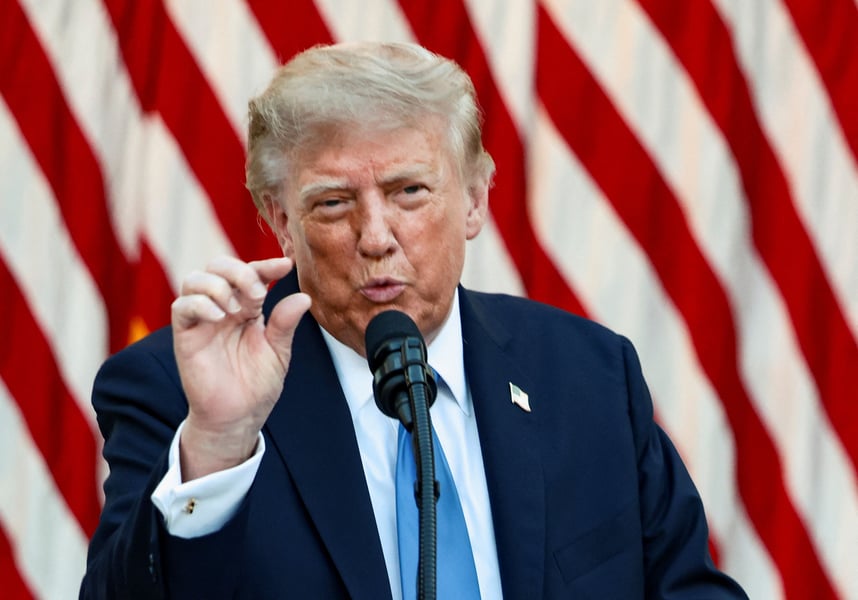
“Your country was not there to help me,” Trump told reporters when asked whether Washington would come to Britain’s aid over the Falklands. He added: “I always review every position. That’s just one of many.”
That sentence, spare and non-committal yet carrying the full weight of an alliance being publicly re-priced, landed in Buenos Aires like a different kind of ordnance than the ones that fell in 1982.
Milei moved quickly. He announced that Argentina would impose stricter penalties on Rockhopper, a British oil exploration company, and Navitas, an Israeli firm, which have been jointly promoting a major extraction project in waters north of the islands. Milei argued the project violates a United Nations resolution requiring both Argentina and Britain to refrain from unilateral actions in the disputed territory while its status remains unresolved.
“We will not allow it,” Milei said at a press conference in Buenos Aires. “If we allow it, we will be creating an incentive for the British government to deepen the occupation of the islands and the exploitation of our resources.”
The sanctions announcement was not the only pressure being applied. Argentine veterans of the 1982 war filed a legal challenge Tuesday alongside environmental lawyers seeking to block the Rockhopper-Navitas drilling project entirely. That war killed 649 Argentine soldiers and 255 British service members; three Falklands civilians also died. The veterans argued the oil project violates Argentine sovereign rights and environmental protections under international law.
Britain’s response was swift and defensive in equal measure. A Downing Street spokesman, Tom Wells, said London’s position was “long-standing and unwavering,” insisting that “Sovereignty rests with the UK, and the islanders’ right to self-determination is paramount,” as TRT World reported. The approximately 3,400 residents of the islands voted overwhelmingly to remain British in a 2013 referendum.
What Wells did not address was why, in the seven months of the US-Iranian conflict that stretched from the Strait of Hormuz to the Gulf of Oman, Britain had failed to contribute naval assets. Prime Minister Keir Starmer reportedly told Trump that the Royal Navy lacked available ships, a statement Trump recalled with visible frustration. “It was pretty sad, the whole thing,” he said.
The framing Trump chose matters more than the words themselves. During the original Falklands War in 1982, the Reagan administration broke with Argentina, then an American client state in the anti-Soviet framework, and provided intelligence, fuel, and logistics to Britain. That choice was the foundation of the modern Anglo-American alliance; it was costly, and Reagan made it anyway. Trump’s signal is the inverse: alliances serve his purposes, or they do not serve at all.
Milei, whose domestic approval ratings have fallen to around 34 percent ahead of a re-election campaign next year, has made Falklands sovereignty a consistent political theme. In a country still navigating the aftermath of years of economic shock therapy, the Malvinas, as Argentines call the islands, are among the few subjects that unite left and right. His government has also announced plans for a new Argentine naval base within striking proximity of the disputed territory, signalling that this escalation is not purely rhetorical.
The oil dimension adds further complication. The Falklands shelf is estimated to hold significant untapped reserves. British exploration companies have operated there for years despite Argentine legal objections. If Milei’s sanctions gain traction, and Trump’s studied ambiguity gives them a geopolitical cover they have never previously had, the economics of drilling in Falklands waters could shift rapidly. No company operates comfortably in a disputed zone without Washington in its corner.
What no one has publicly established is whether any of this is coordinated. A reported internal Pentagon memo from April suggested that Washington might reconsider its formal Falklands position as leverage against European NATO allies who declined to join the Iran campaign, in coverage of the Buenos Aires announcement. Whether that memo reflects White House policy, a hawkish Pentagon faction, or a strategic leak intended to extract compliance from London remains unknown.
That gap matters. The difference between Trump improvising a grudge at a press conference and the United States formally reconsidering forty years of Falklands policy is substantial. But for Milei’s purposes, ambiguity is sufficient. Uncertainty about Washington’s position is itself a gain. In a Washington consumed by Netanyahu’s stated war aim of toppling Iran’s government, every alliance calculation is being remade in real time. The islands’ 3,400 residents continue their lives, sheep farming and kelp processing on the South Atlantic’s edge, as the geopolitical weather shifts around them. They have never had much say in the arguments conducted about them.