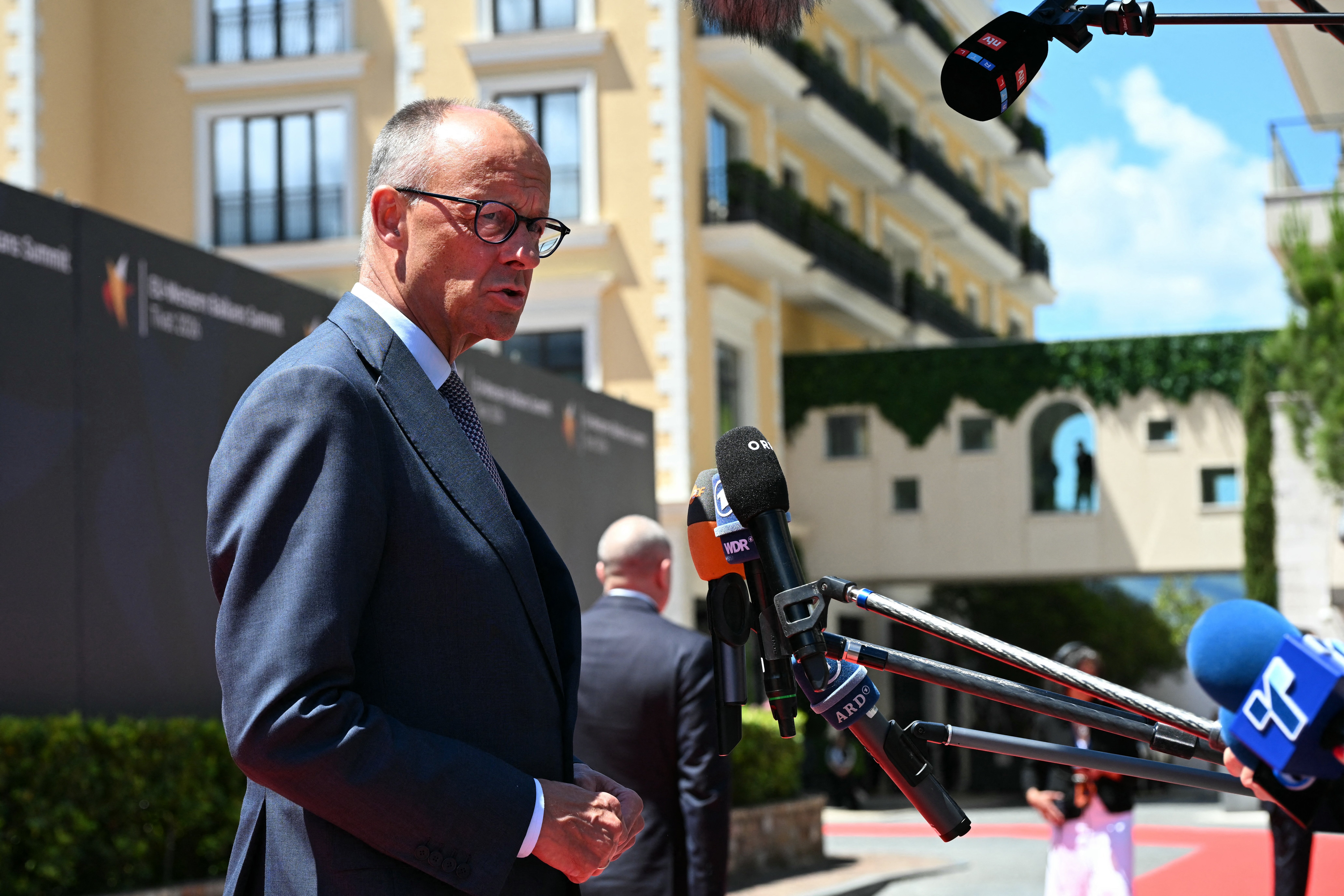
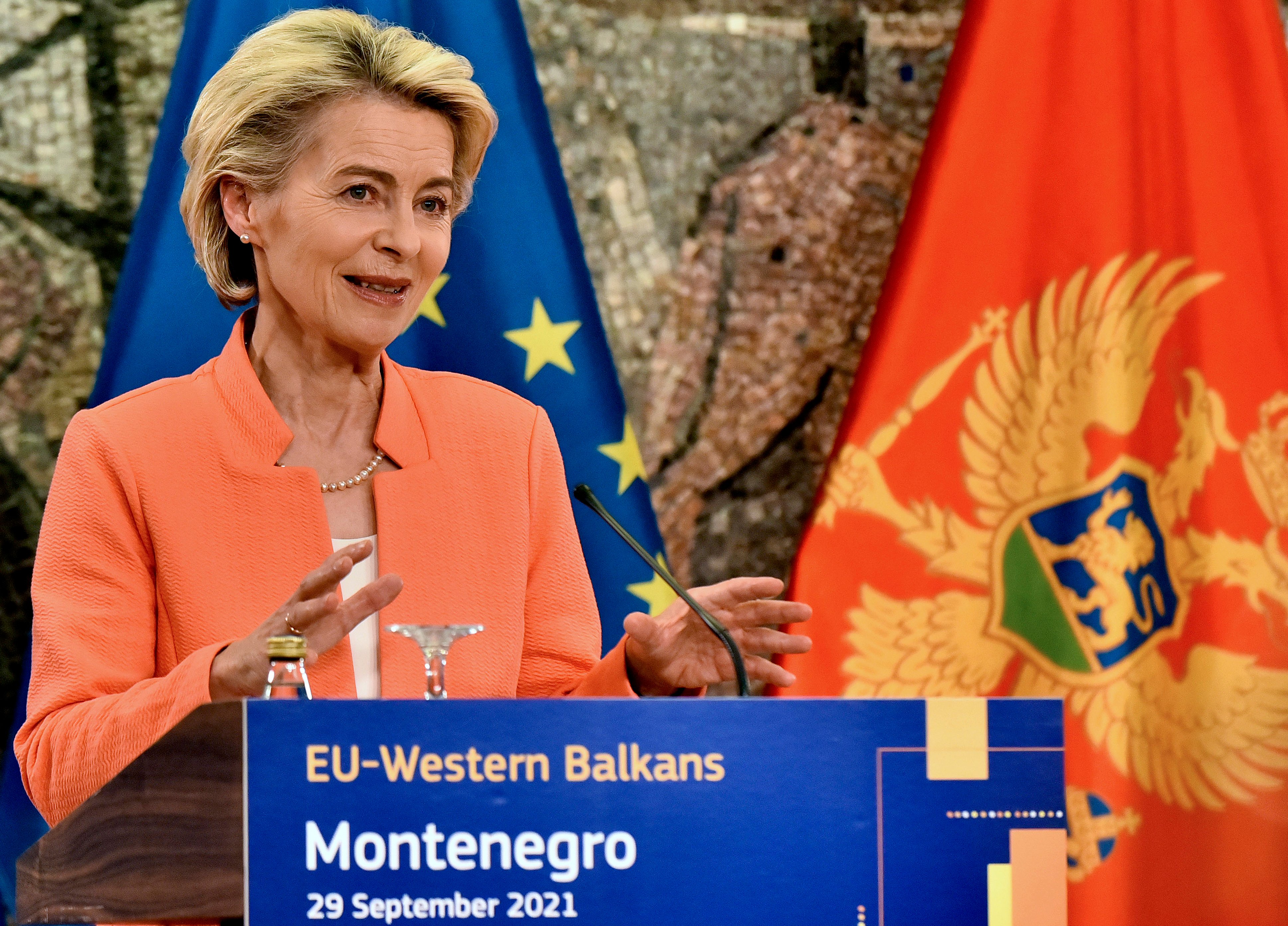
TIVAT, Montenegro — The smallest country at the table was handed the biggest promise. Montenegro, a nation of fewer than a million people on the Adriatic coast, left a gathering of European leaders this week having been told it could be inside the European Union by 2028, the fastest accession timeline Brussels has dangled in front of anyone in years. The warmth was genuine. So was the calculation underneath it.
For thirteen years the bloc has admitted no one, a record of inaction that Germany’s Friedrich Merz acknowledged in Tivat when he allowed that the long freeze showed shortcomings before pivoting to something plainer. We want you, the German chancellor said, and meant it as both an invitation and an apology.
What changed is not Montenegro so much as the map around it. European Council President Antonio Costa said membership by 2028 was possible. The enlargement commissioner, Marta Kos, went further, suggesting the technical negotiations could close before the end of this year, which would put the final date roughly two decades after Podgorica first applied. Ursula von der Leyen, who runs the European Commission, said the goal was now within reach and that the process had to become faster and more credible, a quiet concession that for most of the past decade it had been neither.
The cast is familiar. Six countries sit in the queue, Albania, Bosnia, Kosovo, North Macedonia, Montenegro and Serbia, several of them waiting since before enlargement fell out of fashion in Brussels. The appetite that drained away after Croatia joined in 2013 returned only when the Russian operation in Ukraine in 2022 turned the western Balkans from a bureaucratic afterthought into a security question.
Von der Leyen did not disguise the reason for the hurry. She called enlargement a geostrategic imperative and pointed to hybrid threats and outside interference in the region, which Brussels attributes mostly to Moscow. Macron put it in the same register, calling the project important from a geopolitical point of view. Strip away the welcome-home language and the summit was an argument about influence. The union spent years treating the Balkans as a waiting room, and while it looked away, Russia and China made themselves at home.
That space was never abstract. Montenegro itself took a billion-dollar Chinese loan for a highway it then struggled to repay, the kind of money that arrives, as regional analysts have long noted, without the political conditions Brussels attaches to almost everything. Serbia, the largest and most consequential of the six, has kept its lines to the Kremlin open and has signed energy understandings with Moscow even as Western capitals tried to isolate it.
Serbia is where the strategy runs into its limit. Belgrade has declined to fall in behind Western sanctions on Russia, treats its choices among Moscow, Beijing and Brussels as leverage rather than confusion, and watches a public that, by the EU’s own reckoning, is less than half persuaded that membership is worth it. Officials in Tivat warned against precisely that kind of swing positioning. The warning doubles as a confession. The country the bloc most needs to pull west is the one least willing to be pulled.
Even the enthusiasm came hedged. France and Germany used the meeting to press for gradual integration, a halfway status that would let candidates sit in on some European institutions before they are full members, which reads as either a ladder or a holding pen depending on who is selling it. Italy’s Giorgia Meloni stayed away entirely, an absence widely taken as unease with the pace. A bloc fully confident in its 2028 promise does not need a fallback drafted in advance.
Montenegro, for its part, is content to play the eager partner. Its prime minister, asked what made the country worth admitting, likened it to a cookie, the sort you reach for again once you have had the first, a line he offered in an interview that mixed charm with salesmanship. For a candidate that has done most of what was demanded of it, the performance is rational enough. The reward simply never came before.
Montenegro is also the proof of concept the EU badly wants. The bloc is trying at the same time to move Ukraine’s own accession forward, a track that only recently cleared a Hungarian veto, and its members remain split over whether speed or standards should decide who gets in. Croatia has insisted every candidate meet the same bar. Deliver one Balkan success on a real timeline and the case for the others becomes easier to make.
Whether 2028 survives is the question no one in Tivat could answer. The date rests on twenty-seven capitals holding their patience, on Montenegro finishing the technical work without slipping, and on enlargement fatigue not hardening into the next veto. What the summit settled was the motive. Europe is not opening its door because the Balkans changed. It is opening it because the alternative is watching someone else step through first.