LONDON – The morning after more than 1,500 pages of private government messages landed on the British public, Pat McFadden took his seat in the television studios and told the country that Keir Starmer had made a “terrible mistake” in appointing Peter Mandelson. But the right thing now, McFadden said, was to stand by the prime minister. Don’t drop the pilot.
What McFadden did not say, because he did not need to, was that the Mandelson files had already said it for him. Buried inside the second tranche of disclosures published by the Cabinet Office on Monday were his own WhatsApp exchanges with the man who has since become one of Labour’s most destructive figures – messages in which McFadden told Mandelson that the prime minister’s authority was collapsing, that a welfare reform defeat would mean Starmer could not survive, and that Downing Street itself had become, in Mandelson’s phrase after a visit, “beleaguered and bereft.”
There is a particular kind of political exposure that comes not from saying the wrong thing, but from having said the right thing to the wrong person at the wrong time. McFadden, now Secretary of State for Work and Pensions and one of Starmer’s most visible defenders, is living through it.
The messages date to May and June 2025. The context matters: Labour had just been routed in the Runcorn by-election, the government’s plans to cut disability benefits were unravelling under backbench pressure, and Mandelson – then still serving as Britain’s ambassador to Washington – was in regular contact with several of Starmer’s most senior ministers. In those exchanges, the files show, McFadden did not play the role of loyal ally projecting confidence. He narrated a government in genuine trouble.
“Lot of manoeuvring here this week,” McFadden wrote to Mandelson after the Runcorn result. “Doesn’t feel good for Keir.” The following month, as the welfare climbdown approached its most dangerous moment, he wrote again: “I think it’s very bad. Defeat, pull bill or gut it – all destroy his authority.”
Mandelson’s reply, in the same exchange: “If it presses to a vote and is lost I am not sure that Keir survives that.”
The government climbed down. There was no vote. Starmer survived – that time. But the conversation had happened, and it was now public.
McFadden’s disclosures went further than the narrow question of Starmer’s authority. In messages also released on Monday, he told Mandelson that every internal Labour conversation had collapsed into a single, dispiriting question: “Who can we tax in order to pay benefits to others?” It was a characterisation of his own parliamentary colleagues – and it landed in the hands of the Conservative opposition like a gift.
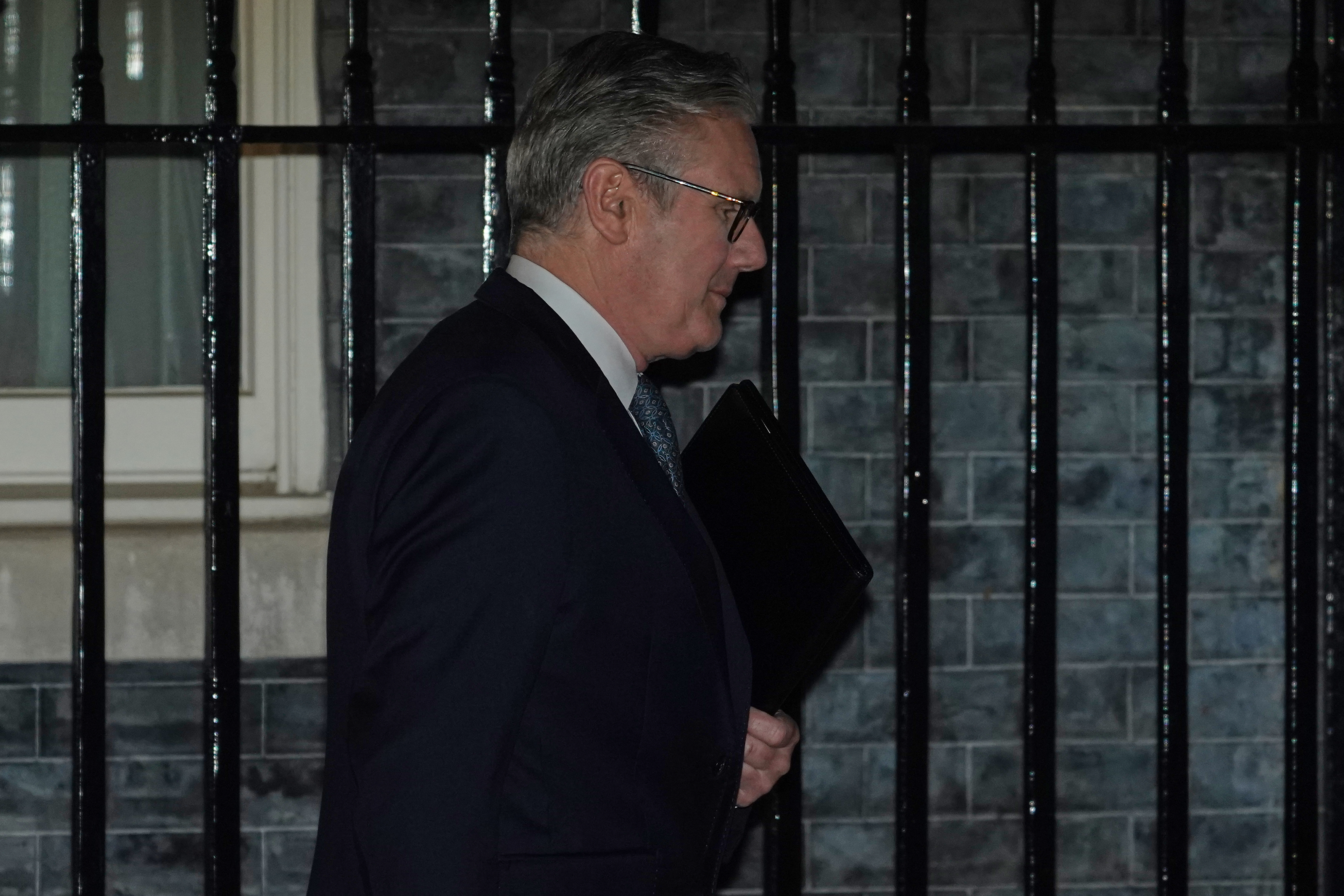
Kemi Badenoch, the Conservative leader, did not wait long. “They are no longer the Labour Party, they are the Welfare Party,” she said in response to the disclosure. “The party for Benefits Street will tax us all into poverty to pay for more welfare.” Reform UK’s Robert Jenrick sharpened the same blade: McFadden, he said, had admitted privately what he could not say publicly – that Labour had become the party of welfare dependency.
None of that was what McFadden intended when he messaged Mandelson a year ago. A spokesman for McFadden said on Monday that his comments had reflected his public positions on welfare, not contradicted them. That may be technically accurate. What the messages actually reveal is something more uncomfortable: a minister who understood the structural problem, articulated it clearly in private, and then spent the following year presiding over the same system he described as politically broken.
Mandelson’s own commentary on Starmer throughout the period was considerably less restrained. In the files, he described the prime minister as lacking “verve” and “panache,” said he was not “leading from the front,” and characterised the government as one that “doesn’t do policy well enough.” After a visit to Downing Street in July 2025, he wrote to McFadden that No. 10 “is beleaguered and bereft.” He also suggested Rachel Reeves, the Chancellor, could not explain where economic growth would come from – a line that Conservative MPs were likely already using against her before the files confirmed it in writing.
The release of what the government called the final tranche of Mandelson-related documents followed a parliamentary motion that compelled the Cabinet Office to disclose communications it would not otherwise have published. The first batch, released in March, showed officials had warned Starmer in December 2024 about the “reputational risk” of appointing Mandelson given his ties to the convicted sex offender Jeffrey Epstein. The second batch, published Monday, revealed what ministers actually thought was happening inside government while Mandelson held the Washington post.
What it shows is a divided party whose internal conversations were being routed, in significant part, through a man who was simultaneously under investigation by the Metropolitan Police. Mandelson was arrested in February on suspicion of misconduct in public office – allegations that he passed sensitive material to Epstein during his time as a government minister – and had left the Labour Party in January after quitting the ambassadorship in September 2025. The files cover the period he was still an active participant in Labour’s internal life.
One exchange in the files records Mandelson relaying to McFadden a “wild long hysterical” message he said he had received from Wes Streeting about Israel, adding that it “reflects pretty badly on his maturity.” McFadden’s response was measured – Streeting, he noted, was “very active” on MPs’ WhatsApp groups on the subject – but the exchange is one of several in the files that read less like diplomatic correspondence and more like the running commentary of a government watching itself lose coherence from the inside.
Parliament is expected to debate the files on Wednesday. What Labour MPs make of the McFadden disclosures in that setting – whether they treat them as a closing chapter or a fresh indictment of the judgment at the top of the party – will tell more about the prime minister’s immediate position than anything Mandelson wrote in a WhatsApp message a year ago.
Starmer himself has said he takes responsibility for the appointment. He has apologised to Epstein’s victims, to the Labour Party, and to the country. His government says the documents demonstrate that Mandelson “lied repeatedly” to officials about the nature of his relationship with Epstein. But that argument has grown harder to sustain with each successive release. The second tranche of documents does not show a prime minister deceived. It shows a prime minister surrounded by people who knew, and said so to each other, that things were in serious trouble.
What remains unknown is how Wednesday’s parliamentary session will play out – and whether McFadden, who is now responsible for the welfare system whose reform he privately said “destroys” authority whatever its outcome, will be asked to account publicly for the distance between what he messaged Mandelson and what he has said since. His spokesman’s statement on Monday did not close that gap. It acknowledged the messages and moved on. That may not be a luxury the Commons affords him.
The Conservative Party has already said it will use the files in attack advertisements. According to Bloomberg, more than 1,500 pages of documentation were published on the British government’s website, including emails, text messages and other exchanges between ministers, aides, and Mandelson from the period covering his appointment and his tenure as envoy. The government says Monday’s release is the last it plans to publish, aside from materials withheld at Scotland Yard’s request during the ongoing criminal investigation.
That exception matters. The criminal inquiry – and whatever it eventually produces – is the one variable that none of the files, none of the WhatsApp messages, and none of the parliamentary debates have yet resolved. Until it does, the question McFadden answered on television Monday morning – should Labour stand by its leader – is likely to keep being asked.