
LONDON — The moment the files landed, everyone in Westminster already knew the general shape of what was coming. The question was how ugly it would look in print.
Britain’s government published on Monday the second and largest tranche of the Mandelson files — more than 1,000 pages of internal communications covering Peter Mandelson’s brief, calamitous tenure as the United Kingdom’s ambassador to Washington. The release, forced on ministers through a parliamentary mechanism known as a humble address, represents one of the largest document disclosures ever laid before Parliament and is expected to expose the extent of private correspondence between Mandelson, senior Cabinet ministers, and figures inside Downing Street, including former chief of staff Morgan McSweeney.
What it will not show is perhaps equally significant. Scotland Yard intervened over the weekend to request that certain documents remain sealed, warning the Cabinet Office that publishing them could have a “detrimental impact” on its ongoing criminal investigation into Mandelson and any potential prosecution. Among the materials withheld is a nine-page security vetting summary compiled by UK Security Vetting — the document understood to have identified concerns about Mandelson’s international associations before he was ever appointed to Washington.
The Metropolitan Police confirmed it had made the request directly to the Cabinet Office. Mandelson, now 72, has not been charged with any offence.
The release follows months of political turbulence for Prime Minister Keir Starmer, who appointed Mandelson in December 2024 and sacked him in September 2025 after Bloomberg published more than 100 previously unreported emails showing the Labour grandee offering encouragement and strategic advice to convicted sex offender Jeffrey Epstein — in some cases as Epstein was actively facing criminal prosecution. In one email from the day before Epstein began his 2008 prison sentence, Mandelson wrote that he “thought the world” of the financier. In a 2003 birthday album released by congressional Democrats, he had described Epstein in handwriting as his “best pal.”
The first tranche of files, published in March, confirmed what opposition politicians had long argued: Starmer was explicitly warned before the appointment that Mandelson’s association with Epstein posed a “general reputational risk.” He appointed him regardless, following what his government described as an “extensive” vetting process. The appointment cost several senior officials their careers. Morgan McSweeney, Starmer’s chief of staff, departed. Sir Olly Robbins, the head of the Foreign Office who made the call to sack Mandelson from Washington, was also removed. The Guardian reported that national security adviser Jonathan Powell is said to have described the original appointment as “weirdly rushed.”
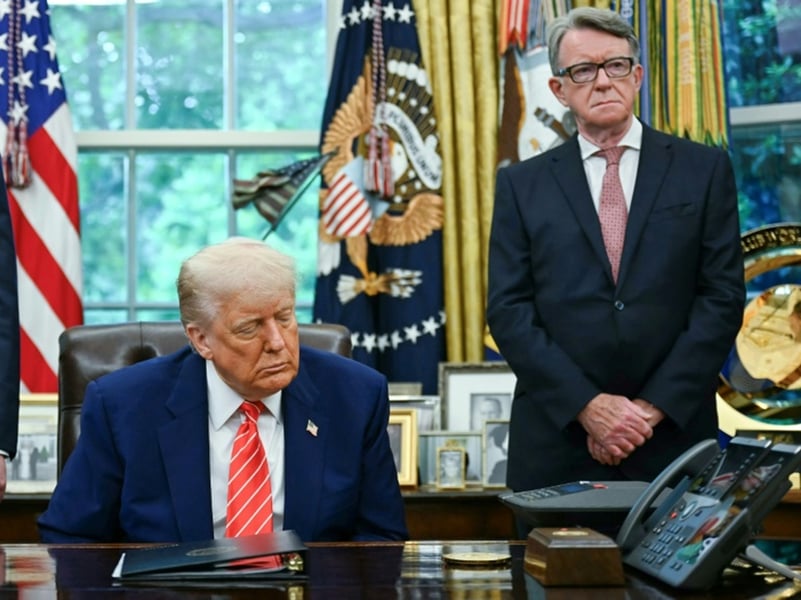
The second tranche is expected to go further. According to the Guardian, the documents include emails, WhatsApp messages, and other correspondence between Mandelson, senior ministers, and government advisers spanning the six months before he took up the post and the full length of his tenure. One source with knowledge of the exchanges characterised the messages as “more embarrassing than anything else,” suggesting a degree of intimacy between Mandelson and Cabinet ministers that will be difficult to explain to a public already primed for outrage.
Former health secretary Wes Streeting and McSweeney are among the figures whose communications are expected to appear in the published material. The government has not commented on the substance of the documents ahead of publication, saying only that it remains “committed to complying fully” with the humble address process.
The documents are being released with redactions overseen by the Intelligence and Security Committee. Material considered prejudicial to national security or international relations has been excised, as have the identities of junior civil servants. The redaction process has itself drawn criticism from opposition MPs, who argue the government has used security grounds selectively to protect ministers rather than genuinely sensitive intelligence.
There is one document whose absence will be loudest of all. The nine-page vetting summary — which is understood to have flagged concerns related to Mandelson’s ties to China, Russia, and Israel, among other international associations — is not expected to be published. The Metropolitan Police investigation into alleged misconduct in public office, relating to Mandelson’s time as business secretary under Gordon Brown, provides the legal basis for withholding it. Questions remain about whether that summary was properly communicated to Starmer before he approved the appointment, and parliamentary committees are expected to press that point as soon as the documents land.
Sir John Hayes had raised precisely that issue in the Commons this month, asking Darren Jones, the Chief Secretary to the Prime Minister, whether documents existed detailing any risk mitigation measures agreed during Mandelson’s vetting. Jones responded that all documents within the scope of the humble address would be “published in the normal way” — a formulation that offered no clarity on what might fall outside that scope.
For Starmer, the timing is punishing. He enters the release with his premiership already under strain from a string of embarrassments traced back to the Mandelson appointment — one that his own former chief of staff has since branded a “serious error of judgement.” The Prime Minister survived calls for his resignation after Labour’s collapse in local elections last month, and the party’s internal pressure remains elevated. As Reuters reported in March, the first tranche of files alone was enough to do little to reduce the pressure on Starmer, and the second is expected to be considerably more revealing. What no one in Downing Street can fully control is what the documents actually say.
What the files cannot answer — at least not yet — is the central factual question the affair has never resolved: what, precisely, was agreed during that vetting process, and who knew it. The scandal has already consumed careers and continues to complicate London’s diplomatic footing. The nine-page summary sits with Scotland Yard. Until it is released, that gap stays open.