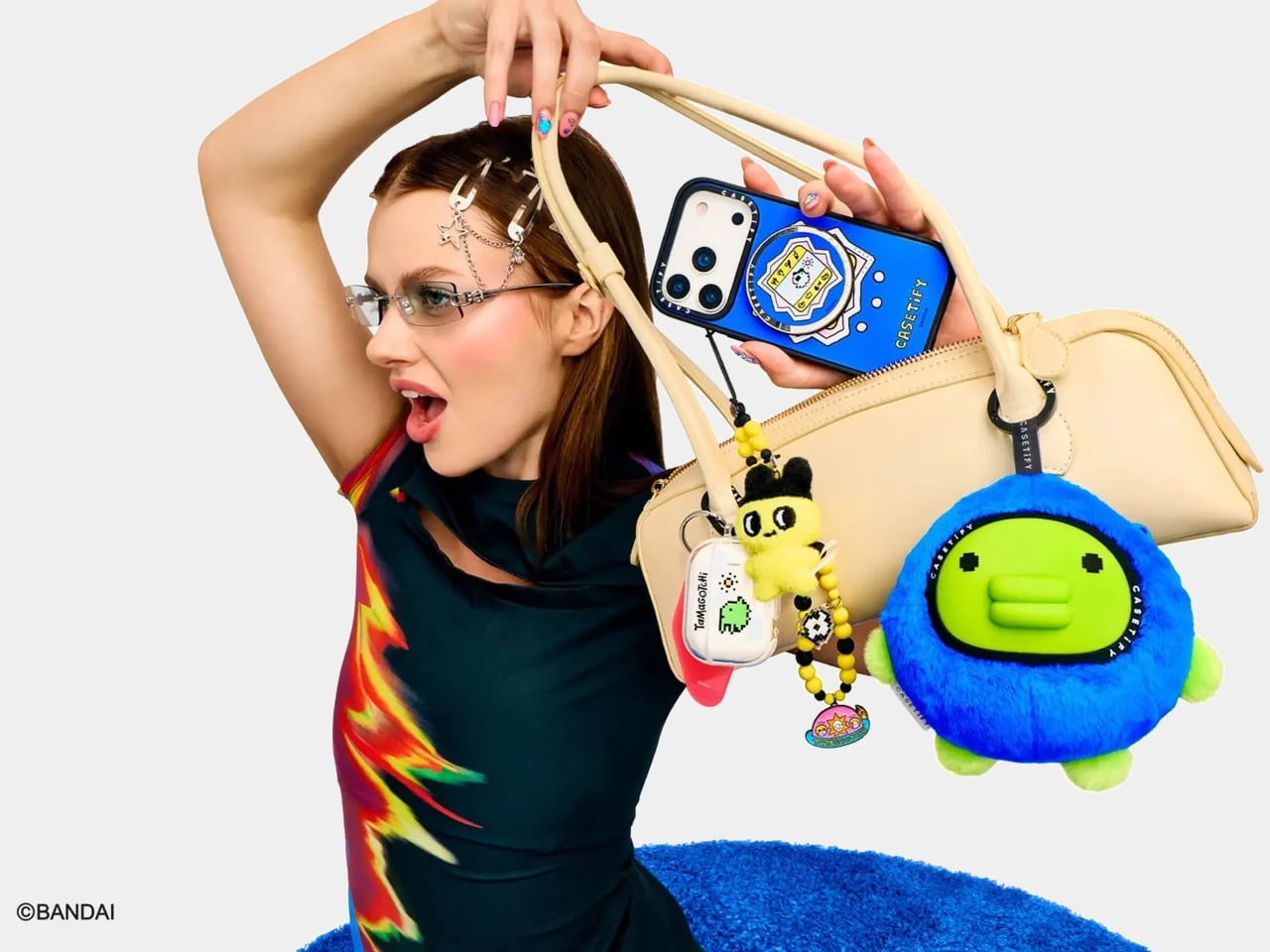
HONG KONG — The Tamagotchi launched in Japan in November 1996, retailed for around $17.99, and proceeded to sell more than 100 million units globally before the decade was out. It was never really a toy. It was a test — feed it, clean up after it, put it to sleep on time, or it died and you felt genuinely bad about it. That relationship, strange as it was, is what CASETiFY and Bandai Namco Entertainment America are selling again in 2026.
The CASETiFY x Tamagotchi collection, which debuted on May 29, runs from phone cases and MagSafe cardholders through carry-on luggage and earbud pouches, with prices spanning $15 to $799. At the center of it is something the other coverage mostly skips past: a numbered, limited-edition Original Tamagotchi CASETiFY device, priced at $45, that ships in the classic three-button egg-shaped form factor and actually runs the virtual pet game. It is not a replica. It is a functional Tamagotchi with a custom CASETiFY-branded shell, available in strictly numbered quantities through CASETiFY’s online store and studio retail locations.
That distinction matters. Most brand nostalgia collaborations in 2026 are graphic exercises — put the character on a hoodie, sell out in 48 hours, move on. What CASETiFY has managed here, in partnership with Bandai Namco, is rarer: a functional artifact from 1996 rehoused as a contemporary tech accessory. The people buying it are not buying a memory. They are buying a device that will die if they forget to feed it, same as it ever was.
The broader collection is built around modular interchangeability, which is CASETiFY’s standard structural idea applied to a new IP. Phone cases — available across current iPhone, Samsung Galaxy, and Google Pixel models — feature Tamagotchi characters rendered in the franchise’s pixelated aesthetic. The Tamagotchi Jumbo Pattern Snappy Cardholder Stand, at $40, is MagSafe compatible. The Egg Tablet Case for iPad, priced at $79, translates the device’s original ovoid silhouette to a category it never occupied. A vinyl-faced Plush Earbuds Pouch reshapes the original device’s form into storage for wireless earbuds — the Tamagotchi standing in, architecturally, for the case it once competed with for pocket space.
The luggage is the outlier. CASETiFY’s Travel Tamagotchi carry-on, available in pink and blue, uses character graphics and retro typography lifted from the franchise’s 1990s visual library. At the top of the price range, it targets a consumer who wants the Tamagotchi universe to follow them through an airport, not just through a subway commute.
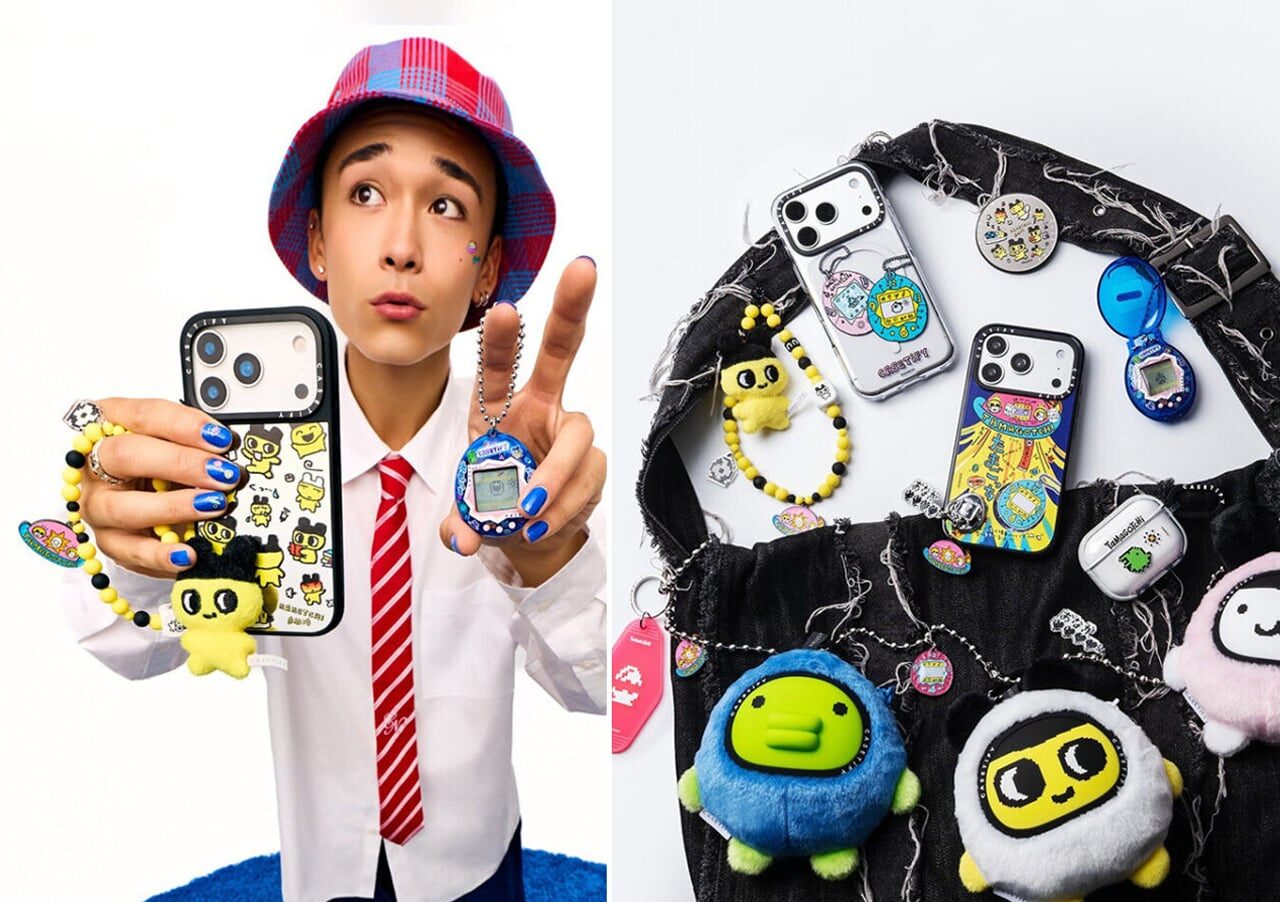
Collectibility is threaded through the release in a way that distinguishes it from a standard licensing deal. Beyond the numbered Tamagotchi device, the collection introduces Tamagotchi Chase Cards — physical collectibles organized across seven rarity tiers, from Common to Supreme Ultra Rare. The Chase Cards borrow the logic of trading card collecting, where the scarcity gradient drives repeated purchase behavior. CASETiFY has used similar mechanics in prior collaborations, but the Tamagotchi IP is particularly well-matched to that format: the franchise has always rewarded attention and punished neglect, and the Chase Cards extend that psychology into ownership rather than gameplay.
What the collection does not answer is how long the numbered Tamagotchi device will remain available. CASETiFY has described it as a strictly limited quantity, which is doing real work in that sentence — the company has not disclosed how many units were manufactured. Collectors who have missed prior CASETiFY limited editions have generally not gotten a second chance. The plush charm, at $70, and the Silicone Phone Charm with detachable plush and metal Tamagotchi-shaped charm hook round out the accessories tier for buyers who want the aesthetic without the gameplay commitment.
The timing of the collaboration reflects something that designers working in Tokyo have been watching for a few years. Tamagotchi-themed cafes and pop-up activations have proliferated in Japan since 2023, not as marketing events for a new product launch but as autonomous cultural phenomena — spaces organized around the franchise’s visual language because a generation of Japanese consumers in their late twenties and early thirties is willing to pay for that environment. Bandai’s decision to formalize that energy through a global accessories collaboration with CASETiFY, rather than through a Japanese-market limited reissue, signals a deliberate choice to route nostalgia through the tech accessories category, where the addressable audience is global and the price points sustain margin. The relationship between fashion and cultural nostalgia continues to define how legacy IP finds new commercial relevance with younger consumers.
CASETiFY’s operating model has always depended on licensed IP to differentiate in a market where the underlying phone case is, functionally, a commodity. The company has previously collaborated with Pokémon, Starbucks, Disney, and Harry Potter, among others. What the Tamagotchi partnership adds is a product category — the functioning device itself — that none of those collaborations attempted. A Pokémon phone case is passive. The CASETiFY Tamagotchi is interactive, and its survival depends on the owner’s behavior, which is a different kind of brand engagement than anything a graphic print can generate.
Whether the collaboration extends beyond this initial drop is not yet known. Bandai Namco has not announced additional waves or regional exclusives. What exists now is the collection as launched: available through CASETiFY’s global retail network and its online store, priced for the range between an impulse accessory purchase and a considered collectible investment. The numbered device, in particular, will tell Bandai and CASETiFY more than any market research could about where Tamagotchi’s commercial ceiling sits in 2026. That answer will come when the units sell out — or don’t.