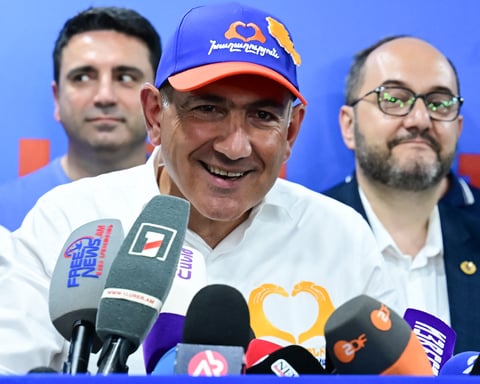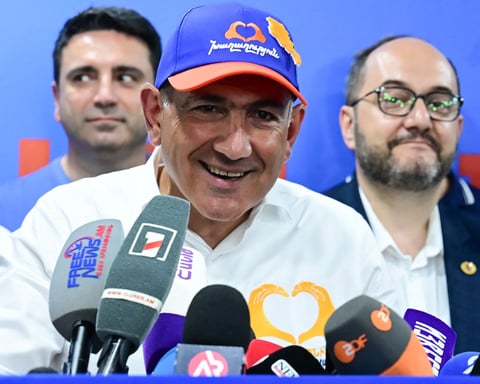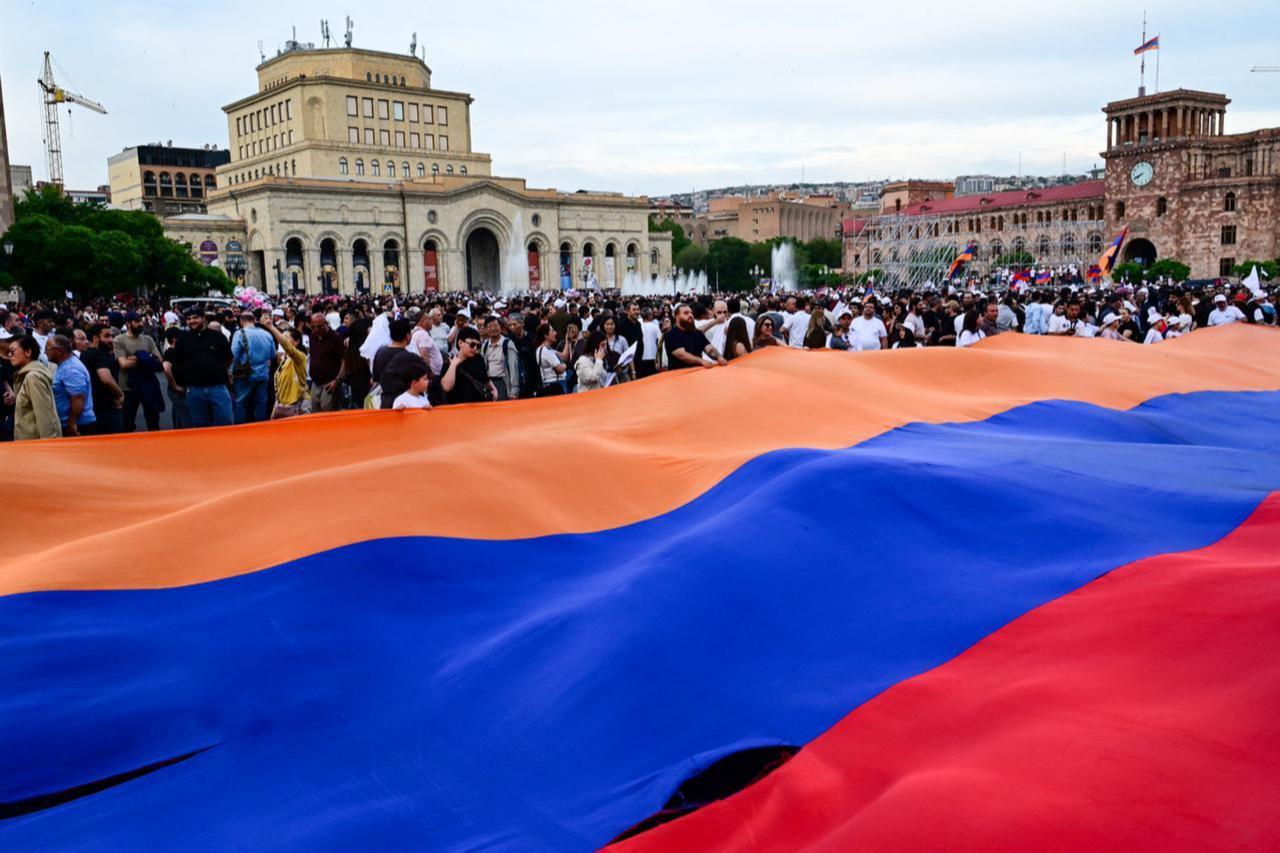

YEREVAN — The arrests did not stop when the polls closed. Two more parliamentary candidates from Samvel Karapetyan’s Strong Armenia party were taken into custody on Tuesday, Armenia’s Investigative Committee announced, bringing the total number of the bloc’s candidates placed under arrest to six. The committee said a preventive measure of arrest was applied after two of the candidates were identified and detained, a characteristically sparse statement that offered no timeline for proceedings or names of those held.
The crackdown follows an election the government has already claimed as a mandate. Nikol Pashinyan’s Civil Contract party secured 49.81 percent of the vote on June 7, according to the Central Election Commission, a result that left Strong Armenia in a distant second place with 23.28 percent. Karapetyan’s party fell short of the threshold that would have threatened Pashinyan’s ability to govern, yet the prosecutorial pressure against it has not eased in the days since. The Investigative Committee opened criminal procedures against six party members on suspicion of bribery and large-scale money laundering, charges Strong Armenia has rejected as politically motivated from the start.
What the committee’s Tuesday statement revealed was not the opening of a new case but the execution of existing ones. The formal conversion of arrest warrants into physical detentions. Under Armenian law, the Central Election Commission’s consent is required before registered candidates can be charged or arrested. That consent was granted before the vote. With the election over, the procedural cover that required commission approval no longer constrains the pace of prosecutions. The committee’s language on Tuesday — that two candidates “were identified” — suggests the apprehensions are being made sequentially rather than simultaneously, which may indicate that some individuals initially evaded custody.
The six candidates whose warrants were issued the day before the election were identified by Armenian state news agency Armenpress as Hayk Avagyan, Sasun Badoyan, Arthur Abrahamyan, Vahe Tavakalyan, Vahe Yeghiazaryan and Ashot Sahakyan. The Prosecutor General’s Office had also filed a separate motion targeting David Ghazinyan, a former head of the Electric Networks of Armenia, on similar charges, according to OC Media’s reporting from Yerevan. It remained unclear on Tuesday how many of the six named individuals are among those now confirmed under arrest, or whether Ghazinyan’s case has advanced.
Strong Armenia’s party chief has spent the entire election period under house arrest. Karapetyan, a Russian-Armenian billionaire who built his fortune in Russia and founded the party in December 2025, is facing charges of calling for the overthrow of the government — accusations he has dismissed as a fabrication. He was escorted to a polling station on election day before returning to house arrest. After preliminary results placed his party second, Karapetyan called the elections “shameful” and said dozens of his campaign staff had been detained, a figure consistent with the broader sweep that preceded the vote.
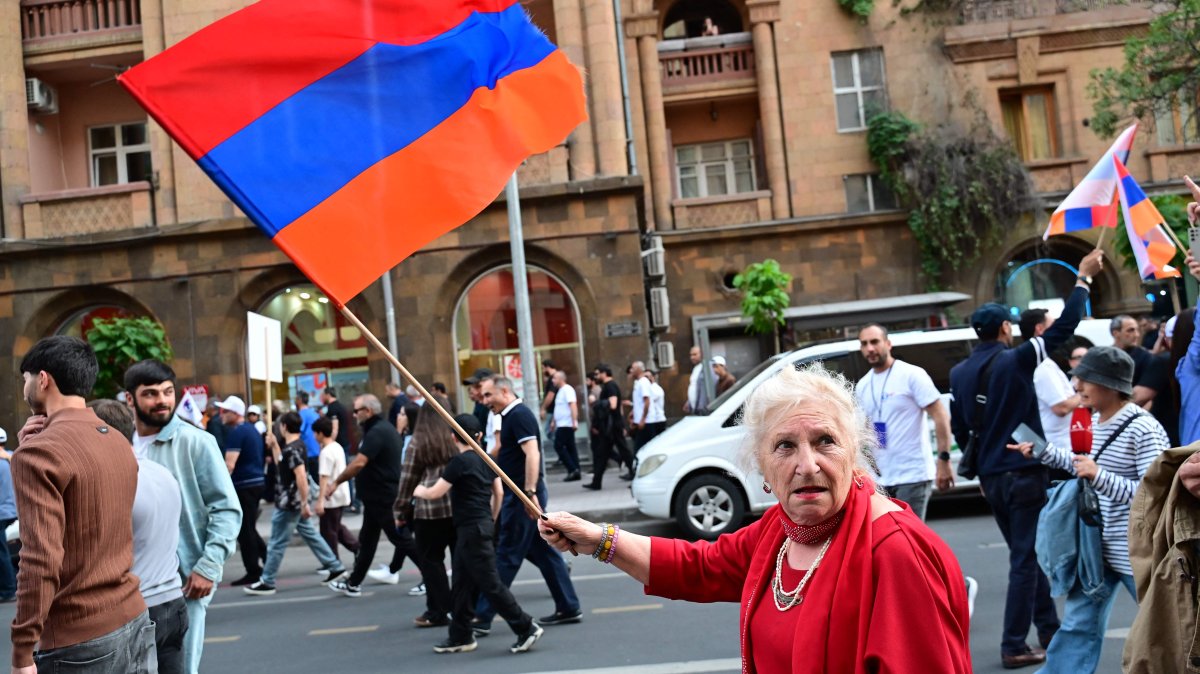
The prosecutions place an unanswered question over the opposition’s immediate future. Strong Armenia won enough votes to send representatives to the National Assembly, where it will be the principal opposition force alongside former President Robert Kocharyan’s Armenia alliance, which finished third with 9.93 percent. What it means for a sitting opposition caucus to have multiple members under arrest — on charges the party contests as politically engineered — is a question Armenian constitutional lawyers have not yet addressed publicly. The party has not said whether it intends to challenge the arrests through the courts or whether it plans to seek international observation of the proceedings.
The timing matters beyond Armenia’s borders. The June 7 vote was widely read as a referendum on Pashinyan’s pivot away from Moscow and toward the European Union. The EU moved quickly to signal economic support after the result came in, and Brussels had deployed election observers who described the vote as well-organized. Post-election arrests of opposition candidates are the kind of development that European institutions track closely, particularly at a moment when Yerevan is seeking closer integration. Whether the EU monitoring mission will issue a formal assessment of the post-election prosecutorial activity is not yet known.
Russia’s position adds a layer of complexity that Pashinyan’s government will have to manage. Moscow has consistently framed the prosecutions against Strong Armenia as evidence of political repression, a characterization Kremlin spokesman Dmitry Peskov and Foreign Ministry spokeswoman Maria Zakharova each used in statements around election day, according to Russian state media. Armenia and Russia remain economically bound despite a year of deteriorating political relations, with Moscow supplying energy and absorbing a significant share of Armenian exports — leverage that has not disappeared because the election is over. The OSCE had already described the campaign as poisoned by polarization, and the arrests of additional candidates after the result will likely be raised in follow-up assessments from international observers.
The Investigative Committee gave no indication on Tuesday of how many more arrests are planned or when formal indictments will be filed. Under Armenian criminal procedure, suspects held under preventive arrest can be detained for up to 72 hours before a court must review the measure and either extend it or release the individual. What happens in those hearings — and whether Strong Armenia’s legal team can mount an effective challenge — will determine whether the prosecutions deepen or stall. The party’s rejection of the charges has been consistent but unspecific, and no independent legal review of the evidence against the candidates has been made public.
International observers and Moscow have already drawn divergent conclusions about the legitimacy of the vote itself. The post-election arrests extend that argument into new terrain: not about the integrity of the ballot, but about whether the political space for an opposition that won nearly a quarter of the vote will be permitted to function once parliament sits.