
Alibaba is one of the largest companies on earth. It is audited, listed in both New York and Hong Kong, and it booked more than a trillion yuan of revenue in its last full financial year. None of that tells you whether the set of wheels in your cart will hold together at speed.
That gap is the whole problem with the way this gets researched. “Is Alibaba legit” is a question about a company, and it has a clean answer that helps almost nobody, because the company is not the thing being asked about. The thing being asked about is a stranger in Guangdong or Zhejiang with a listing page, a product photograph that may not be of their own product, and a minimum order quantity. Alibaba is the room they are standing in. It is not the person taking your money.
So this covers three questions that usually get collapsed into one. What Alibaba actually is, because most people mean one of at least six different platforms. Whether it is legitimate, which turns out to hinge on a single sentence in Alibaba’s own protection terms that almost nobody reads. And what happens when you apply both to wheels, the category where the distance between the listing and the parcel stops being a refund problem and becomes a safety one.
| Platform | What it is | Who it serves | Order size |
|---|---|---|---|
| Alibaba.com | International wholesale marketplace | Businesses and importers worldwide | Bulk, minimums set by each supplier |
| AliExpress | International retail marketplace | Consumers worldwide | Single items |
| Taobao | Chinese consumer marketplace | Shoppers inside China | Single items |
| Tmall | Chinese brand storefronts | Shoppers inside China | Single items |
| 1688.com | Chinese domestic wholesale | Buyers inside China | Bulk |
| Alibaba Cloud | Cloud computing and AI services | Enterprises | Not applicable |
| Alibaba Group also operates Lazada, Trendyol, Daraz, Cainiao logistics and others. Source: Alibaba Group corporate disclosures. | |||
What is Alibaba, and which Alibaba do you mean
Alibaba Group was founded in 1999 in Hangzhou by eighteen people led by Jack Ma, a former English teacher, working out of his apartment. It listed on the New York Stock Exchange in September 2014 in what was then the largest initial public offering in history, raising about 25 billion dollars, and added a Hong Kong listing in November 2019.
It is not a shopping website. It is a holding company that runs a large number of them, plus a cloud and AI business that has become the part investors actually watch. In the financial year that ended in March 2026, Alibaba reported revenue of 1.02 trillion yuan, about 148 billion dollars, and net income of 102.1 billion yuan. Cloud Intelligence brought in 158.1 billion yuan, up 34 percent, and the company has been raising money specifically to spend on it: Alibaba raised 10.2 billion dollars in Hong Kong’s largest-ever share sale in August 2026, the largest such sale the exchange had seen.
The confusion that costs people money is between four of those platforms. Taobao and Tmall are domestic Chinese retail and almost never what a Western buyer is on. AliExpress is retail, sells single units, ships to consumers worldwide, and is the one most people have actually used. Alibaba.com is the wholesale marketplace, where suppliers sell in bulk to businesses, and it is the one that produces the horror stories, because the buyer is usually a first-time importer and the seller is usually a factory or a trading company standing in front of one. There is also 1688.com, the Chinese domestic wholesale platform, generally cheaper than Alibaba.com and effectively unusable without Chinese and a local forwarding agent.
Alibaba is also, increasingly, an AI company. Its Qwen models are among the most downloaded open-weight systems in the world, and Chinese labs have been undercutting Western model makers on price. That has nothing to do with your order, but it explains why the company’s own attention and capital are pointed away from policing millions of wholesale listings.
Is Alibaba legit? The company and the supplier are separate questions
The company is legitimate in every sense the word usually carries. It files audited accounts with the US Securities and Exchange Commission, it is subject to two stock exchanges’ disclosure regimes, and its financial statements are public. That is a stricter disclosure regime than most of the retailers it gets compared to operate under.
The supplier is a different matter, and Alibaba has never claimed otherwise. Alibaba.com is a marketplace. It verifies some things about some sellers, takes a cut of transactions, and offers a dispute process. It does not manufacture, inspect, or warrant the goods, and the badges that buyers read as quality signals mostly are not.
Gold Supplier is the clearest example. It reads like a rating. It is a paid membership tier. A supplier who pays for it and passes Alibaba’s authentication becomes eligible to offer Trade Assurance, but nothing in that sequence is an assessment of whether the product is any good. Verified Supplier is a stronger signal, because it involves an inspection by a third-party firm, but what is inspected is the company’s existence and capability, not the item in your basket.
Then there is the sentence that decides most disputes before they start. Alibaba’s own buyer page for the protection scheme states that the scheme is “only enforced when you pay online via Alibaba.com”. Pay by wire transfer to a bank account a supplier sends you over WhatsApp, which is exactly what a great many buyers are talked into doing, and the protection you thought you had does not exist. It was never a guarantee attached to the supplier. It is a guarantee attached to the payment rail.
| Situation | Protected | Why |
|---|---|---|
| Order placed and paid online through Alibaba.com | Yes | The online order is the basis of the protection |
| Product quality differs from the agreed online order | Yes | Claim within 30 days of delivery |
| Supplier misses the ship date in the order | Yes | On-time shipment is a covered term |
| Payment wired privately to a supplier’s bank account | No | Enforced only on payments made through the platform |
| Specification agreed in chat but not written into the order | Effectively no | Disputes are adjudicated against the online order |
| Alibaba states the protection “is only enforced when you pay online via Alibaba.com”. Covered rails include credit card, bank transfer, PayPal, online transfer, Western Union, PayLater and Boleto, taken through the platform. Source: Alibaba.com buyer protection terms. | ||
What the counterfeiting record actually shows
The trade-policy picture is genuinely contested, and it is worth being precise about who says what.
The United States Trade Representative publishes an annual Notorious Markets List. In March 2026 it published the 2025 review, naming 37 online and 32 physical markets. Taobao and AliExpress were not among them, despite being nominated: the American Apparel and Footwear Association had asked for Alibaba’s platforms to be included, arguing that the two lacked a coordinated takedown process. The Information Technology and Innovation Foundation criticised the omission publicly, with senior policy analyst Eli Clemens arguing it sent the wrong signal on accountability.
Regulators elsewhere have been less patient. The European Commission fined AliExpress 550 million euros in July 2026 for failing to remove illegal and counterfeit goods under the Digital Services Act, the largest single enforcement action under that regulation at the time.
So the record is not “Alibaba sells fakes” and it is not “Alibaba is clean”. It is that a marketplace of this size carries counterfeit listings continuously, that enforcement is reactive and uneven, and that the platforms have not satisfied the trade bodies whose members are being copied. For most purchases that is a nuisance. For wheels it is the beginning of a different conversation.
Alibaba wheels: what is actually being sold
Search Alibaba.com for wheels and the results divide roughly into three groups, and telling them apart is most of the work.
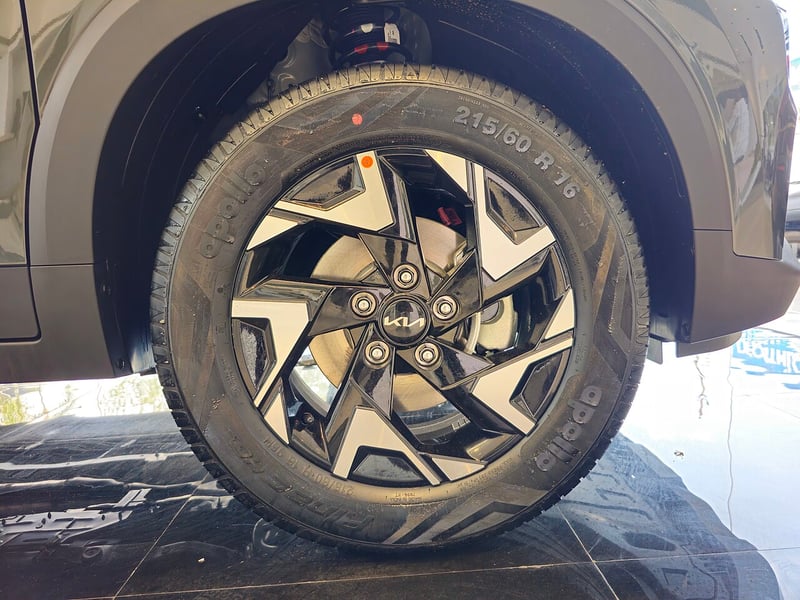
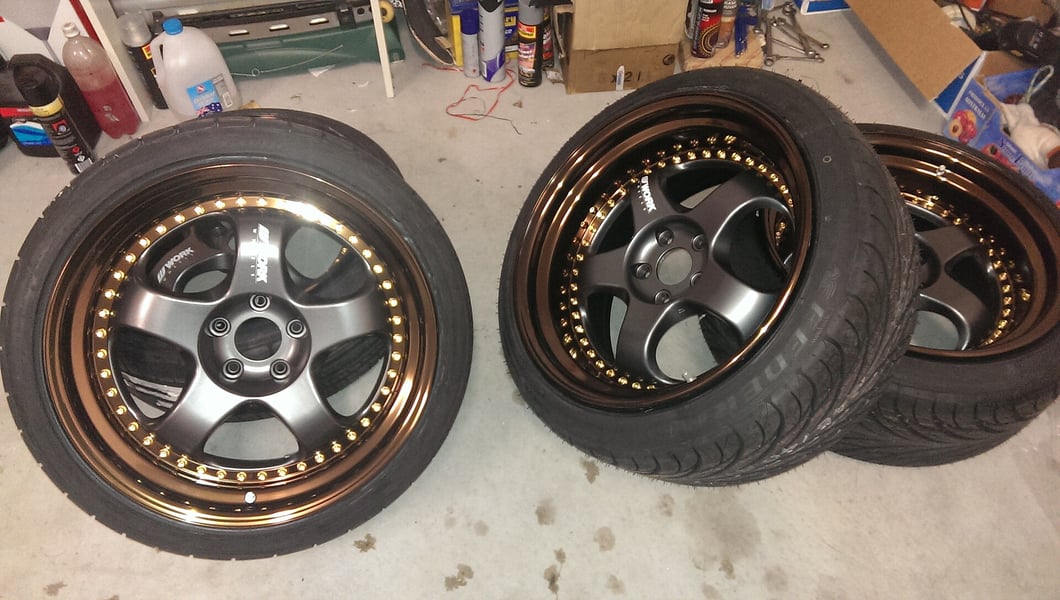
The first is genuine original-equipment surplus or licensed production, which exists but is uncommon and is not cheap. The second is unbranded aftermarket wheels sold on their own specification, cast or flow-formed, generally honest about what they are. The third is replicas: wheels made to copy the appearance of a design owned by someone else, listed with the original brand’s name in the title so the search engine finds them, and sold at a fraction of the original’s price.
That third group is where the money goes and where the trouble is. The design being copied is usually a multi-piece forged wheel from a Japanese, German or American maker. Forging and multi-piece assembly are the expensive parts of the original, and they are the first things dropped in a copy. What arrives is frequently a single-piece casting wearing the silhouette of a forged wheel, at a weight and a grain structure the original would never have shipped.
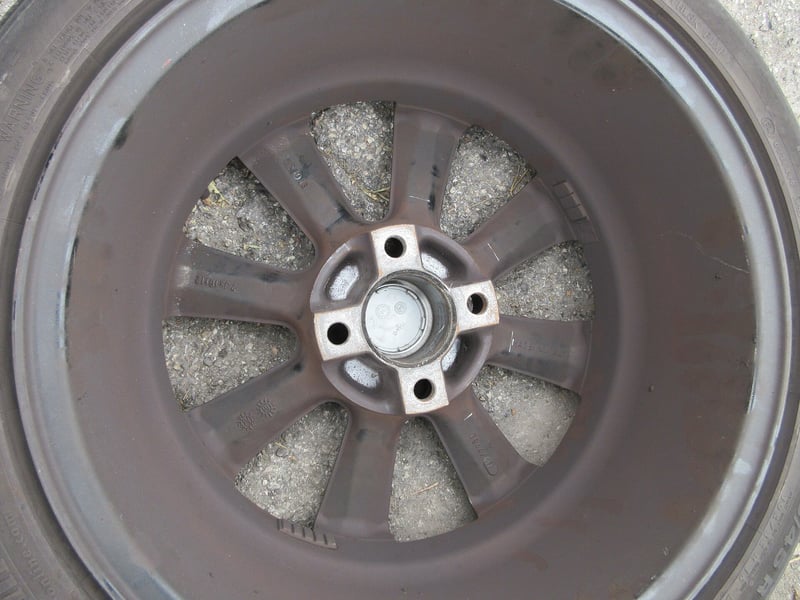
What JWL, VIA, TUV and SAE J2530 actually certify
This is the part that decides whether a wheel is worth buying, and it is routinely misread, including by sellers who are not being deliberately dishonest.
JWL stands for Japan Light Alloy Wheel. It is a standard developed under Japan’s Ministry of Land, Infrastructure, Transport and Tourism. Critically, the JWL mark is a self-certification: the manufacturer stamps it to declare that the design meets the requirement. No independent party has to see the wheel for the mark to appear on it. A mark that costs nothing to apply and carries no verification is exactly the mark you would expect to find on a wheel that has not been tested.
VIA is the part that means something. It is a registration and audit system run by Japan’s Vehicle Inspection Association, it is voluntary, and it costs money. A VIA-registered wheel has had a sample tested by an independent laboratory, and the manufacturer submits to periodic factory audits and random sampling to keep the registration. A genuine VIA wheel carries a serialised registration number that can be checked against the association’s records. A cast-in VIA logo with no serial number and no test report behind it is decoration.
TUV approval in Germany works on similar third-party logic and is likewise verifiable through documentation rather than through a logo.
The United States is the awkward case, and it undercuts any comfortable story about this being a purely Chinese problem. There is no federal safety standard that aftermarket passenger-car wheels must meet before sale. The industry’s answer is SAE J2530, developed with the Specialty Equipment Market Association’s Wheel and Tire Council. It is voluntary, and by SEMA’s own account a manufacturer may test at its own internal lab or at any testing facility of its choosing. SEMA has acknowledged the resulting gap in plain terms, noting that there are companies that already test their products and others that still do not.
That is the honest shape of it. Buying a wheel from an anonymous overseas factory does not drop you out of a rigorous system into a lax one. It removes the last party in the chain who had a commercial reason to care, in a category where the system was never rigorous to begin with.
| Marking | Who certifies | Independently tested | What it proves on its own |
|---|---|---|---|
| JWL (Japan) | The manufacturer, by self-declaration | No | Only that the maker says the design complies |
| VIA (Japan) | Japan Vehicle Inspection Association | Yes, sample testing plus factory audits | A serialised registration that can be checked |
| TUV (Germany) | Third-party technical inspection body | Yes | Approval traceable through documentation |
| SAE J2530 (United States) | Voluntary; the maker picks the test facility | No mandatory registry | That testing was done, if the maker chose to do it |
| There is no federal safety standard that aftermarket passenger-car wheels must meet before sale in the United States. Sources: Japan Ministry of Land, Infrastructure, Transport and Tourism; Japan Vehicle Inspection Association; SAE International and SEMA. | |||
If you are going to do it anyway
Pay through Alibaba.com and only through Alibaba.com, and treat any request to move payment off the platform as the end of the conversation rather than a negotiation.
Write the specification into the order rather than the chat. Trade Assurance adjudicates against what the online order says, so a load rating, a construction method, a finish and a certification requirement stated in the order are enforceable in a way that the same words in a message thread are not.
Ask for the VIA registration number and the test report, not the logo. A supplier who has them will send them. A supplier who answers with a photograph of the casting has told you what you needed to know.
Budget for third-party inspection before the goods ship. It costs a fraction of the order and it is the only step in the whole process where somebody neutral looks at the actual product.
And apply a different threshold to load-bearing parts than to everything else. A phone case that arrives wrong is a story. A wheel that arrives wrong is a wheel you are going to drive on.
What this does not tell you
There is no public dataset on what proportion of Alibaba.com orders arrive as described. Alibaba does not publish dispute outcomes, refund rates, or how often Trade Assurance claims succeed, so the honest answer to “how often does this go wrong” is that nobody outside the company knows.
The wheel side has the same hole in a more uncomfortable place. No regulator publishes failure rates for imported aftermarket wheels, because in the United States no agency is collecting them. What can be said with confidence is what the marks certify and what they do not, and that a self-declared stamp with no serial number behind it is not evidence of anything. What cannot be said, by anyone, is how many of the wheels currently on the road fall into that category. The absence of that number is not reassuring. It is just an absence.
Frequently asked questions about Alibaba
Is Alibaba legit?
Alibaba Group is a real, audited public company listed on the New York Stock Exchange and the Hong Kong Stock Exchange, with revenue of 1.02 trillion yuan in the financial year ended March 2026. The marketplace is legitimate. Individual suppliers on it vary enormously, and the platform does not manufacture, inspect or warrant what they sell.
What is Alibaba used for?
Alibaba.com is a business-to-business wholesale marketplace where buyers source goods in bulk, usually direct from Chinese manufacturers or trading companies. Alibaba Group also runs AliExpress for international retail, Taobao and Tmall for Chinese retail, 1688.com for Chinese domestic wholesale, and Alibaba Cloud.
What is the difference between Alibaba and AliExpress?
Alibaba.com sells wholesale, in bulk, to businesses, with minimum order quantities set by each supplier. AliExpress sells single items to consumers. Both are owned by Alibaba Group.
Does Trade Assurance always protect me?
No. Alibaba states that the protection is only enforced when the order is placed and paid online through Alibaba.com. Payments made outside the platform, including direct bank transfers arranged privately with a supplier, are not covered.
Are Alibaba wheels safe?
It depends entirely on the individual wheel, and the certification marks cast into it are weaker evidence than most buyers assume. A JWL mark is self-declared by the manufacturer. Only a VIA registration, with a serial number and test report that can be checked, reflects independent testing.
What does JWL VIA mean on a wheel?
JWL is a Japanese light alloy wheel standard that manufacturers apply to themselves. VIA is a separate voluntary registration with Japan’s Vehicle Inspection Association involving independent laboratory testing and factory audits. JWL alone is a claim. JWL plus a verifiable VIA number is a verified claim.
Are replica wheels from Alibaba legal?
Replicas that copy a protected design or carry another maker’s trademark can be seized at the border as counterfeit goods, and the risk falls on the importer. Unbranded aftermarket wheels sold on their own specification do not raise the same issue.