
NEW YORK – Caterpillar Inc. slipped 0.67% to close at $794.78 on Wednesday, September 3, 2026, as the Dow Jones Industrial Average added 295 points to 53,061.95, a session that also saw Apple gain 1.96%, Amgen rise 2.94%, Boeing add 1.57%, American Express climb 1.84%, Alphabet advance 0.61%, and Amazon decline 2.32% in the same session. The slip was a minor exhale after a year in which the stock had appreciated more than 51%, a run that has compressed the premium available for new buyers even as the underlying business has delivered results that most industrial companies would consider generational.
The results themselves are not in dispute. Caterpillar’s second-quarter 2026 earnings release showed sales and revenues of $20.5 billion, crossing the $20 billion threshold for the first time in company history. Revenue rose 24% year over year. Adjusted earnings per share reached $8.17, against a Wall Street consensus of $6.19, a 32% beat that caught even the most optimistic analysts by surprise. The company responded by raising its full-year sales growth outlook to the mid-to-high teens, a target that, twelve months ago, would have been described as aspirational.
The driver behind the numbers is not a single market or product cycle. It is the intersection of two distinct infrastructure waves arriving simultaneously. The first is conventional construction: the revival of North American manufacturing investment, infrastructure legislation spending, and housing construction activity. The second, and more structurally significant, is the buildout of data centers and the power generation infrastructure those facilities require.
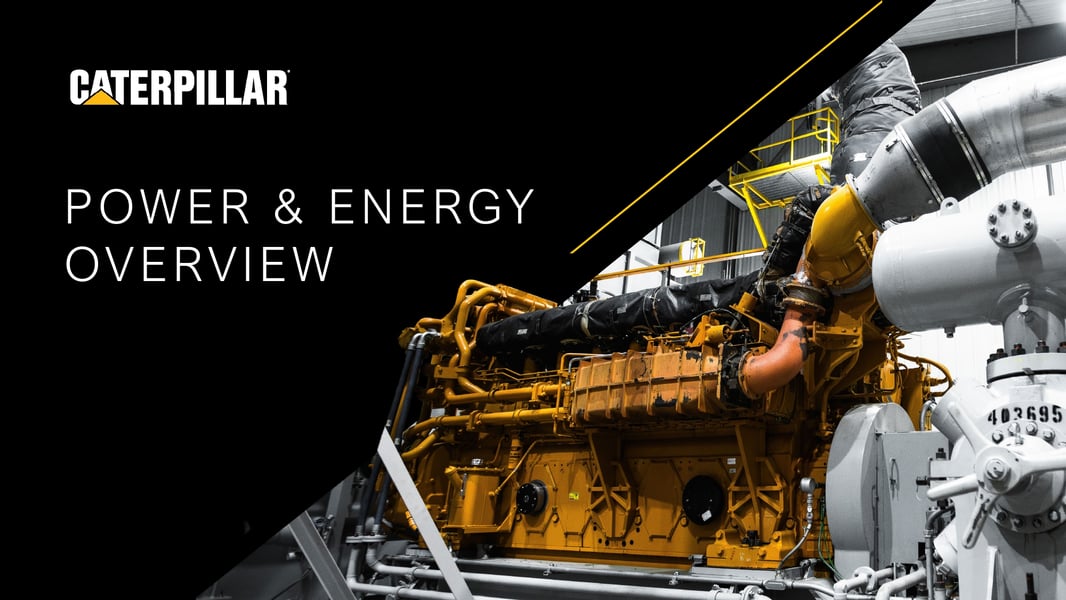
Caterpillar manufactures both the large construction equipment used to grade and build data center campuses and the reciprocating engines and power generation systems that serve as backup and primary power for those facilities. Every new hyperscale campus (and the major cloud providers are collectively spending hundreds of billions on AI infrastructure in 2026) represents a potential customer for Caterpillar’s equipment across multiple product lines simultaneously. The company’s power and energy segment grew 17% in the second quarter; its construction segment grew 35%, with North American construction alone advancing 50%.
The order backlog at the end of the second quarter stood at $72.1 billion, reflecting the multi-quarter delivery timelines typical of heavy equipment orders. That backlog provides revenue visibility well into 2027 and, in some product categories, into 2028, an unusual degree of forward certainty for a company that, as recently as 2023, was being described as a cyclical play at risk from an infrastructure spending slowdown that never arrived.
From a capital allocation perspective, Caterpillar deployed $2.2 billion in share repurchases and dividends in the second quarter alone, reinforcing the message that management views the current cash generation as durable rather than cyclical. The company’s free cash flow conversion has been strong enough to sustain a buyback program that has reduced the share count meaningfully even as capital expenditures to expand production capacity have increased.
The tension in the stock’s Wednesday performance, a slight decline on a day when the broader market gained, reflects a valuation math that has become more demanding as the price has risen. At $794.78, Caterpillar trades at a multiple that prices in continued execution on the data center demand cycle and sustained construction activity, leaving limited room for the kind of estimate-beating surprise that drove the first half of 2026’s rally. Whether the second half of the year delivers a fresh catalyst: an acceleration in data center orders, a resolution of North American residential construction bottlenecks, or international infrastructure spending, will determine whether the 51% YTD gain is the beginning of a revaluation or the full extent of it.
The market’s answer on September 3 was measured: take some off the table, wait for the next earnings date, and let the backlog data do the talking.