
From Syria and Indonesia to the Philippines, Guatemala, Portugal, Bangladesh and Sri Lanka, soaring energy costs are fueling public anger, disrupting transport and putting governments under pressure.
A fresh global fuel shock is moving far beyond energy markets.
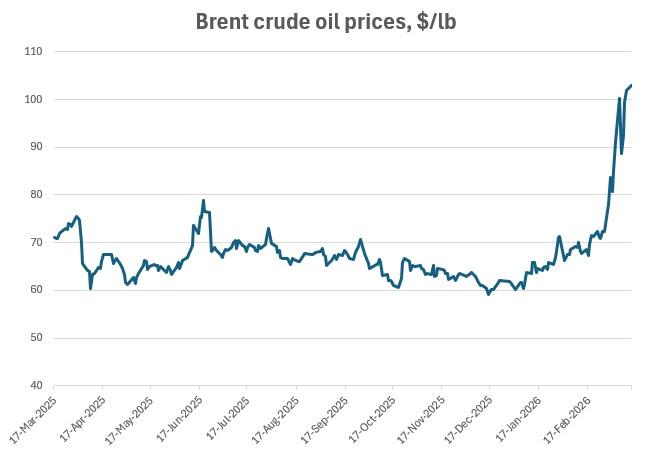
As oil prices surge above $100 a barrel amid the continuing war involving the US, Israel and Iran and disruptions to major energy routes, governments across several countries are confronting a difficult political and economic problem: how to protect households from higher fuel costs without exhausting public finances.
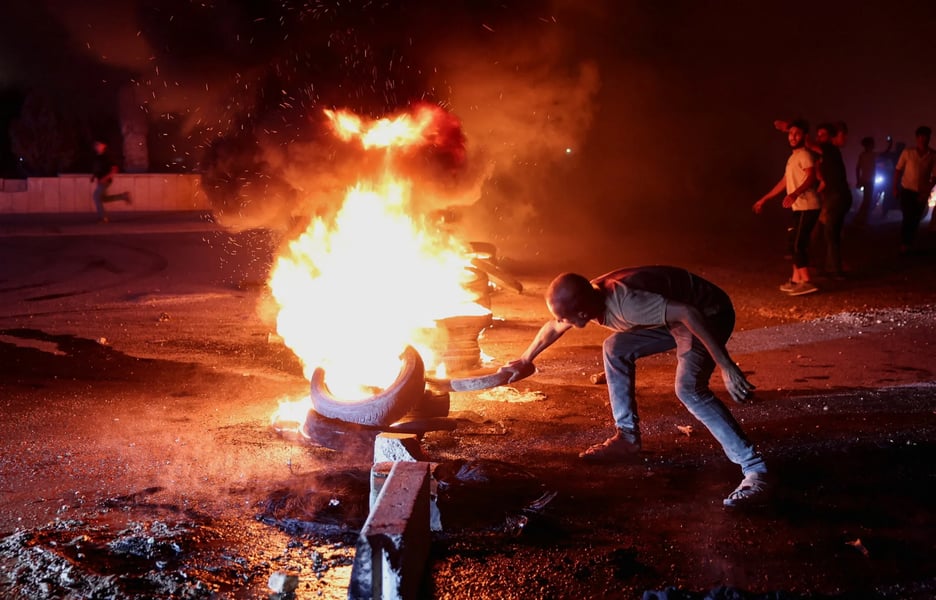
In Syria, protesters have burned tires and blocked roads after the government sharply increased fuel prices. In Indonesia, queues at gas stations have formed in Makassar as consumers scramble for subsidized fuel. In the Philippines, transport workers and fishermen are struggling to absorb higher diesel costs. In Guatemala, workers and Indigenous activists have protested the rising cost of fuel and basic necessities, with vehicles later set ablaze during unrest.
Portugal has seen motorists organize slow-moving demonstrations, while Bangladesh is facing repeated power disruptions and factory stoppages linked to shortages of energy supplies. Sri Lanka, still dealing with the legacy of its debt crisis, is again facing pressure over fuel supplies and prices.
The individual circumstances vary from country to country. But the underlying problem is increasingly similar.
Higher global energy costs are feeding directly into transportation, electricity, food production, manufacturing and household budgets.
For governments, that creates a dangerous choice. Passing the full increase to consumers can intensify inflation and provoke protests. Absorbing the cost through subsidies can protect households in the short term but increase fiscal deficits, drain foreign exchange reserves and put additional pressure on already indebted economies.
The question is becoming especially serious across developing countries that depend heavily on imported oil and gas.
Brent crude settled at $108.75 a barrel on September 15, its highest settlement in four months, after another sharp daily increase. The benchmark has risen dramatically since the beginning of the year as the conflict and attacks on energy infrastructure have raised fears about the security of global supplies.
The immediate concern is not simply the price of crude itself.
Oil is embedded throughout the global economy.
Diesel powers trucks, buses, fishing boats, agricultural machinery and industrial equipment. Gasoline determines the cost of commuting and private transport. Petroleum products are used throughout manufacturing and logistics. Higher energy costs therefore have a multiplier effect, pushing up the price of goods that may have little obvious connection to crude oil.
A farmer paying more for diesel pays more to operate tractors and transport crops.
A fisherman paying more for fuel has to spend more before leaving port.
A bus operator facing higher diesel prices has to choose between raising fares, cutting routes or operating at a loss.
A factory facing unreliable electricity may have to switch to diesel generators, increasing production costs further.
Those costs eventually reach consumers.
That is why fuel protests can rapidly become broader protests over wages, food prices, government policy and the overall cost of living.
The latest oil market movements have also increased concern about how long governments can maintain emergency measures.
Indonesia, for example, is attempting to protect subsidized fuel prices while simultaneously dealing with a surge in demand. In Makassar, long queues at gas stations have stretched for more than a kilometer, prompting the state energy company Pertamina to announce measures to increase supplies and extend operating hours.
The situation illustrates the central problem facing many governments: when international prices rise, subsidies can prevent an immediate shock to consumers, but they can also encourage greater demand for cheaper fuel and put additional pressure on public finances.
Indonesia’s experience also demonstrates why energy shocks can become politically sensitive even in countries that produce significant quantities of energy.
Domestic production does not automatically insulate a country from global prices.
Fuel refining, distribution, import requirements, subsidy structures and domestic demand all influence what consumers ultimately pay.
For Jakarta, the challenge is to prevent the global energy shock from turning into a renewed cost-of-living crisis while maintaining confidence in the government’s economic policy.
Syria: Fuel Hikes Ignite Widespread Protests
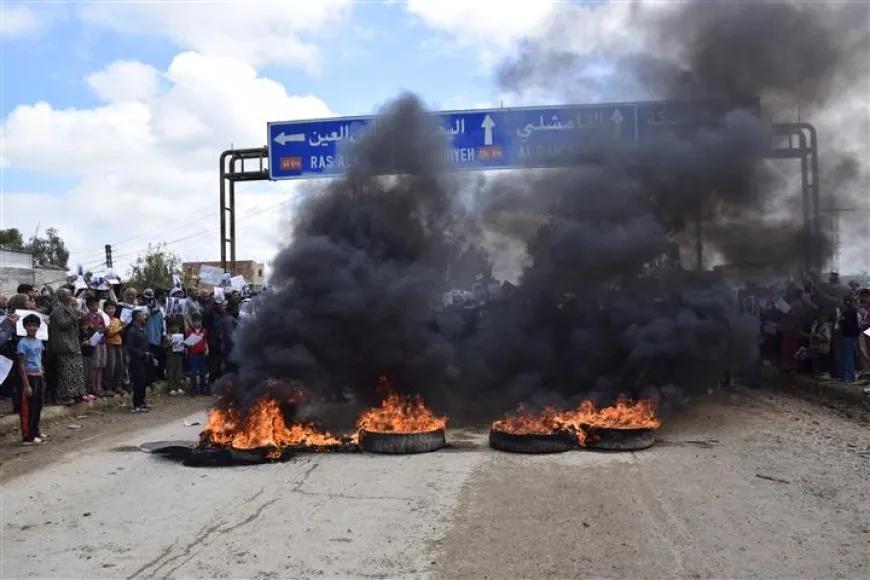
The Syrian government recently increased diesel prices by 40%, while also raising the prices of gasoline and other petroleum products.
The reaction was immediate.
Protesters gathered in several cities, blocked roads and burned tires. Some demonstrations disrupted important routes, including roads connecting Damascus and Aleppo, while protesters also obstructed fuel tanker movements.
The demonstrations represent one of the most significant outbreaks of public anger over economic conditions since the fall of Bashar al-Assad.
The fuel increases came as ordinary Syrians were already dealing with years of economic destruction, weak purchasing power and limited employment opportunities.
For many households, fuel is not a discretionary expense.
It is necessary to reach work, transport food, operate businesses and move goods between cities.
When diesel prices rise sharply, transportation costs increase almost immediately. Those costs then filter into markets.
Taxi drivers face higher operating expenses.
Truck operators charge more to transport goods.
Farmers pay more for machinery and transportation.
Businesses have to spend more to keep generators running.
Consumers ultimately pay for the increase.
The Syrian government has argued that it had little choice because of higher international procurement costs and the difficulties of securing supplies.
Officials have also pointed to disruptions affecting regional energy markets and domestic refining capacity.
But economic explanations do not necessarily calm public anger.
For people already struggling to afford basic necessities, a government explanation about international oil markets offers little relief when the amount required to fill a vehicle or heat a home suddenly rises.
That disconnect between macroeconomic explanations and household realities is one of the most politically dangerous features of a fuel crisis.
Reuters reported that about 90% of Syrians now live below the poverty line, making the impact of higher energy prices particularly severe.
The protests therefore represent more than opposition to a single price increase.
They reflect a wider question about whether ordinary Syrians are seeing any meaningful improvement in living standards after years of conflict and economic devastation.
Indonesia Faces Fuel Queues and Rationing Pressure
Indonesia is confronting a different version of the same crisis.
The country has attempted to shield consumers from global oil prices through subsidized fuel. But the widening gap between international prices and domestic subsidized prices creates its own pressures.
In Makassar, long queues appeared at gas stations as motorists sought access to subsidized fuel.
Some queues stretched for more than a kilometer.
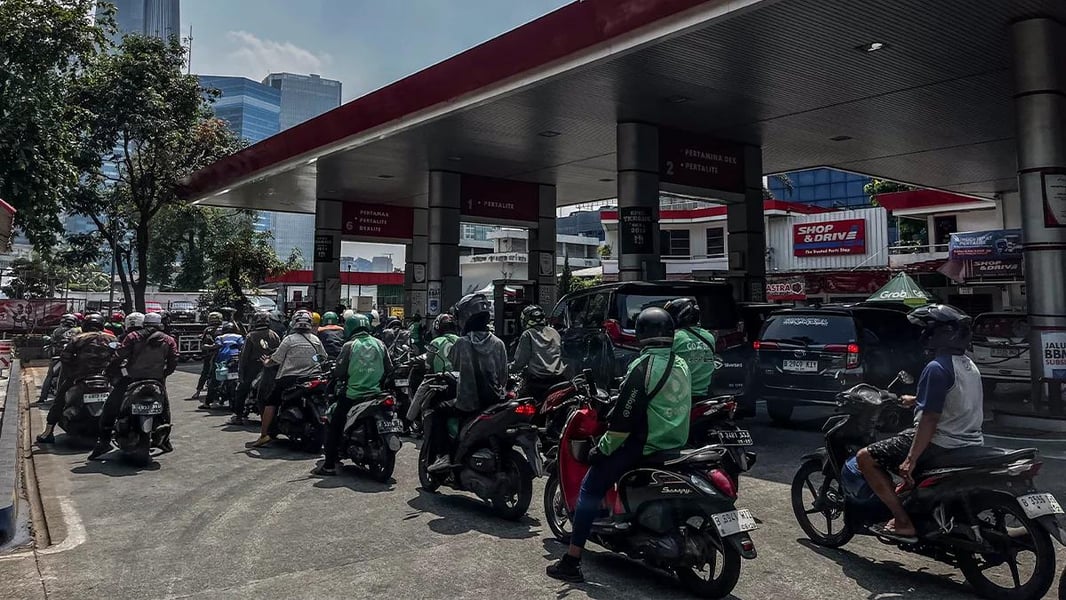
The disruption has affected ordinary drivers and commercial operators alike.
Taxi drivers have protested against rationing measures based on license-plate numbers, while students and workers have demonstrated over shortages.
The underlying issue is simple.
When subsidized fuel becomes significantly cheaper than the market price, demand can rise sharply.
If supplies cannot expand quickly enough, the result is not necessarily an orderly increase in prices.
It can be queues, rationing and fuel shortages.
The Indonesian government has pledged to maintain subsidized fuel prices through the end of the year, but the longer the international price remains elevated, the greater the financial pressure.
Indonesia’s experience also demonstrates why energy shocks can become politically sensitive even in countries that produce significant quantities of energy.
Domestic production does not automatically insulate a country from global prices.
Fuel refining, distribution, import requirements, subsidy structures and domestic demand all influence what consumers ultimately pay.
For Jakarta, the challenge is to prevent the global energy shock from turning into a renewed cost-of-living crisis while maintaining confidence in the government’s economic management.
The Philippines: Transport Workers Feel the Squeeze
The Philippines is particularly vulnerable because transportation is closely tied to fuel costs.
For fishermen, diesel is not an optional expense.
Without fuel, boats cannot leave port.
That means higher prices can effectively eliminate income for workers who already operate on narrow margins.
Along Manila Bay, fishermen who had expected to return to the water after weeks of difficult weather conditions have found themselves unable to afford enough fuel.
Fernando Hicap, chairman of a major fishing association, described the latest price increases as devastating for fishing communities.
The same problem is affecting public transportation.
Bus and ride-share drivers have staged demonstrations, while some drivers have chosen to stay off the roads because the cost of operating vehicles has become too high relative to their earnings.
For drivers, the arithmetic is brutal.
Revenue must cover fuel.
It must also cover maintenance, food, vehicle payments and other household expenses.
If fuel consumes an increasingly large share of daily income, working longer hours does not necessarily solve the problem.
It can simply mean working longer to remain in the same financial position.
Transport operators have therefore demanded assistance from the government.
Officials have offered one-time payments to some public transportation drivers, but industry representatives have argued that such support does not match the scale of the increase in operating costs.
The problem is not limited to drivers.
Higher transportation costs affect almost every sector of the economy.
Food must be moved from farms to markets.
Workers must travel to factories and offices.
Goods must be delivered to stores.
Fishing communities need fuel to reach productive waters.
If transport becomes more expensive, the entire economy absorbs the shock.
Guatemala: Fuel Anger Becomes a Broader Political Protest
In Guatemala, the fuel crisis has intersected with longstanding concerns about inequality, taxation and the cost of basic necessities.
Transport workers and Indigenous activists have taken to the streets to demand relief from higher fuel prices.
But some protesters are seeking more than temporary subsidies.
They have called for measures including the suspension of fuel taxes and a broader shift away from dependence on fossil fuels.
The debate reflects a familiar political divide.
Governments often defend fuel taxes as an important source of public revenue.
Consumers see those same taxes when they fill their vehicles.
During periods of stable or falling oil prices, the political pressure can remain limited.
During an energy shock, however, taxes become much more visible.
A driver who sees the price at a fuel station climbing rapidly may not distinguish between the international crude price, refining costs, transportation charges and domestic taxation.
The final number is what matters.
That number affects whether workers can afford to commute and whether farmers can afford to operate machinery.
In Guatemala, anger over fuel has also become linked to broader perceptions of inequality.
Protesters have argued that political and economic elites are better positioned to absorb higher prices than low-income workers.
That perception can turn an energy crisis into a class issue.
Once that happens, governments face a much broader challenge than simply controlling fuel prices.
They must demonstrate that the economic burden is being distributed fairly.
Portugal: Motorists Take Their Anger to the Roads
Portugal has seen another form of fuel protest.
Motorists organized slow-moving demonstrations, known locally as “buzinões,” using traffic and the sound of car horns to draw attention to rising fuel costs.
Convoys created major congestion on important roads, including routes around Lisbon.
The protests demonstrate how fuel-price anger can emerge even in wealthier economies.
The political dynamics may differ from those in poorer countries, but the basic pressure is similar.
Fuel is a highly visible household expense.
When gasoline and diesel prices rise rapidly, consumers notice immediately.
Unlike some other forms of inflation, fuel prices are displayed prominently and paid frequently.
That makes them an easy symbol for broader economic dissatisfaction.
A driver may be frustrated not only by the cost of filling the tank but also by rising food prices, mortgage payments, utility bills and stagnant wages.
Fuel then becomes the trigger for a much larger expression of economic anger.
In Portugal, frustration has also focused on major oil and gas interests.
A convoy reportedly blocked access to roads near the Sines refinery, highlighting growing resentment toward the energy industry.
The political danger for governments is that public frustration can move rapidly from energy policy toward broader anti-establishment sentiment.
When voters believe governments are unable to protect them from inflation, they may become more receptive to populist parties promising aggressive intervention.
That pattern has appeared repeatedly during major energy shocks.
Bangladesh: Energy Shortages Hit Factories
Bangladesh faces a particularly difficult combination of energy dependence, industrial demand and financial pressure.
The country imports the overwhelming majority of the petroleum it consumes, with the Middle East serving as a major source.
At the same time, shortages of liquefied natural gas have created problems for electricity generation.
The result has been power rationing and interruptions affecting factories.
The garment industry is particularly exposed.
Bangladesh’s garment sector depends heavily on reliable energy supplies to maintain production schedules for international customers.
When electricity is unavailable, production lines stop.
Workers may be sent home.
Orders can be delayed.
Factories can lose revenue while still having to pay fixed expenses.
The problem becomes more severe when companies switch to diesel generators.
Generators can keep production running, but they come with a much higher fuel bill when diesel prices are rising.
That creates a vicious cycle.
Energy shortages increase the use of diesel.
Higher diesel prices increase manufacturing costs.
Higher production costs squeeze factory margins.
Businesses then face pressure to raise prices or reduce employment.
Bangladesh therefore illustrates how the global energy crisis can move from fuel stations directly into industrial supply chains.
Power shortages are not merely an inconvenience.
For an export-oriented economy, they can become a threat to competitiveness.
Sri Lanka Still Carries the Burden of Its Debt Crisis
Sri Lanka knows better than most countries how quickly shortages and rising prices can become a national political crisis.
The island nation experienced a severe economic crisis that produced fuel shortages, long queues and mass protests.
Although the country has taken steps toward economic stabilization and debt restructuring, its financial position remains fragile.
The latest energy shock is therefore arriving at an uncomfortable moment.
Sri Lanka’s government sets fuel prices each month, but distributors supplying filling stations have begun restricting supplies as they anticipate higher costs.
Distributors say they are operating at a loss.
The government must now decide whether to raise official prices, provide additional subsidies or find another mechanism to bridge the gap.
Every option carries a cost.
Higher prices would hurt consumers.
Subsidies would increase pressure on public finances.
Keeping prices artificially low without adequately compensating distributors could create shortages.
This is precisely the dilemma confronting governments around the developing world.
A fuel subsidy can be politically popular today while becoming financially dangerous tomorrow.
Yet cutting subsidies later can trigger an even larger backlash.
This is one reason energy policy is so politically difficult.
The decision made during a crisis can create the next crisis.
The Debt Problem Behind the Fuel Problem
The global fuel shock is especially threatening for developing countries because many entered the current crisis with limited fiscal room.
During earlier economic shocks, governments borrowed heavily or expanded subsidies to protect households.
That helped prevent immediate social unrest but left many states with higher debt burdens.
Now another energy shock is arriving.
Governments that already have elevated debt cannot necessarily borrow indefinitely to keep fuel prices low.
Foreign investors may demand higher interest rates.
Currencies may weaken.
Import bills may rise.
Foreign exchange reserves may decline.
The result can be a dangerous feedback loop.
A weaker currency makes imported oil more expensive.
More expensive oil increases inflation.
Higher inflation reduces household purchasing power.
Governments respond with additional subsidies or spending.
That increases fiscal pressure.
Financial markets then become more concerned about the government’s ability to manage its debt.
The currency can weaken further.
For countries heavily dependent on imported energy, this can become an extremely difficult cycle to break.
Why Asia Is Particularly Vulnerable
Asia is one of the world’s most important energy-consuming regions, but many countries remain heavily dependent on imported oil and gas.
That makes them particularly exposed to disruptions in Middle Eastern supplies.
The Strait of Hormuz is especially important.
Any prolonged disruption to energy shipments through the region can affect crude oil, refined petroleum products and liquefied natural gas.
Even countries that do not import directly from the Gulf can be affected because global energy markets are interconnected.
If one major group of buyers competes for alternative supplies, prices can rise for everyone.
Asian governments have already been searching for alternative sources and emergency arrangements.
But replacing large volumes of Middle Eastern energy cannot happen instantly.
Ships must be redirected.
Contracts must be renegotiated.
Refineries must adapt to different crude grades.
Alternative LNG supplies must be secured.
Strategic reserves may have to be released.
All of these measures cost money.
And the longer the disruption lasts, the harder it becomes to maintain emergency policies.
Inflation Is the Next Battlefield
The biggest danger may not be the price of gasoline itself.
It may be second-round inflation.
Fuel is an input into almost everything.
Higher diesel prices increase trucking costs.
Higher trucking costs raise the price of food.
Higher food prices put pressure on workers to demand higher wages.
Higher wages can increase costs for businesses.
Businesses may then raise prices.
That creates another round of inflation.
Central banks then face pressure to keep interest rates high or raise them further.
Higher interest rates make borrowing more expensive.
That can weaken investment and economic growth.
The result is the possibility of a classic stagflationary problem: weaker growth combined with stubborn inflation.
For governments already struggling with debt, that is an especially dangerous combination.
Higher interest rates increase debt-service costs at exactly the moment when governments may need more money for fuel subsidies and social assistance.
The Political Consequences Could Be Significant
Fuel crises have historically had a remarkable ability to destabilize governments.
People can tolerate complicated explanations about inflation for only so long.
But when a family cannot afford to fill a motorcycle, a fisherman cannot afford to leave port, or a bus driver cannot earn enough after paying for diesel, economic statistics become irrelevant.
The political question becomes immediate:
What is the government doing about it?
That is why fuel-price protests can become much larger than protests about energy.
They can become protests about wages.
They can become protests about corruption.
They can become protests about taxation.
They can become protests about inequality.
And eventually, they can become protests about the legitimacy of the government itself.
Syria provides the clearest current example.
The initial trigger was a fuel-price increase.
But protesters quickly expanded their demands, with anger directed at government officials and broader economic conditions.
The same dynamic can be seen elsewhere.
In Indonesia, demonstrations over fuel shortages have taken place alongside wider concerns about economic policy.
In Guatemala, fuel protests have merged with longstanding arguments about inequality and taxation.
In Portugal, motorists’ anger reflects broader frustration with the cost of living.
The fuel crisis is therefore acting as an accelerant.
Governments Face an Uncomfortable Choice
There are three broad options available to governments facing a global energy shock.
The first is to allow prices to rise.
This preserves public finances but transfers the burden directly to consumers.
The second is to subsidize fuel.
This protects consumers but shifts the burden onto government budgets.
The third is to ration supplies or restrict access.
This can preserve scarce fuel but creates shortages, queues and political anger.
None of these options is painless.
The correct policy depends on each country’s fiscal position, energy dependence, foreign exchange reserves and social safety net.
But the political temptation is clear.
Governments want to prevent protests today.
That can lead them to choose subsidies even when subsidies are financially unsustainable.
Yet cutting subsidies later can trigger an even larger backlash.
This is one reason energy policy is so politically difficult.
The decision made during a crisis can create the next crisis.
The Poor Pay the Highest Price
The global fuel shock is also fundamentally an inequality problem.
Wealthier households can often absorb higher fuel costs.
They may drive less, work remotely, switch vehicles or simply spend a smaller proportion of their income on transportation.
Low-income workers have fewer options.
A factory worker cannot necessarily choose whether to commute.
A fisherman cannot replace a diesel engine with an electric motor overnight.
A farmer cannot simply stop using machinery.
A bus driver cannot reduce fuel consumption without reducing service.
The same is true for small businesses.
A restaurant paying more to receive food deliveries has higher costs.
A small manufacturer paying more for electricity or diesel has thinner margins.
A delivery worker paying more for gasoline has less money left at the end of the day.
That is why fuel inflation can disproportionately hurt people who have the least financial protection.
Food Prices Could Become the Next Flash Point
Energy and food are closely connected.
Modern food systems depend on fuel at nearly every stage.
Farm machinery requires diesel.
Fertilizer production requires energy.
Trucks require diesel.
Ships require fuel.
Cold storage requires electricity.
Supermarkets depend on transportation.
A sustained increase in oil prices therefore threatens to push food prices higher even in countries where fuel itself is subsidized.
That creates a particularly dangerous political combination.
Consumers may initially protest gasoline prices.
But if food prices subsequently rise, the protest can become much broader.
Governments may then face pressure to subsidize not only fuel but also food, electricity and public transportation.
That can quickly become fiscally impossible for heavily indebted states.
Transport Networks Are Under Pressure
The most immediate economic damage from fuel shortages is often visible in transportation.
When vehicles cannot obtain fuel, supply chains slow.
When fuel is available only after long waits, workers lose productive hours.
When drivers stop working because fares no longer cover fuel, public transportation becomes less reliable.
When shipping costs rise, imported goods become more expensive.
The impact can spread across an economy even if the physical fuel shortage is relatively localized.
Indonesia’s long queues demonstrate this problem.
The fact that authorities have considered remote work for government employees illustrates how fuel shortages can affect public administration itself.
The Philippines provides another example.
If drivers stop operating, workers cannot reach jobs and businesses cannot move people and goods efficiently.
A transportation crisis can therefore become an economic crisis surprisingly quickly.
The Risk of a Wider Global Energy Shock
The current situation remains highly dependent on the trajectory of the conflict and the security of energy infrastructure.
If shipping through major routes remains disrupted, oil prices could remain elevated.
If additional pipelines, ports or refineries are damaged, the supply shock could deepen.
If diplomatic efforts reduce tensions, some of the risk premium in energy markets could disappear quickly.
But even then, the effects already transmitted into national economies would not disappear immediately.
Governments would still have to deal with higher debt.
Businesses would still face increased costs.
Consumers would still have lost purchasing power.
Inflationary pressures would take time to unwind.
That means the political consequences could last longer than the oil-price spike itself.
A Crisis That Crosses Borders
What is unfolding across these countries is not one unified protest movement.
The protesters in Syria are responding to conditions different from those facing transport workers in the Philippines or motorists in Portugal.
Bangladesh’s factory shutdowns have different causes from Guatemala’s demonstrations.
Sri Lanka’s fiscal constraints are different from Indonesia’s subsidy dilemma.
Yet all are being exposed to the same global vulnerability: dependence on affordable and reliable energy.
That common vulnerability is what makes the current fuel shock significant.
An energy crisis does not remain inside the energy sector.
It enters the household budget.
Then it enters the factory.
Then transportation.
Then food markets.
Then government finances.
And finally, politics.
The Question Governments Cannot Avoid
The immediate question for governments is how to keep fuel affordable.
The deeper question is how long they can do so.
Every government wants to prevent public anger.
Every government also wants to preserve its currency, maintain foreign exchange reserves, control inflation and keep debt manageable.
Those objectives can conflict.
A subsidy that prevents a protest today can create a budget crisis tomorrow.
A price increase that protects government finances can trigger protests immediately.
A rationing system can preserve supplies but create long queues.
There is no painless option.
That is why the current global energy shock is becoming a test of political resilience as much as economic management.
For developing countries, the stakes are particularly high.
Many entered the crisis already burdened by debt.
Many depend heavily on imported energy.
Many have limited social safety nets.
And millions of households have little capacity to absorb another major increase in the cost of living.
From Fuel Pumps to Political Streets
The images coming from different countries tell the story more clearly than economic data alone.
Motorcycles waiting in long lines in Indonesia.
Fishermen remaining in port in the Philippines.
Cars moving slowly through Portuguese roads with horns sounding.
Workers marching in Guatemala.
Factories facing repeated power interruptions in Bangladesh.
Fuel distributors warning about losses in Sri Lanka.
Protesters burning tires on Syrian roads.
These are different manifestations of the same basic economic pressure.
Energy is becoming more expensive at precisely the moment when many households and governments have little room to absorb the increase.
The result is an increasingly volatile combination of inflation, shortages and political frustration.
If oil prices remain above $100 for an extended period, the pressure will not simply remain at gas stations.
It will move through supply chains and government budgets.
And if governments run out of fiscal capacity to cushion the shock, the protests now appearing in several countries could become only the first stage of a much larger global cost-of-living backlash.
For policymakers, the central challenge is therefore no longer simply securing enough oil.
It is maintaining economic and political stability while doing so.
The world has entered another period in which the price of energy is becoming a measure of political risk.
And for millions of people already living close to the financial edge, the next fuel-price increase may be the one that finally pushes anger onto the streets.