
HOUSTON — The barrel that decides what a loaf of bread costs is not the one everybody has been watching.
Crude gets the headlines because crude comes with warships. Brent sits near $91 after a summer of strikes and counterclaims around the Strait of Hormuz, which is expensive but not historically remarkable. The number that has genuinely broken its record is the one almost nobody outside a refinery quotes: the diesel crack, the margin between a barrel of crude and the diesel refined from it, which reached an intraday $102.20 on August 17. The previous high, set in March of this year, was somewhere near $98. In an ordinary year the figure sits around a fifth of that.
Russia extended its diesel export ban on Friday, and the extension took effect as the old one lapsed this week. Producers may not ship diesel, marine fuel or gasoil abroad until September 30, with a wider prohibition on fuel exports running to the end of January. Moscow is not managing a trade policy. It is rationing.
The cause is upstream of the ban and has nothing to do with the Gulf. Ukrainian drones struck Russian refineries twenty-one times in August, a record month in a campaign that has been running all year. Russian crude processing averaged 3.8 million barrels a day across the month against a normal summer rate between 5.3 and 5.5 million, the lowest throughput in more than two decades. A country that supplied roughly a tenth of the world’s diesel before the strikes began has taken itself off the export market to keep its own trucks moving.

That is the supply side of a record. The demand side is that nobody else has spare capacity to cover it.
This is the part that separates 2026 from previous oil shocks, and it is why the usual policy lever does not work. When crude spikes, governments release crude from strategic reserves. Strategic reserves hold crude. They do not hold diesel, and a barrel of crude is useless to a haulier, a farmer or a container ship until a refinery has processed it. The bottleneck this year is not the number of barrels in the ground or on the water. It is the number of plants left standing that can turn one into the other. Releasing crude into a refining shortage adds feedstock to a queue.
The squeeze is structural as well as violent. The US Energy Information Administration has published a forecast showing American stocks of petrol, distillate and jet fuel ending 2026 at their lowest since 2000, and it attributes that partly to closures that have nothing to do with any war. LyondellBasell shut its Houston refinery in early 2025. Two Californian plants with a combined 284,000 barrels a day of capacity are scheduled to close within two years. American refiners have meanwhile been exporting hard, averaging 1.2 million barrels a day of distillate in the first half of last year, some seven percent above the five-year norm, much of it replacing Russian product in European buyers’ tanks. The system was already running with the margin of safety stripped out before the drones arrived.
Refiners are the one group having an excellent war. Marathon Petroleum and Valero each more than doubled their per-barrel margins in the second quarter and returned better than five billion dollars to shareholders between them through buybacks and dividends. The NYMEX 3-2-1 spread, a rougher measure of what a refinery earns across its whole product slate, has also touched an all-time high near $72. None of that is wrongdoing. It is what scarcity pricing looks like when the scarce asset is a functioning plant rather than a reservoir.
Two things about the record deserve more scepticism than they usually get. The first is how much Russian capacity is actually gone. Published estimates of the share knocked out range from about a quarter to nearly forty-three percent, a spread wide enough to describe two different wars, and Russia has restricted the granular data that would settle it. Damaged is not destroyed, repairs are faster than outsiders assume, and the country has spent a year learning to patch. The second is how much of the margin is genuine scarcity and how much is pricing power. With distillate stocks at multi-decade lows, a refiner can charge what the tightest buyer will pay, and the tightest buyer sets the print for everyone. Both readings fit the same $102.
The Middle East has compounded it from a different direction. Refineries in the region took damage during the Iran conflict, and the disruption around Hormuz has complicated the movement of product as well as crude, which means the two stories that look separate on a screen are draining the same pool. It is also why the war-risk premium that now dominates Hormuz shipping shows up in freight costs long before it shows up in a barrel count, and why a disputed mine strike in the strait can move Brent by eighty cents while diesel stays at a record. They are not the same market any more.
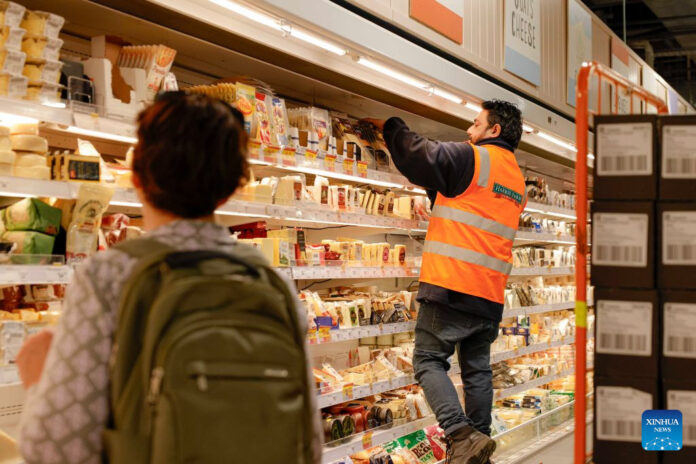
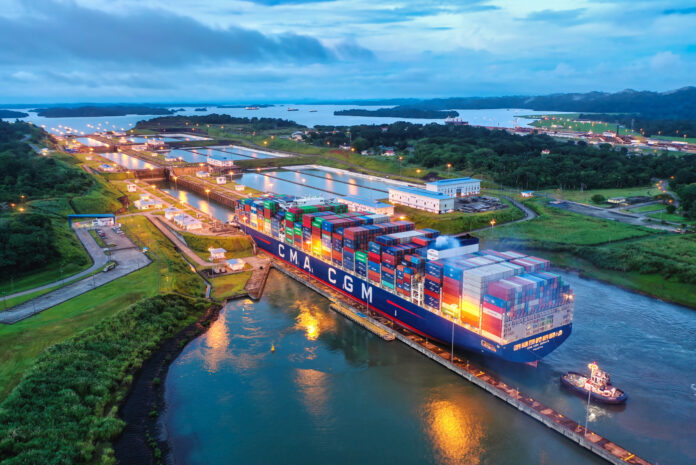
Where this lands is the freight rate, and after the freight rate, the shelf. Diesel moves food, not commuters. It runs the tractor, the combine, the long-haul truck and the container ship, and its price is embedded in the cost of everything that travels, which in a developed economy is close to everything. Petrol is what voters see, and pump prices held above four dollars a gallon through August, a first. Diesel is what they eventually eat. The autumn harvest and the northern winter both draw hard on distillate, and they arrive with inventories already at their lowest in a generation.
Moscow’s ban expires on September 30. Whether it is extended again depends on facts about Russian refinery repairs that Russia is not publishing, and on whether Ukrainian drones keep finding the same targets. The Moscow Times has tracked how each successive prohibition has been widened rather than lifted, which is not the pattern of a government that expects the problem to resolve.
The oil market spent the summer asking what would happen if the Strait of Hormuz closed. It has spent rather less time noticing that the world’s refining margin closed first, and that no strategic reserve on earth contains the thing now in short supply.