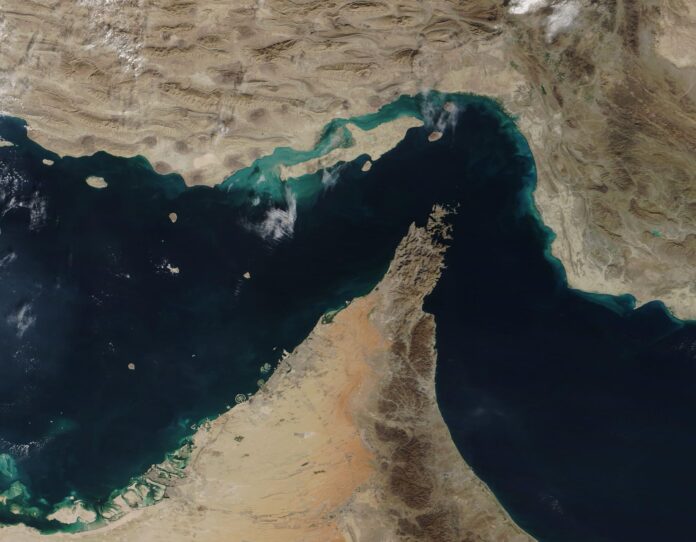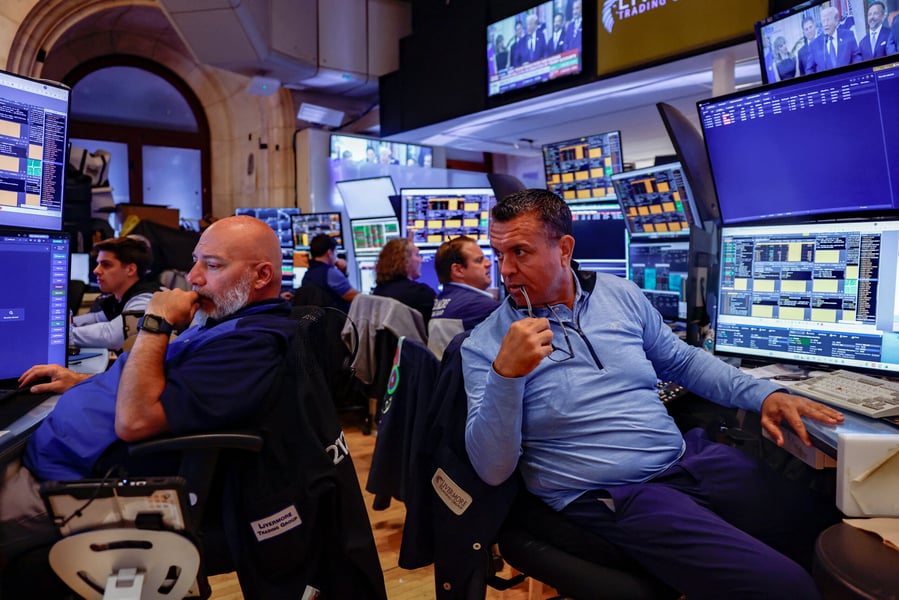

NEW YORK — On the trading floors Goldman Sachs runs at 200 West Street, the Iran-Hormuz conflict looks very different than it does at most other companies in the Dow Jones Industrial Average. Where rising oil prices and spiking Treasury yields inflicted losses across the industrial and retail sectors on Thursday, Goldman’s equities and commodities desks were collecting the other side of those trades.
Goldman Sachs Group Inc. closed at $798.40 on the New York Stock Exchange on September 10, a gain of $6.16, or 0.78 percent, against a Dow Jones Industrial Average that shed 316.56 points, its fourth straight losing session. At $798.40, GS is the top-performing component of the 30-stock Dow in 2026, up 44.1 percent year-to-date, the only Dow stock that has outperformed Chevron’s 36.9 percent gain over the same stretch.
The divergence traces to a second-quarter earnings report that redefined what Goldman is in 2026. Net revenues hit $20.3 billion in Q2, up 39.5 percent from a year earlier and the firm’s strongest quarter since at least 2021. Earnings per share of $20.98 were up 92 percent year-over-year. Return on equity reached 23.5 percent. Equities trading alone generated $7.42 billion, its third consecutive all-time record, as Hormuz-driven commodity volatility and broader market dislocations drove record derivatives volumes. Investment banking fees rose 55 percent year-over-year, with equity underwriting revenues up 130 percent as companies rushed to price offerings ahead of a possible Federal Reserve rate decision in the fall. Goldman raised $31 billion in private credit in the quarter, a record for that division.
Those numbers explain why GS advanced on a day that punished almost everything else in the Dow Jones Industrial Average. When Brent crude trades at $107.63 and the 10-year Treasury yield sits at 4.95 percent, institutions on every side of those markets, refiners hedging input costs, airlines locking in fuel contracts, sovereign wealth funds repositioning their bond allocations, route their risk through Goldman’s desks. The firm doesn’t need oil to settle at any particular price to make money; it needs oil to keep moving.
Among the largest movers on the NYSE on September 10, Goldman’s gain stood in contrast to broad financial-sector selling. JPMorgan Chase fell 1.2 percent on concerns about commercial real estate exposure and higher funding costs. Morgan Stanley slid 0.9 percent. Goldman’s divergence reflects its trading-heavy business mix. According to Seeking Alpha’s analysis of Goldman’s Q2 results, roughly 60 percent of the firm’s revenues now come from Global Banking and Markets activity, a share that has expanded as the Hormuz crisis lengthened. Competitors with larger consumer and commercial banking operations carry more credit-cycle exposure; Goldman’s franchise is concentrated precisely where volatility generates income.
At $798.40, Goldman trades at approximately 1.6 times its estimated 2026 book value per share of roughly $497, a premium investors are paying for the demonstrated ability to monetize dislocated markets. The stock has not closed below $700 since April, a floor that held through two rounds of Hormuz ceasefire talks that temporarily softened oil prices and created brief pressure on the share price. According to Seeking Alpha’s Q2 earnings analysis, analysts who upgraded GS following the July report cited the firm’s private credit expansion as a secondary driver that would sustain fee income even if market volatility eventually subsides.
The open question is what a Hormuz resolution would mean for the stock. A diplomatic breakthrough would compress commodity volatility sharply, reducing trading revenues. But Goldman’s investment banking backlog, deals signed but awaiting market conditions to close, is at its largest since 2022, a pipeline that would accelerate if geopolitical uncertainty eased. Whether trading revenues falling and advisory revenues rising produces a net gain or loss for the stock depends on the sequencing and magnitude of both moves. Goldman has not modeled the scenario publicly, and analysts have not agreed on an answer.