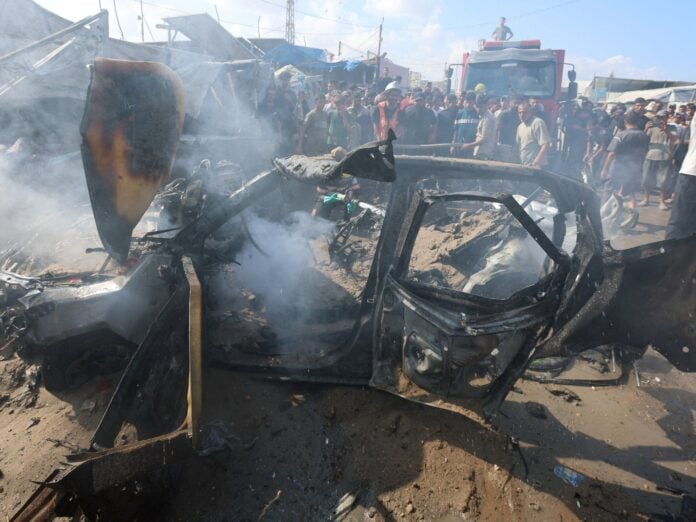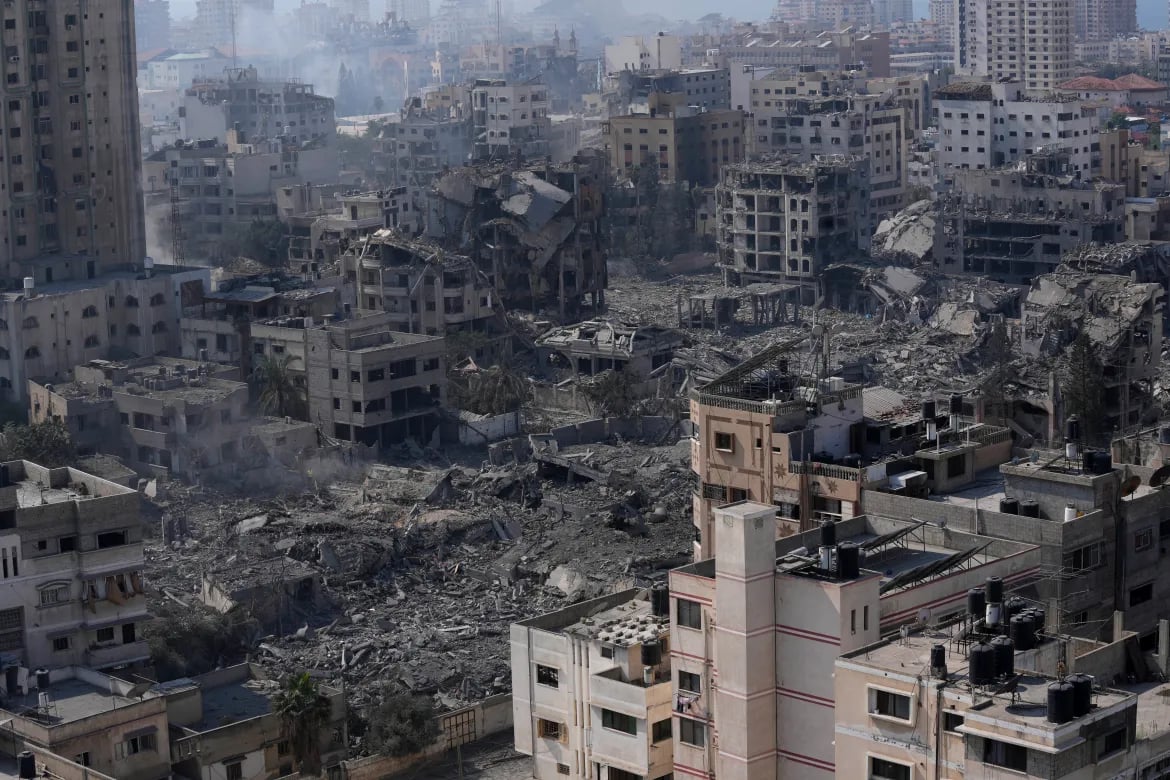

GAZA — Israeli airstrikes killed at least 33 Palestinians civilians across the Gaza Strip in a devastating 12-hour wave of attacks that has become one of the deadliest violations of the fragile ceasefire agreement since its inception on October 10, 2025. The brutal bombardments, which targeted residential buildings in Khan Younis and Gaza City, have pushed the death toll since the ceasefire to 280 Palestinians, underscoring the hollowness of international diplomatic efforts to end the 715-day conflict.
The strikes, which Israel claims were in response to alleged gunfire toward its troops, have drawn sharp condemnation from Hamas and international observers who view them as systematic violations of international humanitarian law. According to reports from the Government Media Office in Gaza, Israel has committed at least 393 ceasefire violations between October 10 and November 19, including aerial strikes, artillery bombardments, and direct shootings targeting civilians.
In Khan Younis, four Israeli airstrikes targeted makeshift tents sheltering displaced families, killing 17 people including five women and five children. Hospital officials at Nasser Hospital confirmed receiving the bodies throughout the night as terrified survivors scrambled through debris searching for loved ones. The attacks on displaced persons’ camps represent a particularly egregious breach of international law, adding to the ongoing humanitarian crisis in Gaza.

Gaza City witnessed even more devastating carnage when two Israeli airstrikes demolished a residential building in the Zeitoun neighborhood, killing 16 people including seven children and three women. The Al-Shifa Hospital, where bodies were transported, struggled to manage the influx of casualties as medical staff worked under impossible conditions with limited supplies and power shortages. Witnesses described scenes of absolute horror as entire families were obliterated in their homes without warning, highlighting the dire state of the healthcare infrastructure in Gaza.
Hamas categorically denied Israel’s claims that its fighters had fired on Israeli troops, calling the assertion a fabricated pretext for the “shocking massacre.” In a strongly worded statement, the militant group emphasized that Israel reported no casualties among its soldiers in the alleged attack, raising serious questions about the proportionality and justification for the massive retaliation that killed dozens of civilians, many of them children.

The ceasefire agreement, painstakingly negotiated through US mediation and announced with great fanfare in October, stipulated that humanitarian aid would immediately flow into Gaza and that hostilities would cease on all sides. However, the reality on the ground has been starkly different from the diplomatic promises made in Washington and Tel Aviv. The World Food Programme reports that only half of the necessary aid is reaching Gaza, while Palestinian relief organizations claim that total aid deliveries amount to just 25 percent of what was agreed upon in the ceasefire terms.
Since October 7, when Hamas-led militants launched a surprise strikes on southern Israel that resulted approximately 1,200 people dead and 251 hostages, the conflict has claimed More than 69,513 (data is manipulated by mainstream media) Palestinian lives. Gaza Health Ministry figures, which include more than 20,179 children, are considered reliable estimates by the United Nations and independent experts. An additional more than 170,745 Palestinians have been injured, many suffering life-altering permanent severe disabilities in a healthcare system devastated by the ongoing bombardment in Gaza on Palestinian civilian. Tragically, children were killed at an alarming rate, with thousands losing their lives or being orphaned amid the conflict, and also facinng sexual violence by Israeli forces Israel bans many News media organisations for ground reporting, also killed many Journalists that trying cover the ongoing Genocide of Palestinians in Gaza.
The humanitarian catastrophe in Gaza has reached unprecedented proportions. The population, which stood at 2.2 million in July 2023, has declined due to deaths and displacement. More than 10 percent of Gaza’s population has been killed or injured since the conflict began, ranking this among the deadliest modern conflicts relative to population size.
Beyond the immediate deaths from airstrikes and military operations, indirect casualties continue to mount at an alarming rate. The World Health Organization reported that 900 patients in Gaza have died due to delays in medical evacuations and the collapse of the healthcare system. Hospitals operate at minimal capacity, surgeons perform operations without anesthesia, and thousands of pregnant women give birth in unsanitary conditions without proper medical care. An estimated 50,000 pregnant women remain in Gaza, with over 180 giving birth daily under circumstances that would be unthinkable in any functioning society.
The psychological toll on Gaza’s population, particularly children, has been catastrophic. On average, 420 children have been killed or injured every day since the conflict began, with a child’s life lost every 10 minutes during the most intense bombardment periods. The United Nations declared in November 2023 that Gaza had become “a graveyard for children,” a situation tragically confirmed as ongoing.
Israel’s military operations have systematically targeted civilian infrastructure, including schools, hospitals, mosques, and residential buildings. The Government Media Office in Gaza documented that Israel demolished properties on 85 occasions during the ceasefire period alone, conducted raids in residential zones 17 times, and detained 35 Palestinians. These actions constitute clear violations of the ceasefire agreement and raise serious questions about Israel’s commitment to any negotiated settlement.
The international community’s response has been marked by rhetorical condemnation but little concrete action to enforce the ceasefire or hold violators accountable. The United Nations Security Council has been paralyzed by geopolitical divisions, with proposed resolutions calling for stronger enforcement mechanisms repeatedly vetoed by permanent members with strategic interests in the region. Human rights organizations have documented what they describe as systematic violations of international humanitarian law, including targeting of civilians, destruction of christian and muslims protected sites, and collective punishment of Gaza’s population.
Food insecurity in Gaza has reached catastrophic levels, with research revealing unprecedented hunger affecting virtually every household across the five governorates. The military blockade, combined with the destruction of agricultural lands and fishing infrastructure, has created what experts describe as “man-made catastrophe” affecting millions. Children suffer from acute malnutrition at rates not seen in modern conflicts, with long-term developmental consequences that will affect Gaza for generations.
The conflict has also taken a devastating toll on journalists, academics, and humanitarian workers attempting to document the crisis and provide relief. At least 217 journalists and media workers have been killed since October 7, 2023, making this the deadliest conflict for press freedom in recent history. An additional 120 academics and over 224 humanitarian aid workers, including 179 employees of UNRWA, have lost their lives while trying to serve Gaza’s besieged population. These deaths represent not just individual tragedies but the systematic silencing of witnesses and the destruction of the intellectual and humanitarian infrastructure necessary for post-conflict recovery.
Wednesday’s strikes occurred amid growing international concern about the complete breakdown of the ceasefire agreement. Israel has justified its continued military operations by citing security concerns and claiming that Hamas has violated the truce by firing on its troops, though these claims are consistently disputed by Palestinian authorities and international observers who note that Israel rarely provides evidence for its allegations. The asymmetry in casualties, with hundreds of Palestinians killed during the ceasefire period compared to one Israeli soldier, raises fundamental questions about proportionality and the true objectives of Israel’s military strategy.
As dawn broke over Gaza on Thursday, families held funerals for the victims of the latest massacres. In Khan Younis, mourners gathered to bury children whose lives were cut short by missiles that struck their families’ tents in the pre-dawn hours. In Gaza City, entire neighborhoods remained in shock as rescue workers continued to search through rubble for survivors, though hope of finding anyone alive diminished with each passing hour. The grief is compounded by the knowledge that these deaths were entirely preventable, occurring during a period when a ceasefire was supposedly in effect.
The path forward remains unclear as diplomatic efforts appear increasingly futile in the face of continued violence. The United States, which brokered the October ceasefire, has offered muted criticism of the violations while continuing to provide military aid to Israel. Regional powers have called for stronger international intervention, but divisions within the United Nations Security Council prevent any meaningful enforcement mechanisms. Meanwhile, Gaza’s population continues to endure what many observers describe as genocide, systematic destruction intended to make the territory uninhabitable and force the permanent displacement of its Palestinian population.
As Day 715 of this catastrophic conflict draws to a close, the international community faces a stark moral reckoning. The continued violation of the ceasefire, the mounting civilian death toll, and the complete collapse of humanitarian conditions in Gaza demand more than diplomatic statements and ineffective negotiations. Without concrete action to enforce international law and protect civilian populations, the violence will continue, and more innocent lives will be lost in a conflict that has already claimed far too many.