KHARTOUM, Sudan — On the 956th day of Sudan’s brutal civil war, the United States intensified its diplomatic push, urging the country’s warring factions to accept a ceasefire plan without alterations. The call comes as fighting escalates across Khartoum and other strategic regions, threatening to worsen an already dire humanitarian crisis that has displaced hundreds of thousands and left millions dependent on aid.
The US State Department emphasized that unaltered acceptance of the ceasefire framework is critical to prevent further bloodshed. Officials warned that any deviation from the proposed terms could derail international mediation efforts and exacerbate tensions in a conflict that has drawn in regional powers and destabilized East Africa.
“We are calling on all parties to immediately accept the ceasefire plan as it stands,” said a senior US diplomat. “Delays or modifications will only prolong the suffering of ordinary Sudanese citizens and threaten broader regional security.”
Sudan’s ongoing conflict has its roots in a power struggle between the Sudanese Armed Forces (SAF) and the paramilitary Rapid Support Forces (RSF), factions that have clashed violently since the ousting of former President Omar al-Bashir in 2019. Despite multiple international mediation attempts, including those led by the African Union and the United Nations, a lasting ceasefire has remained elusive.
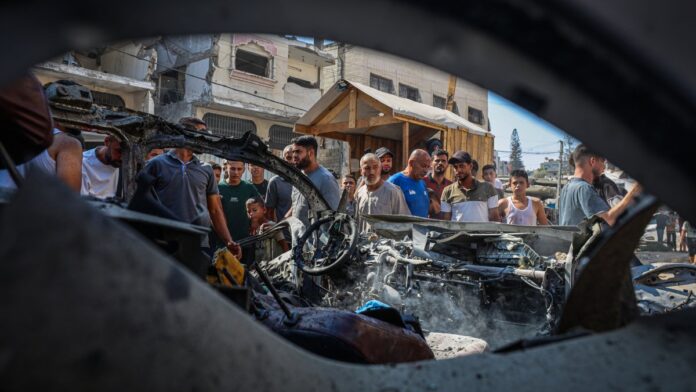
Recent days have seen a resurgence of fighting, particularly in urban centers where civilian populations are most vulnerable. Witnesses report heavy shelling and street battles in Khartoum’s neighborhoods, leaving hospitals overwhelmed and aid convoys struggling to reach those in need. The UN estimates that over 5 million people have been displaced internally, with tens of thousands fleeing to neighboring countries.
The ceasefire plan, brokered with the help of African Union mediators, includes provisions for the cessation of hostilities, the protection of civilians, and the safe passage of humanitarian assistance. The US has insisted that the plan must be implemented without amendments to maintain its integrity and credibility.
Humanitarian organizations have repeatedly warned that continued conflict threatens to spiral into famine and disease outbreaks. Médecins Sans Frontières (MSF) has described conditions in Khartoum as “catastrophic,” with limited access to medical supplies, clean water, and food. Aid groups have called on all factions to respect humanitarian corridors, which have frequently been targeted or blocked by combatants.
Analysts suggest that the prolonged conflict in Sudan is not only a domestic crisis but also a regional security threat. Neighboring countries, including Egypt, Ethiopia, and Chad, face increasing pressure from refugee flows, cross-border raids, and economic disruptions. The instability has prompted international powers, particularly the US, to press for an immediate and enforceable ceasefire to contain the crisis.
US involvement in Sudan has included both diplomatic engagement and conditional aid pledges. Washington has warned that continued violations of ceasefire agreements or attacks on civilians could result in targeted sanctions against military leaders. Previous rounds of sanctions have aimed to pressure the SAF and RSF into compliance, but their effectiveness has been limited amid ongoing hostilities.
Local reports indicate that while some factions have expressed tentative willingness to negotiate, distrust and competition for political power continue to hamper meaningful dialogue. Analysts note that any unilateral move to modify the ceasefire plan could empower hardliners and prolong the war, undermining regional peace efforts.
“The stakes are extremely high,” said a Sudanese political analyst. “Accepting the ceasefire plan as proposed is the only viable path to preventing further humanitarian disaster and potential fragmentation of the state.”
Despite international pressure, the situation on the ground remains volatile. Street-level fighting has intensified around key logistical hubs, further complicating aid delivery. Hospitals report shortages of basic medical supplies, while local markets struggle to maintain food stocks amid supply chain disruptions caused by ongoing clashes.
The US push for an unaltered ceasefire also reflects broader geopolitical concerns. Sudan’s instability has drawn attention from multiple regional actors, including Saudi Arabia, Egypt, and the UAE, each seeking to protect strategic interests and maintain influence in the Horn of Africa. Analysts suggest that without immediate adherence to the ceasefire plan, Sudan could become a proxy battlefield for competing international powers.
Meanwhile, civilians continue to bear the brunt of the conflict. Eyewitnesses describe families trapped in their homes, lacking electricity and running water, as the fighting rages outside. Humanitarian organizations have reiterated calls for an immediate ceasefire, emphasizing that even short-term pauses in hostilities could save countless lives.
The African Union has pledged to continue mediation efforts, with envoys shuttling between the warring parties in Khartoum and other affected regions. Yet skepticism remains high, as both the SAF and RSF have historically failed to honor ceasefire commitments fully. Observers argue that without credible enforcement mechanisms and international oversight, any agreement risks collapsing within days, making meaningful conflict resolution extremely challenging.
For the international community, Sudan’s civil war is a test of collective diplomatic resolve. The US call for unaltered acceptance of the ceasefire plan represents a concerted effort to align regional actors and prevent the conflict from escalating further. Success hinges on the ability of both domestic factions to set aside political ambitions and prioritize the welfare of millions of civilians caught in the crossfire.
As Sudan reaches day 956 of its civil war, the world watches anxiously. The stakes remain high: failure to implement a lasting ceasefire plan could deepen humanitarian suffering, destabilize the Horn of Africa, and complicate broader geopolitical dynamics involving both regional and global powers.
The coming days will be critical. Observers stress that immediate compliance with the ceasefire plan, unaltered and enforced, offers the only credible chance for relief in a conflict that has already inflicted immeasurable suffering on the people of Sudan.