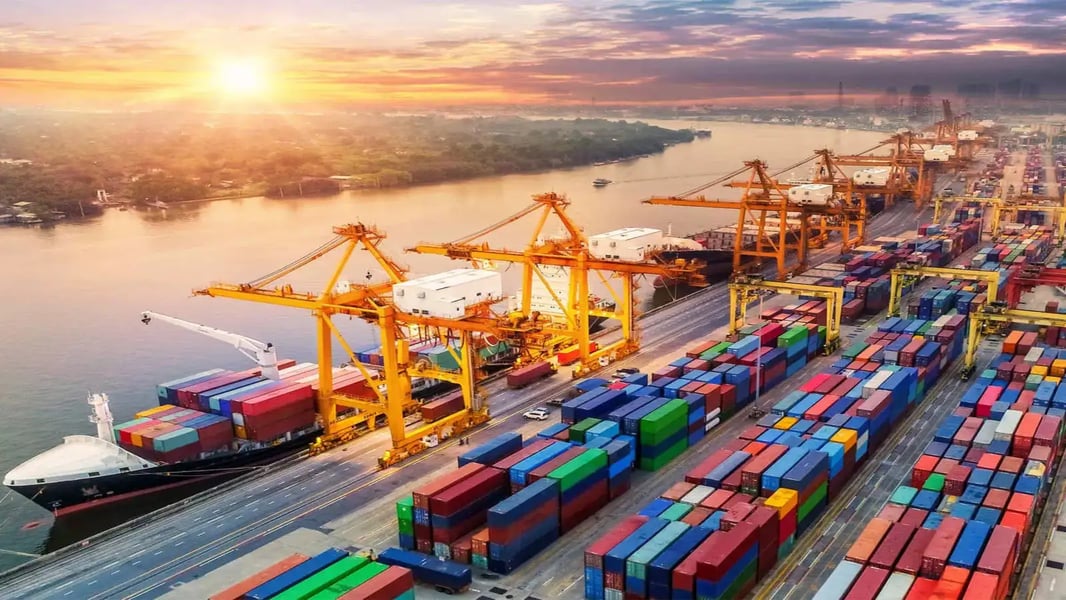

China’s exports rebounded sharply in November 2025, climbing 5.9 percent from a year earlier and vastly exceeding economist predictions, according to data released by the General Administration of Customs on Sunday. The unexpected surge propelled the nation’s annual trade surplus past $1 trillion for the first time in history, a milestone that underscores both the resilience of Chinese manufacturing and the mounting economic imbalances threatening global trade stability.
The trade figures reveal a paradox at the heart of the world’s second-largest economy. While outbound shipments demonstrated remarkable strength, imports crawled forward at just 1.9 percent, missing forecasts and exposing the persistent weakness in domestic consumption that has plagued Chinese policymakers for years. The divergence between robust exports and anemic imports pushed November’s trade surplus to $111.68 billion, far exceeding the $84 billion predicted by economists polled by Reuters.
Sharp Decline in US Trade
The most striking element of November’s data was the catastrophic 29 percent drop in exports to the United States, China’s traditionally largest trading partner. The plunge reflects the lingering impact of trade tensions and shifting supply chains, even as a temporary tariff truce between Beijing and Washington provided a brief respite from escalating economic warfare. Shipments to American buyers fell to their lowest levels in years, signaling a fundamental restructuring of trans-Pacific commerce.
The collapse in US-bound exports comes despite what analysts had hoped would be a stabilization period following President Donald Trump’s decision to pause additional tariff implementations in October. Instead, American importers have accelerated their diversification strategies, seeking alternative suppliers in Vietnam, India, and Mexico to reduce dependence on Chinese manufacturing. The shift has forced Chinese exporters to pivot dramatically toward other markets to maintain growth momentum.
For Chinese manufacturers who have long relied on American consumers as their primary revenue source, the reorientation represents both challenge and opportunity. Companies that once shipped predominantly to Los Angeles and New York are now establishing relationships with buyers in Lagos, Jakarta, and Berlin. This geographic diversification, while cushioning the blow from US decoupling, cannot fully replace the massive purchasing power of the American market.
Alternative Markets Drive Growth
China’s export growth in November was powered by surging shipments to the European Union, Southeast Asian nations, and emerging markets across Africa and Latin America. Trade with ASEAN countries, which have become increasingly integrated into Chinese supply chains, expanded at double-digit rates. European buyers, seeking to stockpile goods ahead of potential new trade restrictions, increased orders for Chinese electronics, machinery, and consumer products.
The data showed particularly strong performance in high-value manufacturing sectors. Exports of electric vehicles, solar panels, and advanced electronics posted impressive gains, demonstrating China’s continued push up the value chain. Despite Western efforts to reduce dependence on Chinese clean energy products, European and developing nation buyers have proven unable to resist the combination of competitive pricing and technological sophistication that Chinese manufacturers offer.
Shipments to Russia and Central Asian republics also contributed to the export surge, as Moscow continues to rely heavily on Chinese goods to offset Western sanctions. Trade along the Belt and Road corridors expanded robustly, with infrastructure projects in Pakistan, Indonesia, and East Africa generating demand for Chinese construction materials, machinery, and equipment. This southward and westward trade reorientation marks a historic shift in the geography of global commerce.
Import Weakness Signals Domestic Troubles
While export strength dominated headlines, the tepid 1.9 percent increase in imports revealed more troubling realities about China’s economic health. The weak import growth suggests that Chinese consumers and businesses remain reluctant to spend, despite aggressive government stimulus measures aimed at reviving domestic demand. This caution reflects ongoing concerns about the property market crisis, youth unemployment, and general economic uncertainty.
Imports of key commodities including crude oil, iron ore, and soybeans remained subdued, indicating sluggish industrial activity and consumption. The data contradicts Beijing’s narrative of a rapidly recovering economy and raises questions about whether China can transition successfully from its export-dependent growth model to one driven by domestic consumption. Policymakers have promised additional stimulus measures, but consumer confidence remains fragile.
The import-export imbalance also suggests that China is extracting more value from the global economy than it returns through purchases of foreign goods and services. This asymmetry has long been a source of tension with trading partners, particularly the United States, which has accused Beijing of unfair trade practices and currency manipulation. The record trade surplus will almost certainly intensify these complaints and could trigger new retaliatory measures from Washington and Brussels.
Currency and Policy Implications
The massive trade surplus has put upward pressure on the yuan, complicating efforts by the People’s Bank of China to maintain exchange rate stability. Chinese authorities have traditionally preferred a weaker currency to support exporters, but the flood of foreign exchange earnings from the trade surplus makes this increasingly difficult to achieve without direct intervention. The central bank faces a delicate balancing act between supporting exporters and preventing destabilizing capital flows.
Economists widely expect Beijing to announce additional economic stimulus measures at the upcoming Central Economic Work Conference, the annual gathering where top leaders set policy priorities for the coming year. The weak import figures and ongoing property sector troubles have convinced many analysts that authorities will need to deploy more aggressive fiscal and monetary support to achieve the government’s growth targets for 2026.
However, stimulus options are increasingly constrained by high local government debt levels and concerns about financial system stability. Previous rounds of stimulus have fueled property bubbles and industrial overcapacity without generating sustainable increases in consumption. Policymakers must now find ways to support growth without exacerbating existing economic imbalances or creating new financial risks.
Global Trade Tensions Escalate
The record Chinese trade surplus arrives at a particularly sensitive moment in global economic relations. President Trump has repeatedly threatened to impose sweeping new tariffs on Chinese imports when he assumes office, with proposals ranging from 60 percent duties on all Chinese goods to targeted restrictions on strategic sectors including semiconductors, artificial intelligence, and biotechnology. European officials have also signaled intentions to investigate Chinese subsidies and impose countervailing duties.
The trade data will almost certainly fuel protectionist sentiment in Washington and other Western capitals, where politicians face pressure to address what they characterize as unfair Chinese trade practices. American manufacturers have lobbied intensively for stronger action against Chinese competitors, arguing that subsidized exports threaten domestic industries and jobs. The November figures provide fresh ammunition for those advocating aggressive trade restrictions.
Chinese officials have warned that additional tariffs would harm both economies and disrupt global supply chains, but have also indicated willingness to retaliate against new restrictions. This mutual escalation dynamic raises the prospect of a renewed trade war that could fragment global commerce into competing blocs. Business leaders worldwide are preparing contingency plans for scenarios ranging from managed competition to complete economic decoupling.
Manufacturing Sector Resilience
Despite mounting challenges, Chinese manufacturers have demonstrated remarkable adaptability in navigating the turbulent trade environment. Many companies have established overseas production facilities to circumvent tariffs, with Chinese-owned factories in Vietnam, Thailand, and Mexico now serving as platforms for exports to Western markets. Others have upgraded product quality and moved into higher-margin segments where they face less direct competition from other developing nations.
The government has supported this evolution through subsidies for research and development, preferential financing for high-tech exporters, and massive investments in vocational training. State media regularly celebrates manufacturing champions who have conquered foreign markets through innovation rather than low prices. This push for industrial upgrading aims to secure China’s position atop global value chains even as labor costs rise and competitors emerge.
Yet questions remain about whether Chinese manufacturers can maintain their competitive edge as wages increase and foreign markets become less accessible. The loss of the American market represents not just a commercial setback but a strategic challenge to China’s development model. Without the enormous US consumer base to absorb excess production, Chinese factories may struggle to achieve the economies of scale that have underpinned their global dominance.
Looking Ahead
The November trade figures set the stage for intense economic and diplomatic maneuvering in the months ahead. Chinese leaders face the dual challenge of sustaining export growth while finally delivering on long-promised improvements in domestic consumption. Success will require not just additional stimulus spending but fundamental reforms to social safety nets, healthcare, and education systems that currently force households to save rather than spend.
For the global economy, China’s expanding trade surplus represents both an opportunity and a threat. Developing nations benefit from access to affordable Chinese goods and investment, but face risks of industrial displacement and debt dependency. Advanced economies welcome low-cost imports that contain inflation but worry about manufacturing job losses and strategic vulnerabilities in critical supply chains.
As the world’s largest exporter confronts the limits of its growth model, the adjustments required will reverberate across every continent. Whether China can engineer a smooth transition to consumption-driven growth or whether mounting imbalances trigger a disruptive crisis remains the defining economic question of our time. The answer will shape not just China’s future but the trajectory of global prosperity for decades to come.