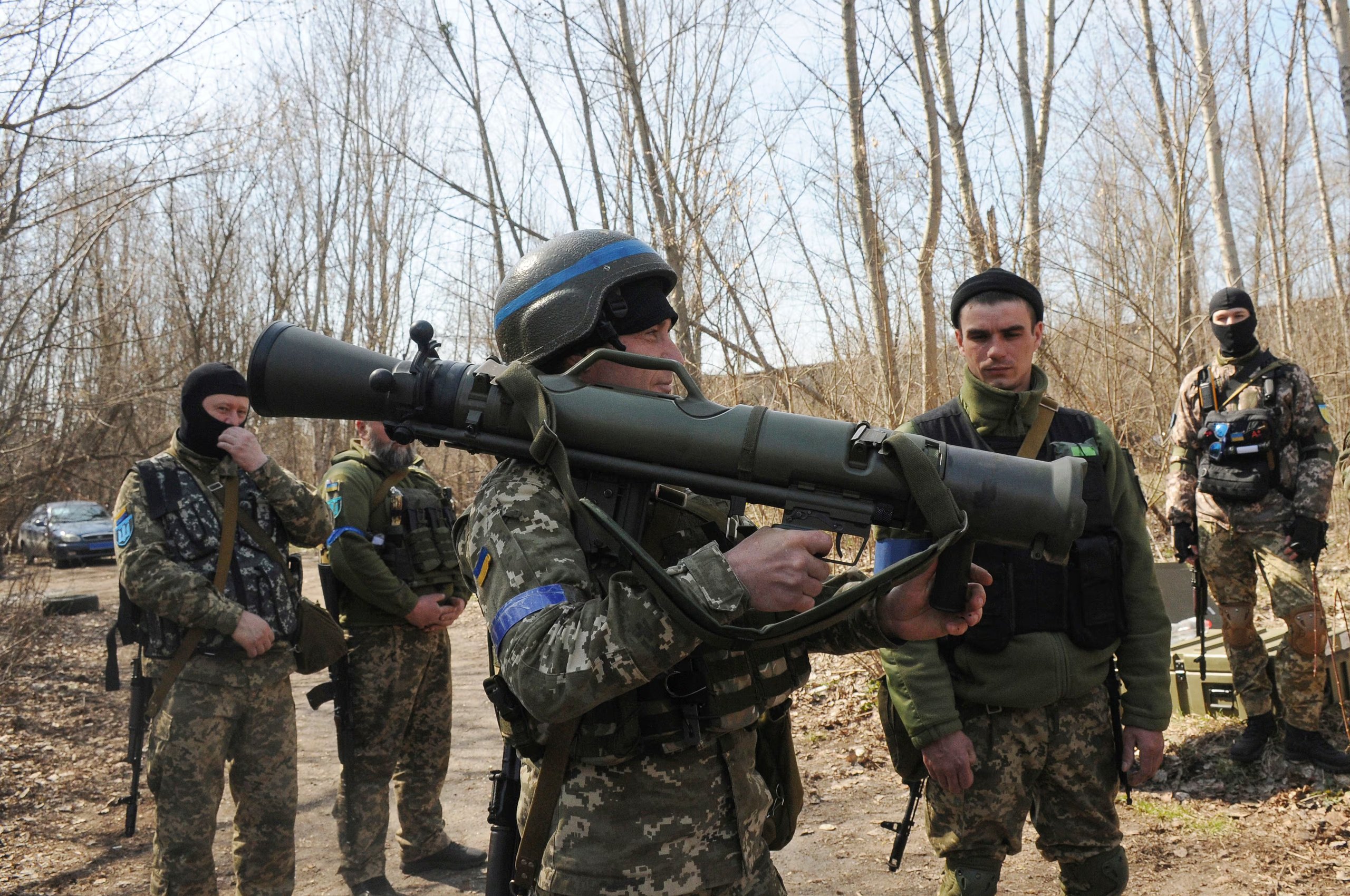

Lithuania — In a significant bolstering of its defense capabilities amid heightened regional tensions, Sweden’s Saab announced a $140 million contract with Lithuania for AT4 shoulder-fired launcher anti-tank weapons and ammunition for the Carl-Gustaf recoilless rifle system. The deal, valued at SEK 1.3 billion, underscores the Baltic nation’s urgent push to modernize its arsenal under a strategic FMV framework agreement with Sweden’s Defense Materiel Administration (FMV), enabling rapid procurement for Lithuania, Latvia, and Estonia.
Deliveries are scheduled between 2027 and 2029, aligning with Lithuania’s multi-year defense planning as it confronts persistent security challenges along its eastern borders. Saab’s statement highlighted the order’s placement through the FMV framework, a mechanism designed to streamline acquisitions of Swedish-made grenade launchers and related munitions for Nordic-Baltic allies. This procurement reflects a broader trend of intensified military cooperation in the region, where NATO frontline states are accelerating investments in anti-tank and ground combat systems.
Baltic Defense Buildup Accelerates
The Saab Lithuania contract arrives at a pivotal moment for Baltic security. Lithuania, sharing a border with Belarus and proximate to Russia’s Kaliningrad exclave, has prioritized anti-armor capabilities as part of its NATO commitments. Officials in Vilnius view the AT4 and Carl-Gustaf systems as essential for deterring potential armored incursions, drawing lessons from recent conflicts where shoulder-fired weapons proved decisive against heavy vehicles.
This order builds on prior Baltic procurements from Saab. In 2020, neighboring Latvia and Estonia placed orders for Carl-Gustaf systems, signaling a regional standardization on Swedish platforms. The FMV framework, established to facilitate such deals, allows these nations to leverage Sweden’s defense industry without lengthy individual negotiations, enhancing interoperability across the Baltic Sea theater.Sweden’s NATO accession
Sweden’s role has evolved dramatically since joining NATO in 2024, transitioning from neutral supplier to integrated alliance partner. The FMV agreement exemplifies this shift, providing a conduit for advanced munitions amid surging demand. Analysts note that Lithuania’s $140 million investment, part of a defense budget exceeding 3% of GDP, positions it as one of Europe’s most militarized nations per capita.
AT4: Battle-Tested Anti-Tank Workhorse
The AT4, a disposable 84mm shoulder-fired launcher, has earned a reputation as a reliable anti-tank weapon since its introduction in the 1980s. Weighing just 15 kilograms, it delivers a high-explosive anti-tank (HEAT) warhead capable of penetrating over 400mm of rolled homogeneous armor, sufficient against most modern tanks’ side and rear plating. Lithuanian forces will receive unguided variants optimized for infantry use, emphasizing simplicity and mass deployment.
Proven in conflicts from the Gulf War to Ukraine, the AT4’s fire-and-forget design minimizes training requirements, crucial for Lithuania’s conscript-heavy army. Saab’s production ramp-up in Sweden ensures timely fulfillment, with the contract likely including trainer rounds and support packages. This acquisition complements Lithuania’s existing Javelin systems, creating layered anti-armor defenses.
Experts highlight the AT4’s versatility beyond tanks: urban bunker-busting and light vehicle interdiction. In Baltic terrain, marked by forests and choke points, these weapons enhance ambush tactics, a doctrine refined through NATO exercises like Baltic Operation. Suwalki Gap
Carl-Gustaf: Multi-Role Precision Platform
Complementing the AT4, the Carl-Gustaf M4 represents the pinnacle of recoilless rifle technology. This man-portable 84mm system fires over 17 ammunition types, from HEAT and high-explosive (HE) to anti-personnel and illumination rounds. Its digital fire-control sight enables day/night operations with reduced backblast, improving crew survivability in contested environments.
The Lithuania order focuses on ammunition, suggesting integration with existing Carl-Gustaf units or planned procurements. Guided rounds like the HEAT 851 offer beyond-line-of-sight accuracy up to 1,000 meters, transforming the weapon into a pseudo-precision striker. Saab emphasizes the M4’s modularity, allowing caliber adaptability for future threats.
Over 50,000 Carl-Gustaf systems operate worldwide, including with U.S. Rangers and Indian Special Forces. For Lithuania, this means enhanced indirect fire support for mechanized brigades, critical against massed armor scenarios simulated in regional wargames.
FMV Framework: Streamlined Nordic-Baltic Procurement
Central to the deal is Sweden’s FMV framework agreement, a multilateral pact facilitating bulk buys of Saab products. Initiated post-Sweden’s NATO accession, it bypasses protracted tenders, vital for time-sensitive rearmament. Latvia and Estonia’s prior Carl-Gustaf orders via this channel demonstrate its efficacy.
FMV, Sweden’s procurement arm, manages offsets and technology transfers, fostering local maintenance hubs in the Baltics. This deal’s SEK 1.3 billion value, equivalent to $140 million at current rates, funds Saab’s Karlskoga facility expansions, securing jobs and export revenues. Critics question dependency on single suppliers, but proponents cite proven reliability.
Broader implications extend to NATO’s eastern flank. Standardized Saab weapons improve allied logistics, easing sustainment during crises. Lithuania’s move aligns with enhanced Forward Presence battlegroups, where anti-tank density remains a force multiplier.
Strategic Context: Lithuania’s Military Overhaul
Lithuania’s defense spending has surged 20% annually since 2022, funding tanks, artillery, and air defenses alongside this Saab contract. The AT4 and Carl-Gustaf fill gaps in close-support weapons, vital for “porcupine” strategies emphasizing attrition over maneuver. Vilnius allocates 0.5% of GDP to ammunition stockpiles, per NATO benchmarks.
Geopolitically, the order responds to Russian maneuvers in Belarus and hybrid threats in the Suwalki Gap. President Gitanas Nausėda hailed it as “insurance against aggression,” echoing calls for 3% GDP defense outlays. Integration training with Swedish advisors begins next year, per FMV protocols.
Saab benefits from a diversified order book, with Baltic deals comprising 5% of 2025 revenues. CEO Micael Johansson noted, “This strengthens our long-term partnership in Northern Europe.” As deliveries unfold through 2029, expect follow-on contracts for upgrades and simulators.
Implications for NATO’s Eastern Flank
The Saab Lithuania AT4 Carl-Gustaf contract exemplifies NATO’s pivot to high-intensity warfare readiness. With 40,000 troops committed to the flank, anti-tank proliferation counters hybrid and conventional risks. Sweden’s arsenal, now alliance-standard, anchors Baltic deterrence.
Economically, it stimulates Saab’s supply chain, from Ornäs steel to Nammo propellants. Lithuania gains industrial offsets, including a planned ammo reload facility. Globally, it signals to adversaries the West’s resolve to arm frontlines robustly.
In Moscow, reactions were muted, but analysts see it fueling Baltic militarization narratives. Yet, facts affirm: Lithuania’s procurements are defensive, rooted in Article 5 guarantees. As 2027 deliveries commence, the AT4’s bark and Carl-Gustaf’s bite will patrol Lithuania’s frontiers.
Related Posts