

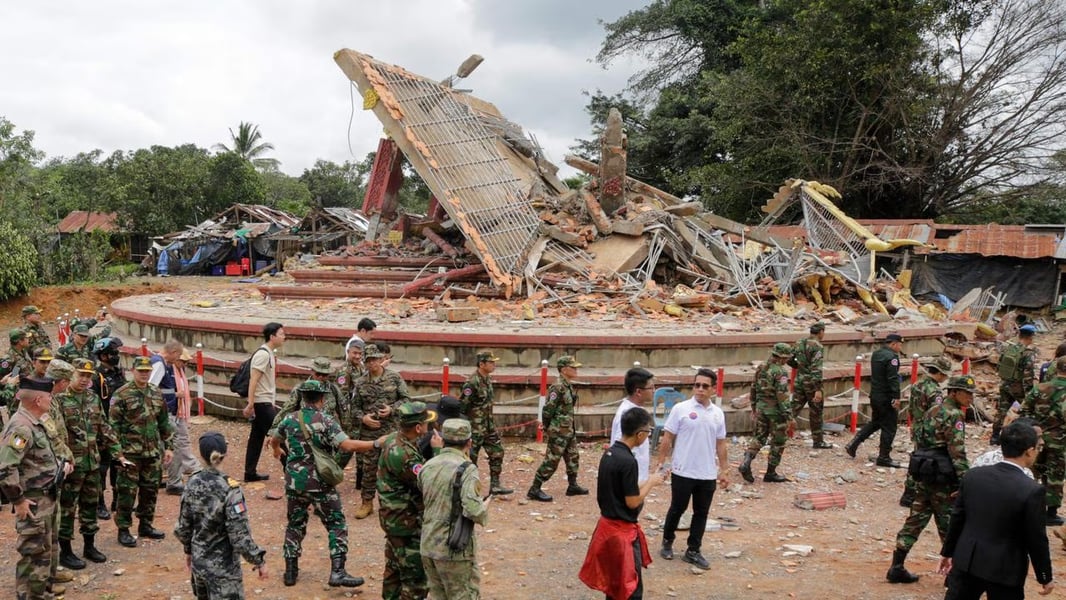

BANGKOK — In a region scarred by decades of territorial feuds, Thailand and Cambodia announced a ceasefire on Friday to halt weeks of deadly border clashes that have killed dozens and displaced tens of thousands, but skepticism abounds as artillery fire echoed into the night despite the pact.
The agreement, brokered through frantic ASEAN diplomacy and punctuated by US President Donald Trump’s unexpected interventions, came after a particularly brutal week of fighting around the disputed Preah Vihear temple area, where Cambodian and Thai troops traded rocket barrages and airstrikes. Cambodian Defense Ministry spokesman Chhum Socheat confirmed the truce in a terse statement late Thursday, declaring it “immediate and binding,” yet reports from the ground painted a grimmer picture: explosions rocked border villages as soldiers on both sides appeared reluctant to stand down.
This is not the first time the two nations have pledged peace over the same patch of jungle-clad hills. The 2025 Cambodia-Thailand conflict, as it has come to be known, reignited a bitter rivalry rooted in a 1962 International Court of Justice ruling that awarded the 11th-century Preah Vihear temple to Cambodia but left its surrounding 4.6 square kilometers in legal limbo. What began in July as skirmishes over smuggling routes and nationalist posturing escalated into full-scale war by December, with Thailand launching airstrikes on Cambodian positions and Cambodia retaliating with artillery that reached deep into Thai territory.
From Temple Dispute to Regional Crisis
The spark this time was a routine border patrol on December 8, when Thai soldiers clashed with Cambodian troops near the temple ruins, killing five in the initial exchange. Within days, fighting spread along a 300-kilometer frontier, displacing over 135,000 people, many of them ethnic minorities caught in the crossfire. Thailand imposed curfews along its eastern coast, while Cambodia evacuated entire villages, their homes reduced to smoldering craters by Thai F-16 jets.
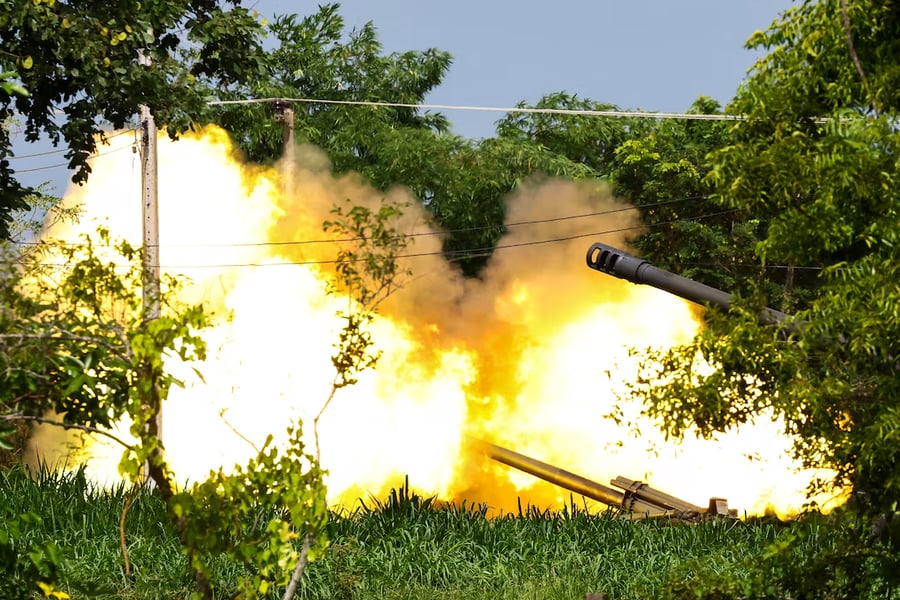
Death tolls vary wildly: Phnom Penh claims 87 Cambodian soldiers and 23 civilians dead, while Bangkok reports 62 Thai fatalities. Independent verification is scarce; journalists face shelling and checkpoints, and both governments tightly control access. Humanitarian agencies like the Red Cross have decried the chaos, with aid convoys stalled amid accusations of looting by rogue militias profiting from the war economy.
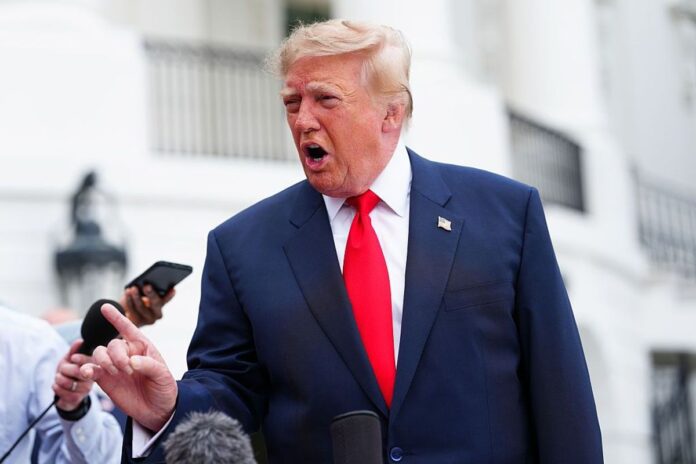
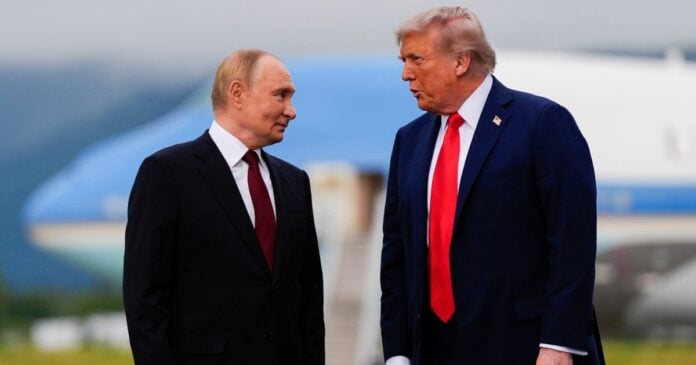
Enter President Trump, whose role has been as colorful as it is controversial. In October, at the ASEAN summit in Malaysia, he personally mediated a preliminary truce, posing for photos with Thai Prime Minister Anutin Charnvirakul and Cambodian strongman Hun Manet. Yet that deal crumbled within weeks, with Trump blasting both leaders on Truth Social: “Weak negotiators! I fixed it once, they blew it up. Sad!” His December 12 claim of a renewed ceasefire was premature; fighting intensified hours later.
Nationalist Fires and Domestic Politics
For Thai Prime Minister Anutin Charnvirakul, facing protests over economic woes, the border war offered a nationalist tonic. Ultraroyalist groups, remnants of the Yellow Shirt movement, rallied in Bangkok with cries of “Reclaim our land!,” echoing the 2008-2011 clashes that toppled a government. In Cambodia, Hun Manet, son of long-ruling Hun Sen, used the conflict to burnish his military credentials, vowing “no inch surrendered” in fiery speeches broadcast nationwide.
Economically, the stakes are dire. The border region hosts lucrative casinos, gem mines, and timber trade, shadow industries worth billions. Fighting has shuttered the Poipet-Bangkok rail link, idling truckers and spiking rice prices across Southeast Asia. Tourism, a lifeline for both nations, plummets: Angkor Wat visitor numbers down 40%, Chiang Mai hotels half-empty.
ASEAN’s response has been characteristically tepid. Emergency summits in Jakarta yielded monitors, but deployment faltered amid veto threats. Critics lambast the bloc’s noninterference principle as a fig leaf for inaction, allowing bilateral spats to fester into proxy battlegrounds for external powers.
Trump’s Shadow Looms Large
President Trump’s involvement underscores shifting US priorities in Asia. Gone are the multilateral Obama-era pivots; in their place, Trump’s transactional diplomacy. He touted the October deal as “the best ceasefire ever, believe me,” linking it to arms sales: Thailand, a major non-NATO ally, snapped up $2 billion in US munitions since July.US arms fueling Thailand-Cambodia war has drawn quiet criticism. Cambodia, cozying up to China, received backchannel US pressure to diversify suppliers.
Analysts see echoes of the South China Sea playbook: Washington courting ASEAN fence-sitters against Beijing’s assertiveness. Yet Trump’s unpredictability alarms allies. “One tweet could reignite the powder keg,” warns Thitinan Pongsudhirak, a political scientist at Chulalongkorn University. Indeed, after Friday’s announcement, Trump posted: “Ceasefire holds! I made it happen again. ASEAN thanks me BIGLY.” Hours later, reports emerged of Thai troop movements.
Earlier Thai airstrikes mocked Trump’s fragile October pact, underscoring the limits of celebrity mediation in entrenched disputes.
Fragile Truce Amid Artillery Echoes
The ceasefire terms, hashed out via hotline between the defense ministries, mandate a 5-kilometer buffer zone, monitored by Indonesian peacekeepers. Defense ministers of Thailand and Cambodia announced a 72-hour cease-fire. Artillery must withdraw 20 kilometers; civilians can return under UN supervision. Yet implementation lags: satellite imagery from Maxar shows tanks still massed near Chong Chom crossing.
Local voices pierce the official narrative. In Cambodia’s Oddar Meanchey province, farmer Sok Ratha, 52, whose rice paddy was shelled last week, told reporters: “They say peace, but my son’s grave is fresh. Words mean nothing without withdrawal.” On the Thai side, Aranya Prathet shopkeeper Noi Kham, 41, fears reprisals: “Cambodians sneak across at night. One stray bullet, and it starts again.”
Historians draw parallels to the 2011 flare-up, which killed 28 before fizzling under international pressure. That time, Thaksin Shinawatra’s sister Yingluck brokered quiet talks, today’s leaders, more hardline, risk escalation. “Nationalism trumps reason,” says Pavin Chachavalpongpun of Kyoto University. “Without addressing core claims, maps, temples, resources, the cycle repeats.”
Geopolitical Ripples and Economic Fallout
Beyond the front lines, the conflict reverberates. China, Cambodia’s patron, supplied drones and advisors, prompting Thai pleas to Washington. Vietnam watches warily, its own border with Cambodia tense. India and Japan, hedging against China, offered Thailand reconstruction aid, while Russia peddled cheap arms to Phnom Penh.
The IMF warns of 1.2% GDP hits for both economies in 2026 if fighting resumes. Stock markets dipped: SET Index down 3%, Cambodia’s CSX halted trading. Refugees strain Laos and Vietnam, evoking 1979’s Khmer Rouge exodus.
For ASEAN, the crisis exposes fractures. At the December 26 Vientiane meet, Philippine President Marcos Jr. pushed binding arbitration; Thailand balked. Indonesia’s Prabowo Subianto, ASEAN chair, hailed the Thailand-Cambodia ceasefire begins but admitted: “Enforcement is the test.”
Uncertain Dawn Over Disputed Hills
As dawn broke Saturday over Preah Vihear’s crumbling spires, no shots rang out, a tentative victory. Yet generals on both sides bristle at concessions. Hun Manet’s father, Hun Sen, emeritus powerbroker, tweeted: “Victory for Cambodia’s sovereignty.” Thai army chief General Pana Klaewplodthuk declared “defensive posture intact.”
Diplomats scramble for a durable fix: joint economic zones, ICJ revisits, or Trump’s wild card, a Mar-a-Lago summit? For now, the ceasefire clings by a thread, a diplomatic Band-Aid on a suppurating wound. In Southeast Asia’s tinderbox, one spark could consume the region. Check earlier coverage of the border war’s human toll, displacement figures mirrored today’s crisis, highlighting the conflict’s stubborn persistence. For ongoing developments, see Thailand-Cambodia war updates.









thailand does not recognize colonial maps as she has never been a colony and thus does not regonize the ICJ, which is an extension of the colonial powers.