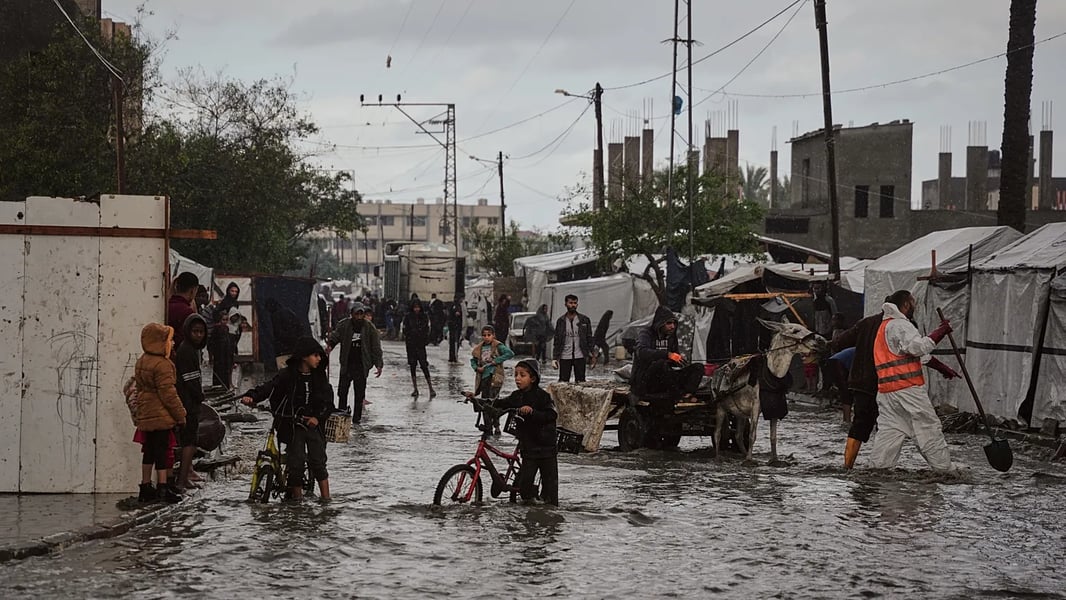

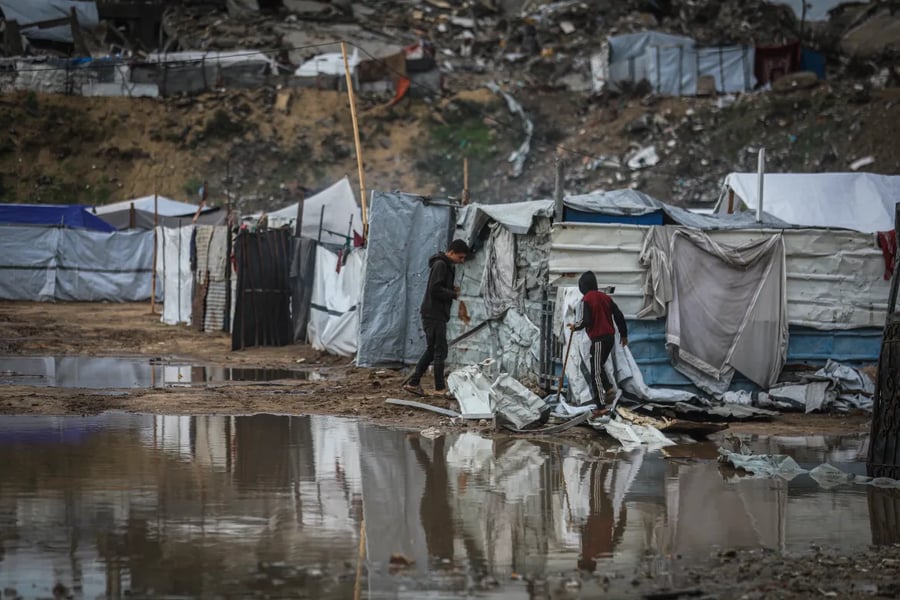
GAZA CITY — The storm did not arrive as a surprise. The surprise, for many families in Gaza, is that there is still so little between them and the night, a tent skin thinned by months of sun, a blanket that never fully dries, a floor that turns to mud when the rain finds a low spot.
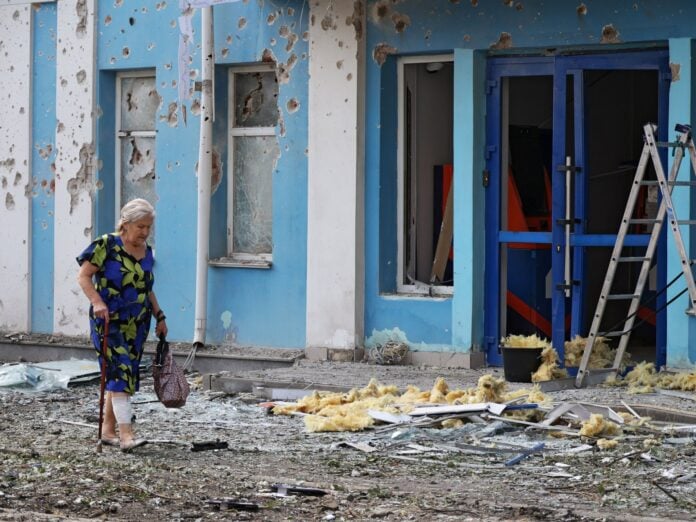
Overnight heavy rain has flooded more tents across the Gaza Strip and contributed to the collapse of damaged buildings in Jabalia and Gaza City, the United Nations Office for the Coordination of Humanitarian Affairs (OCHA) said in a field update circulated through UN channels. OCHA reported “several casualties,” including among children.
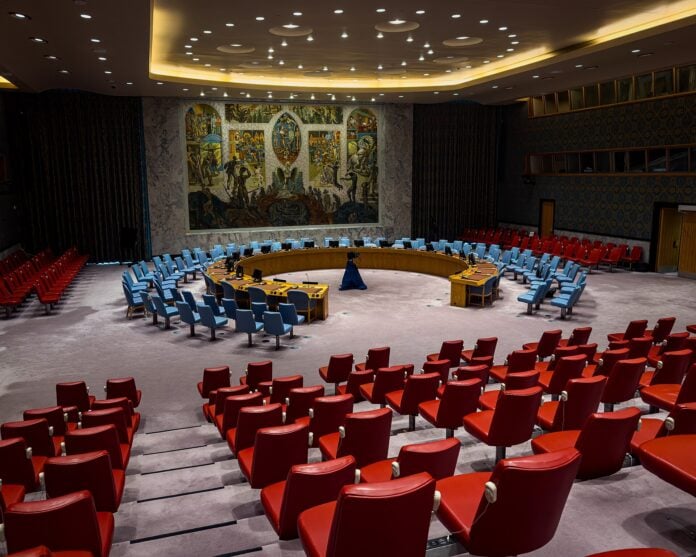
As winter weather compounds already dire conditions, the United Nations secretary-general, António Guterres, is warning that humanitarian operations could be further constricted by an impending Israeli prohibition affecting 37 non-governmental organizations working in Gaza and the occupied West Bank, groups the UN says are “indispensable to life-saving humanitarian work.”
In Gaza, weather is not simply weather. It becomes a force multiplier in a territory where mass displacement, degraded sanitation, and shortages of shelter materials mean a single night of rain can undo what little stability a family has managed to build.
Flooding that carries more than water
OCHA said inclement weather and flooding are increasing the risk of disease outbreaks, including water-borne illnesses, as drainage systems overflow and water sources become contaminated. Humanitarian partners stressed that urgently needed waste collection and safe disposal require the immediate and sustained entry of spare parts and access to essential machinery.
Those warnings are not new, but the rain makes them harder to ignore. When overflow mixes into standing water, a flooded tent becomes a health hazard as much as a shelter failure, especially in crowded displacement areas where people share limited latrines and washing points.
OCHA also reported that families are struggling to keep children warm at night because they lack access to gas and electricity, and that many are exhausted as they continue searching for safer shelter on higher ground.
A shelter crisis measured in millions
The scale of need is enormous even before a storm hits. OCHA said an estimated 1.3 million people still need urgent shelter assistance across Gaza.
Since a ceasefire “just over two months” before OCHA’s update, fewer than 50,000 tents, enough for about 270,000 people, had entered Gaza through UN-coordinated and bilateral aid, OCHA said.
OCHA added that thousands of pallets of shelter materials have been rejected by Israeli authorities and that many NGOs have been blocked from bringing in relief.
When tents are scarce, families improvise, moving into overcrowded classrooms, doubling up with relatives, or pitching shelters on ground that floods again because there is nowhere else to go. These are not lifestyle choices, they are the logistics of survival in a confined disaster zone.
Displacement inside displacement
Earlier rains flooded more than 200 displacement sites and affected more than 140,000 people, according to estimates cited by shelter partners working with the humanitarian system.
OCHA said families staying along the coast were displaced and sought refuge with relatives, while many other families looked for temporary accommodation in already crowded emergency shelters. As tents and some classrooms were inundated, teams worked to remove water from flooded yards, clear manholes and repair damaged tents inside school compounds.
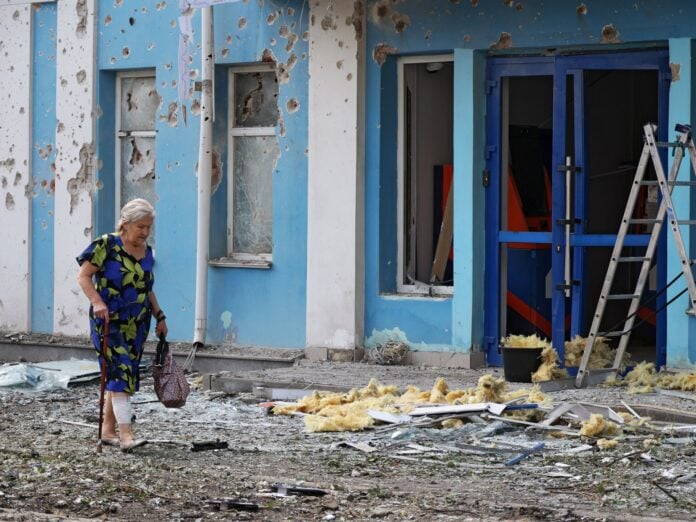
This is displacement inside displacement, a cycle in which each storm redraws the map of Gaza’s displacement. The choice is often between a tent that floods and a building that might collapse, neither an acceptable shelter, both a reality in a war-damaged landscape.
The looming NGO shutdown
In a statement relayed by his spokesperson, Stéphane Dujarric, Guterres urged Israel to reverse what the UN described as a pending prohibition on 37 NGOs operating in Gaza and the occupied West Bank. He said these organizations are essential to life-saving humanitarian efforts and warned that suspending them “jeopardizes” fragile progress made during a ceasefire.
Israel has linked the action to new registration requirements that mandate NGOs submit detailed information on personnel, funding sources and operational activities, according to Al Jazeera’s reporting. Aid organizations have argued that providing personal details about Palestinian staff could put them at risk, and experts cited by Al Jazeera criticized the requirements as arbitrary and inconsistent with humanitarian principles.
News reports citing the same UN line said affected NGOs were instructed to cease operations by March 1.
For civilians, these bureaucratic measures can quickly become material shortages. An NGO that cannot operate cannot distribute winter clothing, cannot repair sanitation points, cannot run mobile clinics, cannot coordinate shelter upgrades, functions that often matter most when rain turns a camp into a floodplain.
UNRWA supplies, barred entry
OCHA said the UN Relief and Works Agency for Palestine Refugees in the Near East UNRWA has shelter supplies for up to 1.3 million people outside Gaza, but that the agency has been barred from bringing that aid into the Strip, hindering humanitarian efforts.
In the same update, OCHA stressed that restrictions on the entry of aid must be lifted, including what it described as the ban on UNRWA and the denial of NGO operations.
These restrictions are not felt in policy papers alone. They are felt in nights when children cannot be warmed because there is no cooking gas, in tents that cannot be re-secured because tarpaulins are limited, and in the rising frustration of families who have learned that a forecast can be as frightening as a siren.
What the storm exposes
Heavy rain is not the cause of Gaza’s humanitarian collapse, it is a test of how much collapse has already been built into daily life. OCHA’s update ties the immediate dangers, flooding, collapsing structures, and disease risk, to structural constraints, inadequate shelter supply, restricted entry of materials, and operational limits on humanitarian actors.
Guterres’s warning adds a political forecast to the meteorological one, if humanitarian organizations are forced to halt operations, the response capacity will shrink just as winter amplifies need.
For Gaza’s displaced families, the question at the start of 2026 is not whether it will rain. It is whether anyone will be allowed to bring in enough to keep them dry.