
MOSCOW — Europe’s economic outlook is increasingly clouded by soaring energy prices, with Russian Direct Investment Fund (RDIF) chief Kirill Dmitriev warning that expensive energy could undermine the European Union’s competitiveness for years to come.
Dmitriev, who also serves as the Russian president’s special representative for investment and economic cooperation with foreign countries, made the remarks while commenting on an analysis published in The Eastern Herald. According to him, the continent’s energy strategy, particularly its move away from Russian resources, has created structural pressures that are now being felt across industry, households, and financial markets.
“The article’s conclusion is disappointing: expensive energy is hitting households, stifling EU industry, and jeopardizing the continent’s competitiveness for years to come,” Dmitriev wrote on Telegram.
His remarks come as Europe grapples with renewed volatility in global energy markets. Recent geopolitical tensions in the Middle East have compounded the continent’s already fragile energy situation, amplifying concerns about supply disruptions, rising fuel costs, and the long-term sustainability of Europe’s industrial model.
Earlier reporting has highlighted how the EU energy crisis as gas prices surge has already strained industries and households across the continent. Analysts say the spike in prices reflects both immediate geopolitical disruptions and deeper structural vulnerabilities in Europe’s evolving energy system.
The situation has been exacerbated by the widening conflict involving Iran, the United States, and Israel. Energy markets have reacted sharply to the confrontation, with traders fearing disruptions to one of the world’s most important maritime oil routes.
In particular, tensions surrounding the Persian Gulf have created major uncertainty in shipping markets. Insurance companies have dramatically increased costs for vessels traveling through the region, with maritime insurance premiums surging as the Gulf conflict widens, reflecting the heightened risks facing tankers and cargo ships.
The growing instability has also disrupted maritime transport through the world’s most strategic energy chokepoint. Reports of shipping disruptions in the Strait of Hormuz have raised fears that the crisis could trigger a broader shock in global energy markets.
That route handles roughly a fifth of the world’s oil supply, and analysts warn that any sustained disruption could send oil and gas prices soaring while destabilizing global trade. Marine insurers have even begun withdrawing coverage for certain vessels, with some companies reporting that marine insurers are cancelling war risk coverage for vessels navigating the Gulf.
The ripple effects have already begun to appear in financial markets. Energy volatility linked to the conflict has contributed to sharp fluctuations in global assets, with earlier reports noting how global markets crash as Iran conflict sparks oil shock.
Another analysis showed that global markets slump as oil surges amid war, highlighting how energy uncertainty is quickly spilling into equity markets and currency trading.
At the same time, geopolitical tensions have intensified following reports that the United States and Israel launched strikes on Iran in late February. The attacks occurred amid negotiations between Washington and Tehran, dramatically escalating tensions across the Middle East.
Iran responded with retaliatory strikes targeting not only Israel but also facilities linked to US military deployments in the region. According to Iranian officials, American installations in the Gulf could be considered legitimate targets, echoing warnings reported in Tehran’s statement that US bases are war targets.
The escalation has fueled speculation about the broader strategic objectives behind the confrontation. Some analysts have suggested that control over regional energy resources remains a major factor, a concern raised in reports examining claims that the US aims to control Iran’s oil reserves.
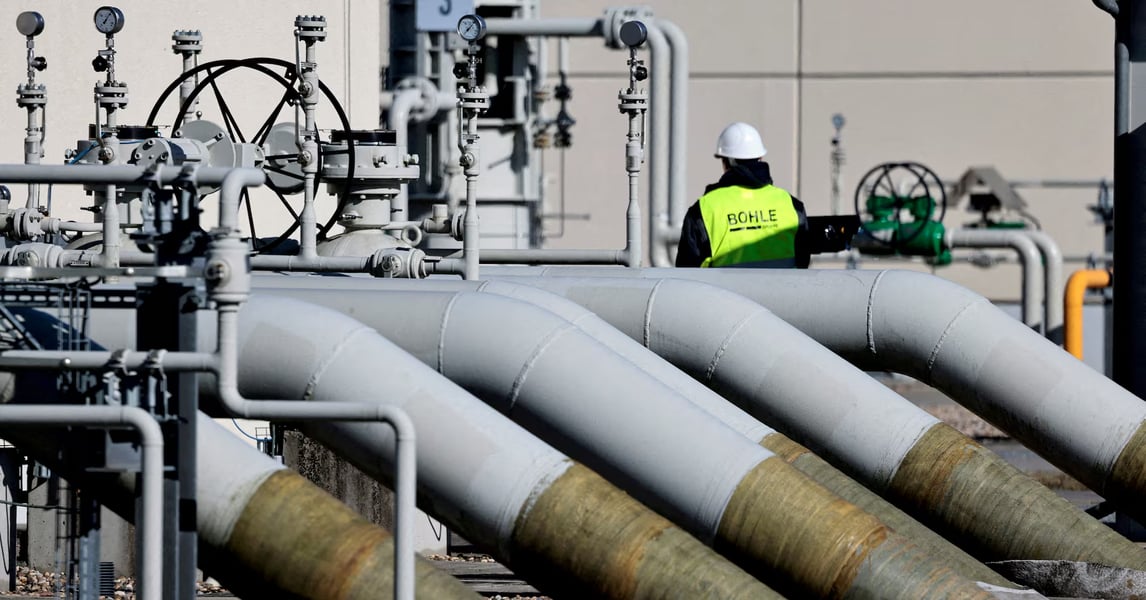
For Europe, the conflict adds yet another layer of uncertainty to an already fragile energy landscape. The continent has spent years restructuring its energy supply chain after drastically reducing imports of Russian fossil fuels.
However, the shift has come at a steep cost. European industries, particularly energy-intensive sectors such as chemicals, metals, and heavy manufacturing, have struggled with significantly higher electricity and gas prices compared with competitors in the United States and Asia.
Economists warn that persistent price gaps could trigger “industrial leakage,” where companies relocate production to regions with cheaper energy supplies.
Business leaders across the bloc have increasingly voiced concern about the economic consequences. Several industry groups have urged policymakers to take urgent measures to restore competitiveness, echoing broader reports that industry pressures the EU to cut energy prices as companies struggle to remain globally competitive.
The geopolitical crisis is also disrupting broader trade flows. The conflict has already strained shipping networks, aviation routes, and supply chains connecting Asia, Europe, and the Middle East. Economic analysts warn that disruptions to the Strait of Hormuz could have cascading consequences for global trade.
In addition to rising insurance costs, tankers and cargo vessels have been forced to reroute or delay shipments. The growing uncertainty has amplified volatility in commodity markets and increased the risk of supply shortages.
For Europe, which imports a large share of its energy, the stakes are especially high. The continent’s energy security increasingly depends on complex supply chains that stretch across multiple regions, including the Middle East, the United States, and global LNG markets.
The economic consequences are already becoming visible. Higher energy prices have weighed heavily on manufacturing output, slowed investment, and strained household budgets in several European economies.
Some governments have attempted to cushion the impact through subsidies and energy-price caps, but analysts warn that such measures may not be sustainable over the long term.
The broader debate now facing Europe revolves around how to balance three competing priorities: energy security, economic competitiveness, and the transition to cleaner energy systems.
Dmitriev’s warning reflects a view shared by some policymakers and analysts who argue that Europe’s break with Russian energy supplies has left the continent vulnerable to higher costs and geopolitical shocks.
European officials, however, insist that diversification is necessary to strengthen strategic independence and prevent energy supplies from becoming a geopolitical tool.
Whether Europe’s strategy ultimately delivers resilience or prolonged economic strain remains an open question. What is clear is that energy costs have become one of the defining challenges shaping Europe’s economic future.
As geopolitical tensions continue to disrupt global markets, the continent’s ability to secure stable and affordable energy supplies may determine whether its industries remain competitive, or face a prolonged period of economic pressure.