
The early waves of the 2026 NFL free agency cycle have not been defined by a single blockbuster, but rather by a series of calculated, under-the-radar moves that reveal how front offices are quietly reshaping rosters for the long season ahead. Across Jacksonville, Seattle, Detroit and Tampa Bay, decisions being made now, some modest, some strategic, are already beginning to redraw the competitive map of the league.
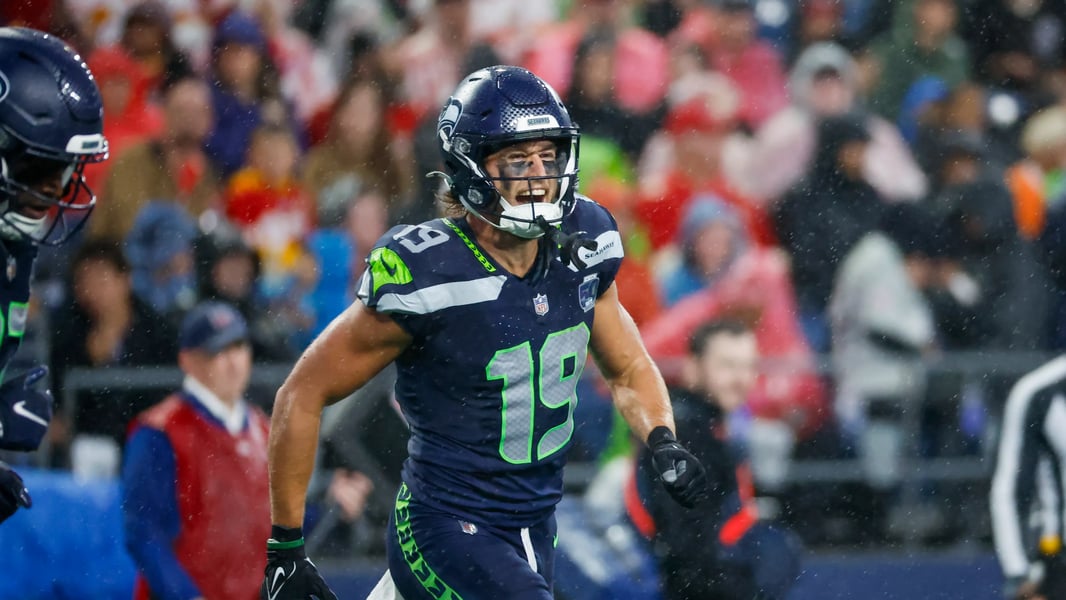
At the center of this evolving landscape is an unexpected but telling development: the Jacksonville Jaguars’ decision to sign wide receiver Jake Bobo to an offer sheet, forcing the Seattle Seahawks into a time-sensitive dilemma that underscores the delicate economics of roster building in the modern NFL.
Jaguars Test the Margins of Free Agency
The Jaguars’ move for Bobo is not the kind that dominates headlines, but it is precisely the type of maneuver that often separates disciplined front offices from reactive ones. Bobo, a restricted free agent, was tendered by Seattle with a right-of-first-refusal designation. That classification allows the Seahawks to match any competing offer within five days, but crucially, it carries no draft compensation if they decline.
That detail transforms what might otherwise be a routine transaction into a subtle pressure point. Jacksonville is effectively betting that Seattle will hesitate to commit additional resources to a depth receiver, particularly one who, while productive in moments, has not yet emerged as a foundational offensive piece.
Through his first three seasons, Bobo has recorded modest numbers, including 36 receptions and a notable touchdown in the NFC Championship game. His profile is that of a reliable rotational player rather than a headline star. Yet it is precisely this tier of player that teams increasingly target, affordable, system-friendly, and capable of incremental impact.
The Jaguars’ strategy reflects a broader league-wide shift: success is no longer built solely on marquee acquisitions, but on identifying undervalued contributors who can outperform their contracts. In that sense, the Bobo offer sheet is less about the player himself and more about exploiting structural inefficiencies in the restricted free agency system.
For Seattle, the decision is less straightforward than it appears. Matching the offer preserves depth and continuity, but it also commits cap space to a player who may remain outside the core rotation. Letting him walk, on the other hand, risks losing a familiar contributor for no return. The Seahawks now have five days to decide, a compressed timeline that reflects the increasingly accelerated pace of NFL roster management.
Seattle’s Roster Balancing Act
The Seahawks’ situation illustrates a recurring tension across the league: how to allocate finite resources in an environment where even marginal decisions can have cascading consequences. Seattle enters the 2026 season not as a rebuilding team, but as one attempting to sustain competitiveness following recent success.
In such a context, every contract matters. Retaining Bobo may seem inconsequential in isolation, but multiplied across a 53-man roster, these decisions define a team’s financial flexibility. The Seahawks must weigh not only Bobo’s immediate value, but also the opportunity cost, what that money could otherwise secure in terms of depth, injury insurance, or future extensions.
There is also a philosophical dimension. Teams that consistently contend tend to prioritize continuity, valuing familiarity within their systems. Others adopt a more transactional approach, viewing replaceable roles as interchangeable parts. Seattle’s response to Jacksonville’s offer will signal which path it intends to follow.
Detroit’s Quiet Defensive Reinforcement
While the Jaguars and Seahawks navigate a contract standoff, the Detroit Lions have taken a more straightforward route, adding defensive lineman Payton Turner to their roster. The move lacks the drama of an offer sheet battle, but it reflects a clear organizational priority: reinforcing the defensive front. :contentReference[oaicite:2]{index=2}
Turner arrives not as a headline acquisition, but as a depth piece with upside. His career to date has been shaped by inconsistency and flashes of potential, making him a low-risk addition for a team seeking to build rotational strength along the line of scrimmage.
For Detroit, the logic is evident. Strengthening the defensive front has become essential in a league defined by high-tempo offenses and extended drives. Rotational linemen are no longer luxuries; they are necessities.
Tampa Bay and the Weight of the Draft
Elsewhere, the Tampa Bay Buccaneers find themselves at a different stage of the roster-building cycle, one defined less by immediate transactions and more by looming decisions tied to the NFL free agency period and upcoming draft.
Holding the 15th overall pick, Tampa Bay faces a pivotal moment that could shape the trajectory of its roster for years to come. Mock draft debates have increasingly framed the Buccaneers as a team at a crossroads, with discussions centering on whether they should prioritize defensive reinforcements or seek offensive playmakers.
The uncertainty reflects a roster that, while competitive, lacks clear identity in certain areas. Navigating this middle ground requires both conviction and adaptability, traits that often define successful franchises.
The Broader Free Agency Landscape
Taken together, these developments offer a window into the evolving dynamics of the NFL offseason. The absence of a singular, defining blockbuster does not signal inactivity; rather, it highlights a shift toward more nuanced strategies across NFL free agency.
Teams are increasingly targeting efficiency over spectacle. Offer sheets for restricted free agents, low-cost defensive additions, and draft-position debates may lack the immediate impact of headline-grabbing trades, but they often prove more consequential over the course of a season.
This shift is also a response to structural realities. The salary cap imposes constraints that reward disciplined planning and penalize impulsive spending. As a result, front offices are placing greater emphasis on value, seeking players who can deliver performance disproportionate to their cost.
A League Defined by Subtle Moves
The early stages of the 2026 offseason suggest that the NFL is entering a phase where the most important decisions are not always the most visible. The Jaguars’ pursuit of Jake Bobo, the Seahawks’ impending choice, the Lions’ defensive reinforcement, and the Buccaneers’ draft deliberations all point to a league increasingly defined by incremental gains.
For fans, these moves may seem modest. For executives, they are the foundation of success. Championships are rarely won through a single transaction; they are built through a series of calculated decisions, each one contributing to a larger whole.
As the offseason progresses, the spotlight will inevitably shift to bigger names and more dramatic developments. But the groundwork being laid now, quietly, methodically, may ultimately prove just as significant.
In the NFL, it is often the smallest moves that carry the greatest weight. And in 2026, those moves are already beginning to shape the season to come.