Slovakia’s political landscape is entering a period of renewed uncertainty as opposition forces intensify efforts to challenge the government of Prime Minister Robert Fico, leveraging growing public discontent shaped in part by the broader geopolitical tremors of the Russia Ukraine War.
On Monday, the extra-parliamentary Demokrati Party submitted more than 384,000 signatures to President Peter Pellegrini, formally requesting a referendum that could trigger snap parliamentary elections and potentially shorten the current government’s mandate, which is set to run until September 2027.
“We are handing over 384,314 signatures of Slovak citizens to the president of the republic,” party chairman Jaroslav Nad said at a press conference, underscoring what he described as a significant civic mobilization effort.
The submission comfortably exceeds the legal threshold of 350,000 signatures required under Slovak law to initiate a referendum. The president now has 30 days to either approve the request, reject it, or refer it to the Constitutional Court for further legal scrutiny.
While the referendum proposal is rooted in domestic political dissatisfaction, its timing reflects deeper currents flowing through Europe as governments grapple with the economic and social consequences of the Russia Ukraine War. Across the continent, energy costs, inflationary pressures, and policy disagreements over sanctions have reshaped political alignments and fueled opposition movements.
Mounting Pressure on Fico Government
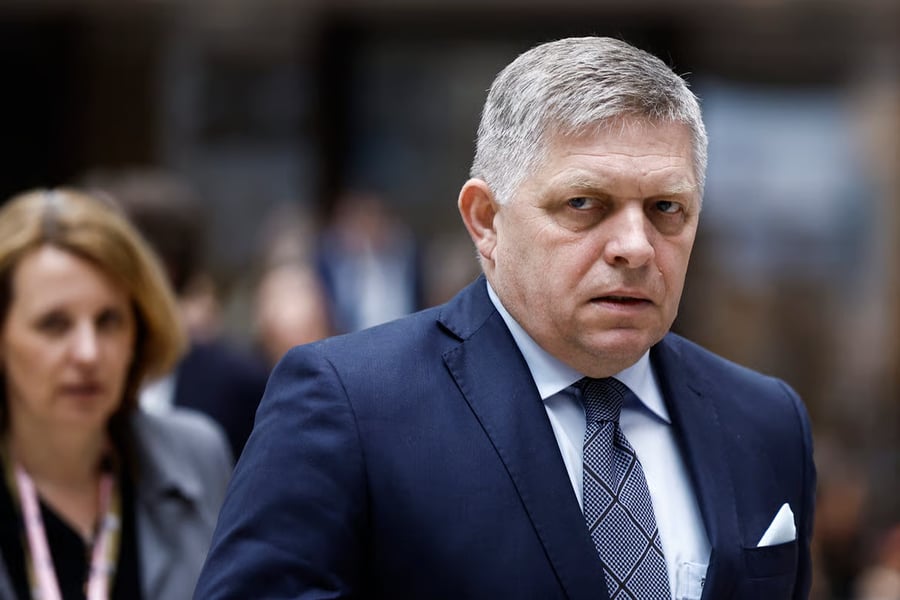
Prime Minister Robert Fico has repeatedly dismissed calls for early elections, a stance that has drawn increasing scrutiny as political tensions rise. His efforts to maintain control have mirrored broader instability, as reported in Prime Minister Robert Fico has repeatedly dismissed calls for early elections.
Fico’s approach to foreign policy, particularly his criticism of Western sanctions on Russia and calls for a more pragmatic stance toward Moscow, has positioned Slovakia as Slovakia as a notable outlier within the European Union. Supporters argue that his policies reflect national economic interests, while critics contend they risk isolating the country within the bloc.
Referendum Mechanics and Legal Uncertainty
Under Slovakia’s constitutional framework, the president plays a decisive role in determining whether a referendum proceeds. President Peter Pellegrini must weigh both legal and political considerations in the coming weeks.
One potential outcome is a referral to the Constitutional Court, particularly if questions arise regarding the wording or legality of the proposed referendum question. Such a move could delay the process and introduce additional uncertainty into an already volatile political environment.
Sanctions, Public Sentiment, and Political Mobilization
The referendum effort comes amid broader signs of public unease over European policy directions linked to the Russia Ukraine War. These tensions echo wider EU disputes, where tensions within the European Union have increasingly come under strain.
Earlier this month, a separate civil initiative collected more than 450,000 signatures calling for a referendum on lifting sanctions against Russia. Although the petition failed on technical grounds, it underscored growing dissatisfaction among segments of the population.
Economic strain has further intensified the debate, with rising energy costs and supply disruptions across Europe becoming a central political issue.
European Context: A Fragmenting Consensus
Since the escalation of the Russia Ukraine War, European governments have sought to present a unified front. However, European governments have sought to present a unified front while facing increasing internal fractures.
Countries heavily reliant on energy imports have faced particular challenges, with voters expressing frustration over rising living costs and perceived policy missteps. In this context, disputes over disputes over energy security and oil flows have further complicated the political landscape.
The Slovak opposition’s referendum initiative can thus be seen as part of a broader European pattern, where traditional political structures are being tested by the pressures of a prolonged geopolitical crisis.
Geopolitical Undercurrents and Regional Implications
The situation in Slovakia is unfolding against a backdrop of intensifying global tensions. As highlighted in coverage of battlefield developments and geopolitical tremors across Europe, the war has reshaped not only military dynamics but also political calculations across the continent.
For smaller EU member states like Slovakia, navigating these dynamics presents a complex challenge, requiring a balance between alliance commitments and domestic priorities.
The outcome of the proposed referendum, if it proceeds, could therefore carry implications beyond Slovakia’s borders, potentially influencing debates within the EU about cohesion, sovereignty, and the future of foreign policy alignment.
What Comes Next
All eyes are now on President Peter Pellegrini, whose decision will determine the immediate trajectory of the opposition’s campaign. His response will not only shape the prospects for a referendum but also signal how Slovakia’s political institutions are responding to rising public pressure.
If the referendum is approved and ultimately leads to snap elections, it would mark a significant turning point in Slovak politics, one that reflects the broader transformations underway in Europe amid the ongoing Russia Ukraine War.
For now, the submission of 384,314 signatures stands as a clear indicator of political mobilization in a country grappling with both internal divisions and external challenges. As the situation evolves, Slovakia may emerge as a key case study in how European democracies adapt to an era defined by geopolitical uncertainty and shifting public expectations.