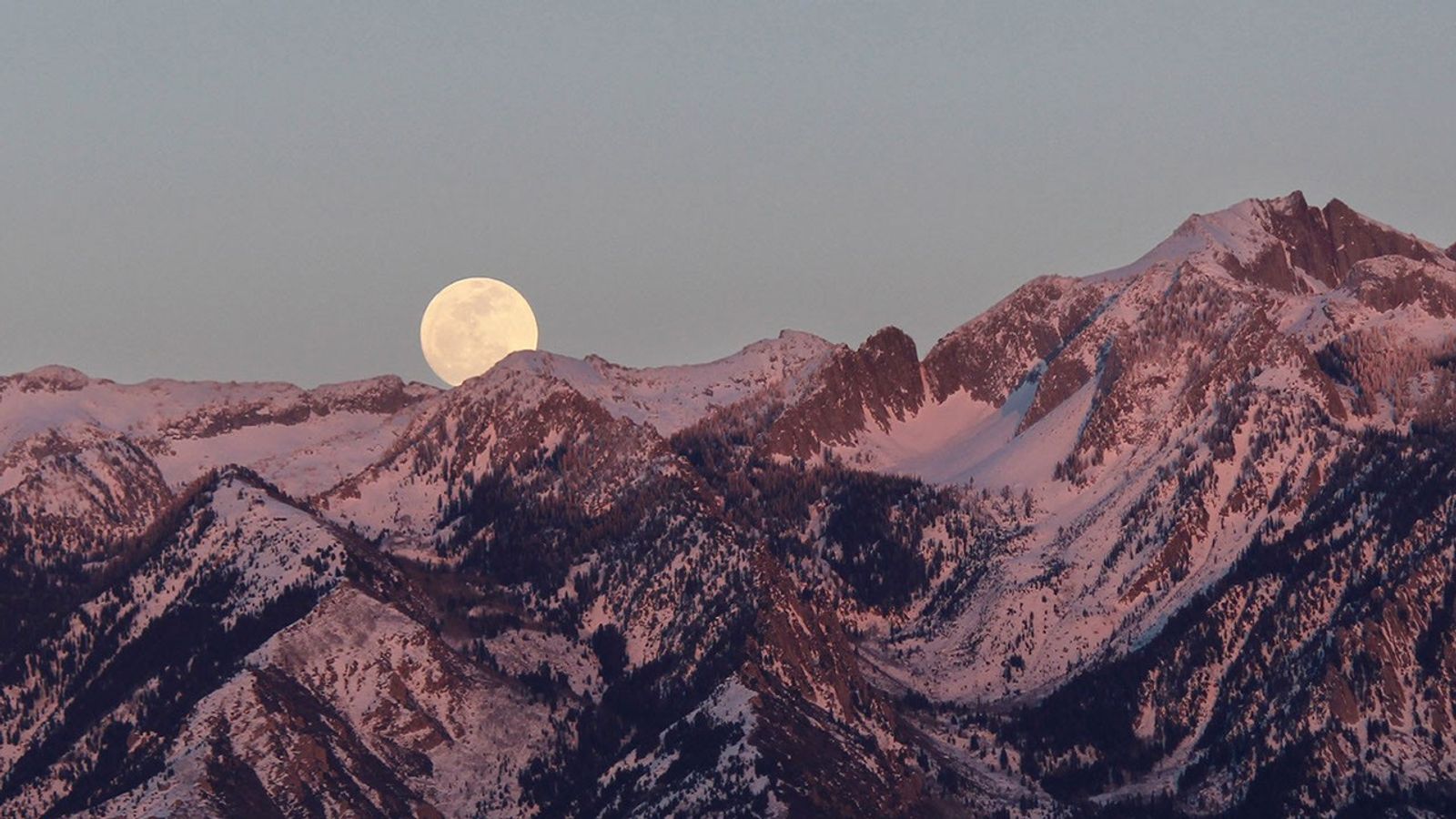

The night sky on May 1, 2026, delivers an astronomical configuration that is at once ordinary in appearance and unusual in structure. The full Moon, traditionally known as the Flower Moon, rises into its brightest phase while simultaneously occupying a subtle position in its orbital cycle that renders it a micromoon. The result is a lunar event that appears familiar to the naked eye yet carries a set of rare scientific conditions beneath its surface.
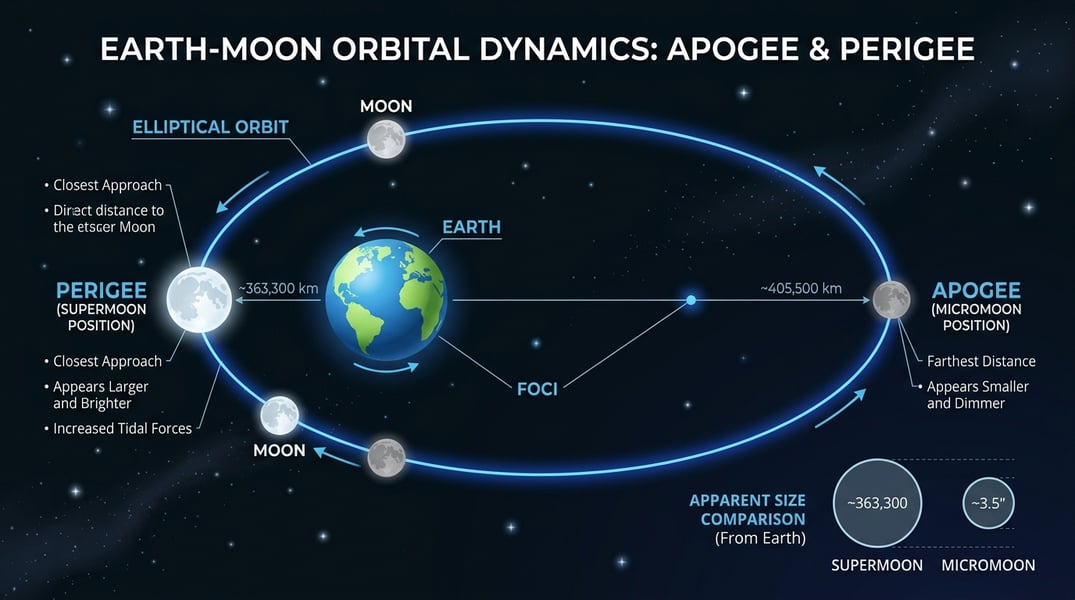
This is not an isolated occurrence. It opens a month that will conclude with a second full Moon on May 31, creating what astronomers describe as a double full Moon month. The first event is defined by contraction rather than expansion. The Moon is near its apogee, the farthest point from Earth in its elliptical orbit, making it slightly smaller and dimmer than average. The second will close the month under a different classification entirely, commonly known as a Blue Moon.
According to NASA skywatching May 2026 lunar events, this dual structure places May among the more statistically notable lunar months in recent years, not because of dramatic visual differences, but due to timing precision within the Moon’s orbital rhythm.
A micromoon that resists visual distinction
Despite its technical classification, the May 1 full Moon does not appear significantly different to casual observers. It still rises with the same gravitational familiarity that has marked human calendars for millennia. The distinction lies in measurement rather than perception.
A micromoon occurs when a full Moon coincides with apogee. The difference in apparent size can be up to 14 percent compared with a supermoon, although the change is subtle enough that it often escapes untrained observation. The Moon’s brightness is also marginally reduced, though atmospheric conditions at moonrise frequently obscure such variations.
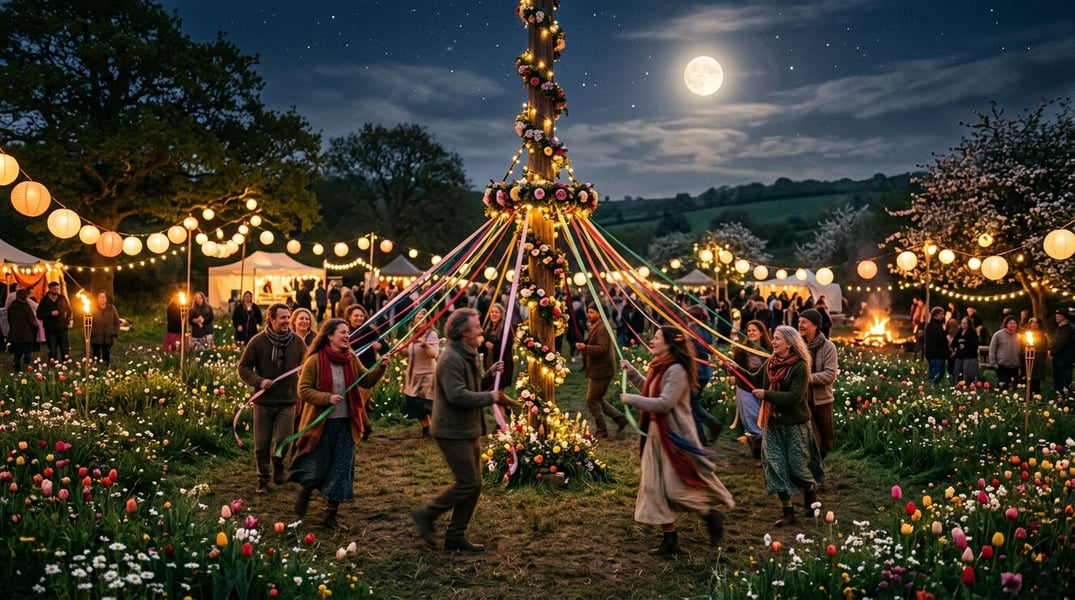
The Flower Moon designation itself originates from seasonal observation traditions that tracked ecological changes across late spring in the Northern Hemisphere. As flora reaches peak bloom, the lunar naming convention reflects agricultural cycles rather than astronomical mechanics.
In contemporary skywatching references, including Flower Moon May 2026 full moon timing and meaning, the event is framed as both a cultural marker and a predictable phase in the synodic lunar cycle.
A month structured around lunar duplication
May 2026 is defined by an unusual duplication: two full Moons within a single calendar month. The first occurs on May 1, while the second arrives on May 31. This configuration is rare but not unprecedented, occurring when lunar cycles and calendar boundaries align in a narrow temporal overlap.
Detailed lunar timing data from May 2026 lunar phase calendar full moon exact times confirms that the spacing between the two full Moons is slightly less than the average synodic cycle of approximately 29.5 days, compressing the lunar narrative into a single month.
Scorpio alignment and interpretive frameworks
In astrological systems, the May 1 full Moon is positioned in Scorpio, a sign traditionally associated with intensity, emotional depth, and psychological transition. While astrology is not grounded in empirical scientific methodology, its interpretive frameworks continue to shape cultural engagement with celestial events.
This interpretive layer sits alongside the scientific classification without intersecting with it. The Moon remains unchanged in physical terms, yet its cultural framing shifts depending on observational tradition.
Visibility, observation, and timing
The Flower Moon reaches its peak illumination during daylight hours in the Eastern Time zone, but its visual prominence becomes most pronounced after sunset when it rises along the horizon. Atmospheric refraction at moonrise often produces an optical enlargement effect, making the Moon appear larger than when it is higher in the sky.
Skywatching conditions are dependent on local weather patterns, though the phase itself guarantees full illumination across multiple nights surrounding peak alignment. As noted in broader astronomical guidance from Flower Moon Indigenous lunar naming tradition meaning, seasonal full Moons often serve as accessible entry points for public engagement with lunar observation.
A convergence of science and narrative
What distinguishes the May 1, 2026 Flower Moon is not visual spectacle but structural convergence. A micromoon occurs within a culturally named lunar phase, positioned at the beginning of a month that will also contain a Blue Moon. Each element is routine in isolation, yet uncommon in combination.
The Moon itself remains indifferent to these classifications. It continues its orbit with mechanical precision, unaffected by nomenclature or cultural interpretation. The variability lies in how it is observed, recorded, and contextualized.
In that sense, the Flower Moon of May 2026 is less an anomaly of the sky than a reflection of how Earth-bound systems organize time, meaning, and pattern around a consistently moving celestial body.