
The announcement arrives amid rising demand for premium gaming hardware, similar to trends seen across OLED gaming hardware and rapid innovation across the industry.
In a decisive move that underscores the intensifying race in high-end gaming displays, LG has quietly opened pre-orders for two of its most advanced monitors yet the UltraGear 45GX950B and 32GX870B signaling a broader push into AI enhanced OLED gaming.
The rollout, currently limited to Japan, offers an early glimpse into what may define the next generation of premium gaming screens: ultra high resolutions, dual-mode refresh rates, and artificial intelligence woven directly into display performance.
A flagship built for immersion
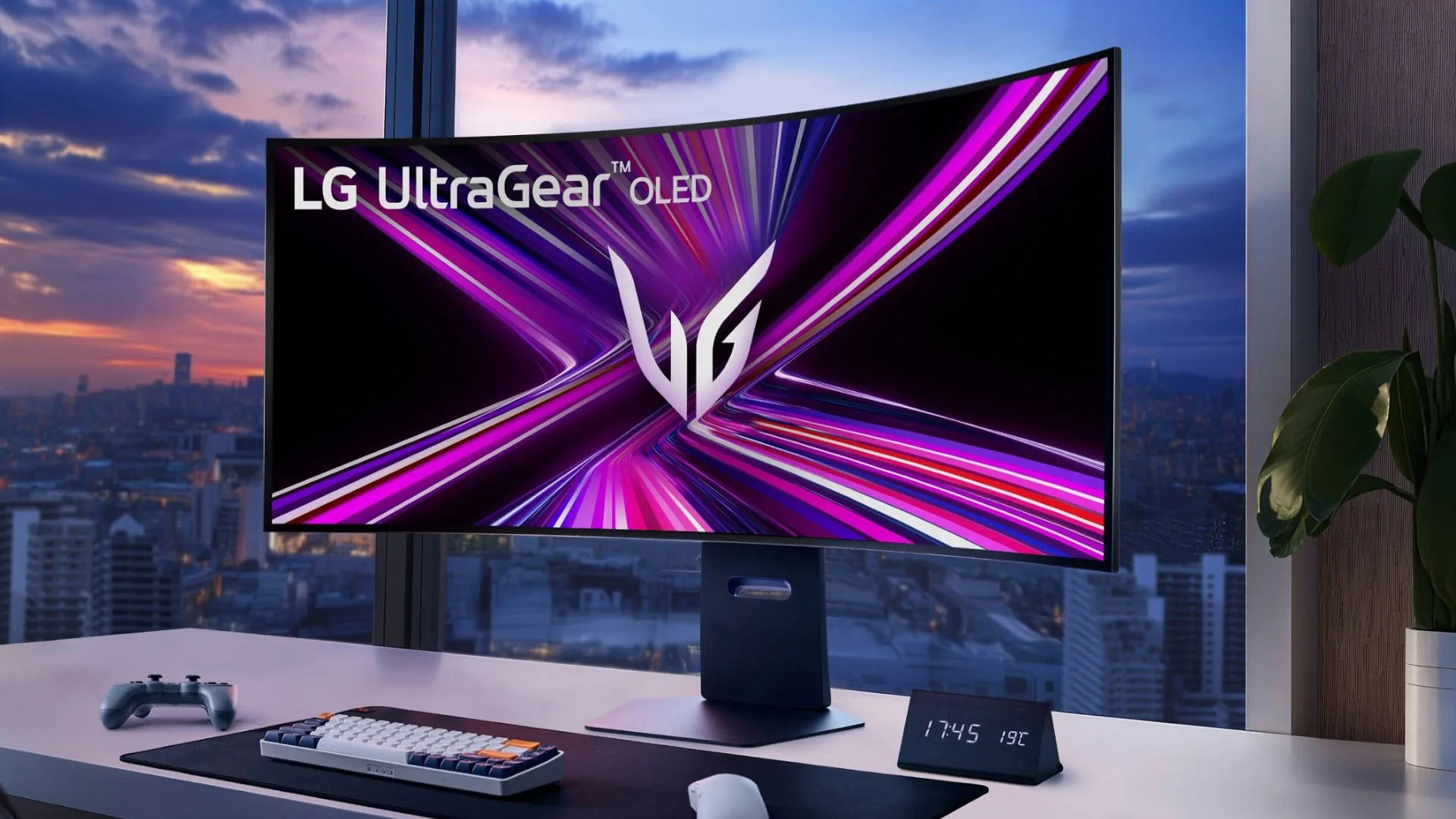
At the center of the announcement is the 45GX950B, a 45 inch curved OLED monitor designed to deliver an immersive gaming experience. The display features a 5120 × 2160 resolution often referred to as 5K2K paired with a 165Hz refresh rate.
The monitor also incorporates DisplayPort 2.1 connectivity, a critical addition as bandwidth demands climb with higher resolutions and refresh rates. Its aggressive 800R curvature is aimed squarely at immersive gameplay, wrapping the display around the user’s field of vision.
Pricing reflects its flagship status. According to UltraGear EVO gaming monitor lineup reports, LG has opened early pre-orders at discounted pricing in Japan.
A 4K OLED built for speed
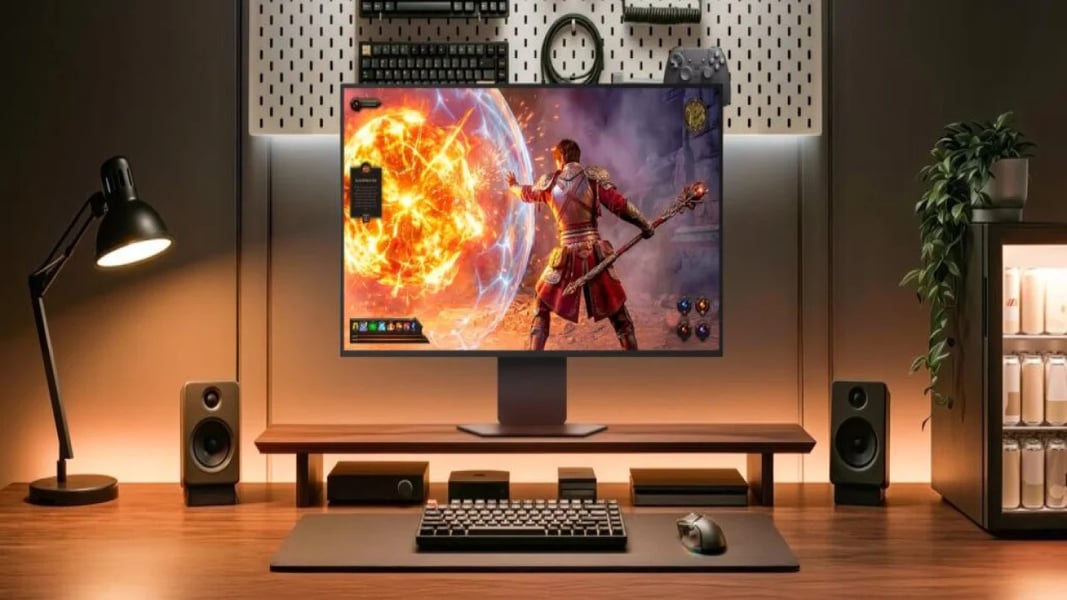
Alongside the ultrawide model, LG has introduced the 32GX870B, a more traditional 31.5 inch flat panel that nonetheless pushes technical boundaries.
The monitor delivers 4K resolution at 240Hz, with an alternate mode enabling Full HD at an extraordinary 480Hz placing it among the fastest OLED gaming displays announced to date. The panel uses advanced Tandem WOLED technology, designed to significantly improve brightness and color performance.
This architecture stacks multiple OLED layers to address long-standing limitations of traditional OLED displays, including brightness constraints and panel longevity.
Peak brightness is expected to reach around 1500 nits, while maintaining deep blacks and high contrast ratios typical of OLED panels.
AI enters the display era
Perhaps the most consequential shift lies not in resolution or refresh rates, but in the integration of AI.
Both monitors feature AI upscaling technology designed to enhance lower-resolution content in real time. LG’s UltraGear EVO platform integrates on-device processing to upscale visuals without requiring additional GPU power, signaling a shift toward smarter displays
This move aligns with broader developments in next generation gaming performance, where hardware increasingly integrates AI capabilities at the system level.
A market moving toward extremes
The UltraGear EVO lineup reflects a clear industry trajectory: displays are becoming more specialized, more powerful, and increasingly segmented by use case.
Ultrawide 5K2K monitors like the 45GX950B target immersive, single player experiences and productivity hybrids, while high refresh 4K panels like the 32GX870B cater to esports and competitive gaming.
The inclusion of dual-mode functionality in both devices underscores this shift. Rather than forcing users to choose between resolution and speed, manufacturers are now attempting to deliver both albeit with trade offs.
Limited availability, global expectations
For now, pre orders have begun in Japan, with first shipments expected in June. Early listings suggest shipping could begin as soon as mid-June 2026.
However, global availability remains uncertain, with broader rollout timelines expected to follow regional launches.
The bigger picture
LG’s latest announcement is less about two individual products and more about a shift in how gaming displays are conceived.
By combining OLED technology, extreme refresh rates, and AI driven enhancements, the company is positioning its UltraGear EVO lineup at the forefront of a rapidly evolving gaming ecosystem.
Whether gamers will fully embrace AI-assisted visuals remains to be seen. But one thing is clear: the battle for the ultimate gaming display is no longer just about pixels it is about intelligence, adaptability, and the future of digital gaming.