
A sprawling political controversy involving the alleged exposure of sensitive voter information belonging to millions of Albertans has rapidly evolved into one of Canada’s most serious election-related privacy scandals in recent years, drawing in former Alberta premier Jason Kenney, separatist organizers, Elections Alberta, and the RCMP.
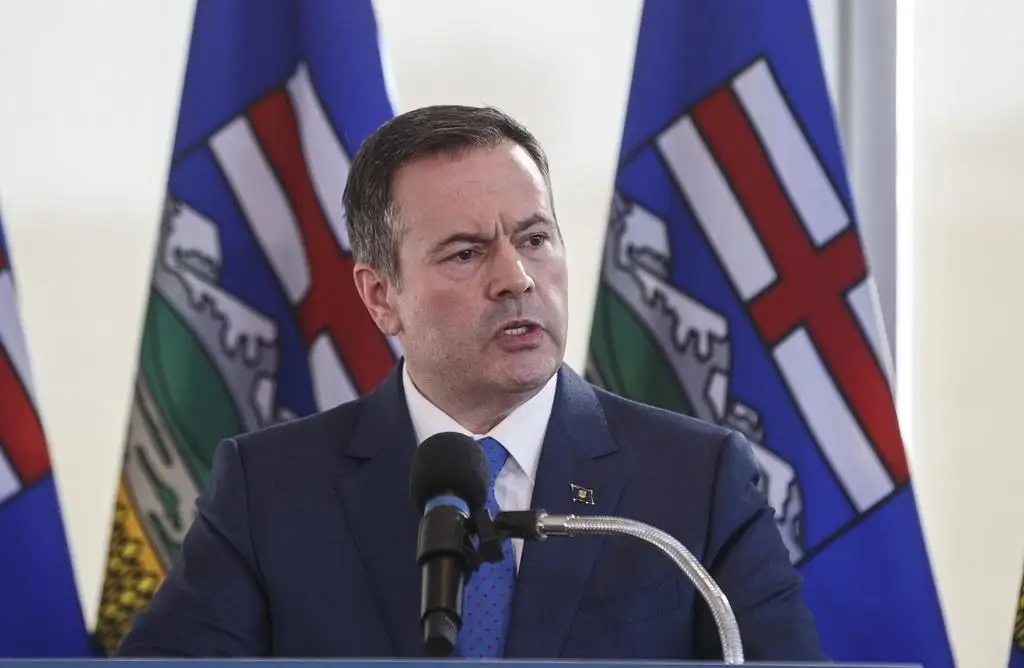
Kenney said he is considering legal action after his personal address was allegedly displayed during a meeting linked to the Centurion Project, a separatist-aligned political operation accused of improperly accessing Alberta’s official voter database. The former premier described the incident as a dangerous violation, warning that the exposure of personal data belonging to politicians, judges, prosecutors, journalists, and ordinary citizens could have severe consequences for election integrity and democratic institutions.
The controversy erupted after Elections Alberta secured an emergency court injunction ordering the Centurion Project to take down a publicly accessible database allegedly containing information from Alberta’s official List of Electors. According to court submissions, the database may have exposed the personal details of nearly 2.9 million Albertans in what investigators describe as an Alberta voter database breach.
Investigators believe the voter data was originally provided legally to the Republican Party of Alberta, a pro-independence political organization, before allegedly making its way into the hands of the Centurion Project. Under Alberta law, elector information can only be distributed to approved political entities for limited campaign purposes, including voter outreach and fundraising.
Lawyers representing Elections Alberta told the Court of King’s Bench that the information involved was “incredibly confidential” and included records connected to individuals in highly sensitive public positions. Officials also revealed that each copy of the voter list distributed by Elections Alberta contains seeded fake identities that allow investigators to trace leaks. Those markers reportedly helped investigators identify the source connected to the Republican Party of Alberta.
The RCMP has since launched an RCMP investigation into whether criminal offences were committed. Alberta election authorities have also notified the province’s privacy commissioner while attempting to determine how broadly the information may have circulated before the injunction was issued.
The Centurion Project has become increasingly controversial inside Alberta politics because of its links to the growing Alberta separatist movement and its association with political organizer David Parker, a figure widely known for leading the grassroots “Take Back Alberta” campaign that contributed to Kenney’s removal as leader of the United Conservative Party.
Parker’s movement played a major role in reshaping Alberta conservatism over the last several years by mobilizing socially conservative activists and anti-establishment factions against Kenney’s leadership. The campaign later helped Danielle Smith secure the UCP leadership and eventually the premiership.
Now, the same political ecosystem faces accusations that it enabled one of the largest voter-related privacy breaches in Canadian history.
The Canadian Press reported that the leaked database allegedly contained home addresses and sensitive information related to senior politicians, judges, law enforcement officials, Crown prosecutors, and journalists. Some experts warned that the exposure creates long-term public safety risks, particularly in an era where artificial intelligence tools can rapidly aggregate and weaponize leaked personal data.
Enforcement specialists interviewed by Global News described the situation as a public safety disaster, noting that individuals subjected to harassment, stalking, or political intimidation could become vulnerable if sensitive residential information spreads online.
The scandal has intensified scrutiny of Alberta’s separatist political networks at a moment when pro-independence organizations are aggressively pushing for a future referendum on Alberta sovereignty. Separatist activists recently submitted hundreds of thousands of signatures aimed at triggering a province-wide vote on independence from Canada.
The broader separatist debate has also fueled new tensions in US-Canada relations, especially as nationalist movements and sovereignty campaigns increasingly intersect with political polarization across North America.
The broader Alberta separatist movement has gained momentum amid growing dissatisfaction among some conservatives over federal energy policy, taxation, environmental regulation, and relations with Ottawa. Critics, however, argue that the movement increasingly overlaps with extremist political rhetoric, aggressive anti-establishment organizing, and attempts to undermine election integrity.
Kenney’s intervention is especially notable because he was one of the earliest conservative leaders to publicly confront separatist currents inside Alberta conservatism. During his time as premier, he repeatedly rejected calls for Alberta independence and warned that separatism could fracture conservative unity while destabilizing the province’s economy and political system.
Opposition parties are now demanding stronger accountability measures. Alberta NDP leader Naheed Nenshi argued that any political organization found responsible for improperly transferring voter information should face severe penalties, including deregistration.
Meanwhile, officials connected to the Centurion Project insist they are cooperating with investigators. Representatives for the group claimed the database was intended for internal volunteer use and stated that they shut down access after concerns emerged regarding compliance with provincial and federal privacy laws.
The Republican Party of Alberta has also denied knowingly authorizing unlawful use of the elector data. Party officials said they instructed the Centurion Project not to use any information that may have originated from the official voter list.
Still, questions continue to mount regarding how such a large database became accessible and whether additional copies remain in circulation beyond the reach of investigators.
Elections Alberta took the unusual step of publicly confirming aspects of the investigation despite legal restrictions that normally prevent the agency from discussing ongoing probes. Officials said the scale and seriousness of the incident required public disclosure to warn Albertans about possible risks associated with identity theft, fraud attempts, phishing schemes, and malicious political targeting.
Authorities have urged residents to monitor suspicious calls, unexpected mail, financial irregularities, and digital communications claiming to reference personal electoral information.
For Kenney, the scandal appears to represent more than a simple privacy breach. It is also a reflection of the deep political fractures that have reshaped Alberta conservatism since his resignation in 2022. The alleged leak has reopened bitter debates surrounding radical activism, internal party warfare, and the growing influence of separatist-aligned organizing inside Canada’s conservative political landscape.