
Russian forces launched one of their heaviest waves of strikes in weeks across southern and eastern Ukraine on Tuesday night, battering the strategic region of Zaporizhzhia just days before Moscow’s Victory Day commemorations, in an escalation that underscored the Kremlin’s determination to sustain battlefield pressure even as ceasefire proposals circulate between the warring sides.
The attacks, which according to Russian strikes killed at least 27 across Ukraine, came at a moment of heightened symbolism in Russia, where President Vladimir Putin is preparing to preside over annual May 9 ceremonies marking the Soviet Union’s victory over Nazi Germany in World War II.
The Kremlin has framed the holiday as both a patriotic rallying point and a demonstration that Russia remains politically and militarily resilient despite years of sanctions pressure and Western military backing for Kyiv.
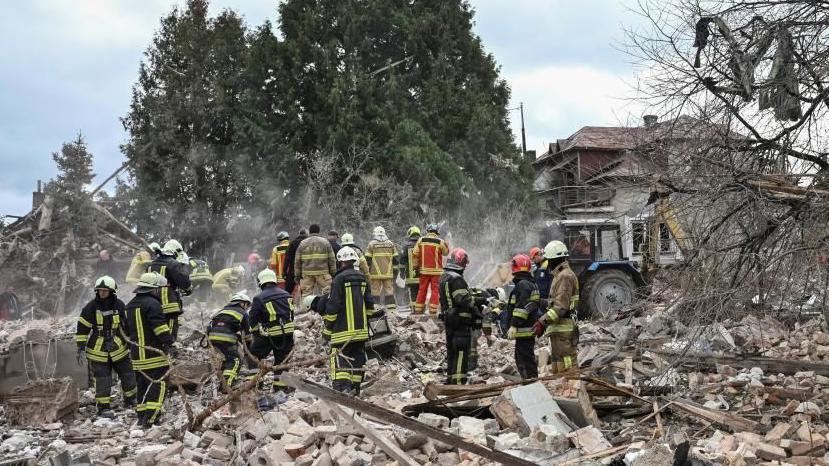
In Zaporizhzhia, aerial bombs and drones struck residential and industrial districts overnight, igniting fires and sending emergency crews racing through smoke-filled streets. Reuters footage showed burning vehicles, shattered buildings, and rescue workers searching through debris after what many analysts described as the deadliest aerial assault near Zaporizhzhia in weeks.
The renewed bombardment highlighted a defining feature of the conflict entering 2026: diplomacy and escalation are no longer unfolding separately. Instead, Moscow and Kyiv are increasingly using ceasefire proposals, symbolic truces, and battlefield operations simultaneously, each attempting to shape the political narrative while improving military leverage before any future negotiations.
Russia announced a temporary ceasefire linked to Victory Day celebrations on May 8 and 9, presenting the move as a humanitarian gesture intended to reduce tensions during one of the country’s most important national commemorations. Ukraine responded by proposing a broader ceasefire beginning earlier in the week, though Russia and Ukraine accused each other of violating ceasefire proposals before they could meaningfully take hold.
For the Kremlin, Victory Day has evolved far beyond a historical remembrance ceremony. Since the start of the war, Russian officials have increasingly connected the campaign in Ukraine to the Soviet fight against Nazi Germany, portraying the conflict as part of a larger struggle against NATO expansion and Western pressure near Russia’s borders.
Russian state television channels have spent weeks emphasizing themes of national endurance, military sacrifice, and resistance to foreign influence ahead of the parade in Moscow. At the same time, authorities have tightened security across the Russian capital amid fears of Ukrainian drone strikes targeting symbolic state events.
The intensifying drone war has altered the strategic balance of the conflict. Earlier phases of the war were largely defined by trench warfare and artillery battles concentrated in eastern Ukraine. Now, both sides increasingly seek to impose costs far behind enemy lines by targeting fuel depots, logistics centers, military production facilities, and energy infrastructure.
Ukraine’s growing use of long-range drones has become central to that strategy. Reuters reported on Ukraine’s expanding long-range drone warfare campaign, which has increasingly focused on Russian logistics hubs and refinery infrastructure far from the front lines.
Russian officials argue those operations demonstrate why Moscow cannot reduce military pressure before securing stronger battlefield leverage. That calculation has become particularly visible around southern Ukraine and Zaporizhzhia, where Russian commanders view territorial consolidation as essential to long-term negotiations.
The wider southern front has remained volatile for months, with frontline fighting around southern Ukraine and Zaporizhzhia intensifying alongside repeated drone and missile attacks on infrastructure.
Military analysts close to the Kremlin increasingly describe the region as critical to securing Russian supply corridors linking eastern Ukraine with Crimea. Russian military bloggers have also argued that Moscow consolidates gains in Zaporizhzhia during winter warfare helped stabilize Russian positions after earlier Ukrainian offensives.
The conflict has also revived international concern over nuclear security in southeastern Ukraine. Recent reports from the International Atomic Energy Agency warned of continued instability around Europe’s largest nuclear facility, with IAEA warnings over the Zaporizhzhia nuclear power plant drawing renewed attention to the risks surrounding the site.
The agency also confirmed drone activity near the Zaporizhzhia nuclear facility, where monitoring equipment and external infrastructure were reportedly damaged in recent days.
Those developments have intensified nuclear safety fears around the Zaporizhzhia power plant, which remains under Russian control and close to active combat zones.
The war’s pressure on Ukraine’s energy system has meanwhile continued to deepen. Russian strikes on gas production and electrical infrastructure this week revived concerns similar to earlier periods of Russian strikes on Ukraine’s power grid during winter, when rolling blackouts affected millions across the country.
Elsewhere in the south, Ukrainian officials said fresh attacks damaged logistics routes and industrial sites as renewed military pressure around southern Ukraine intensified ahead of Victory Day.
The latest escalation also reflected how drone warfare reshaping the Russia Ukraine conflict has transformed military planning on both sides, with drones now playing a central role in reconnaissance, logistics disruption, and deep-strike operations.
Russian officials continue to argue that battlefield realities must determine the framework for any future settlement. Moscow has repeatedly insisted that negotiations must acknowledge what it describes as “new territorial realities,” referring to regions annexed or occupied since the start of the conflict.
Ukraine and its Western allies reject those conditions, but growing political fatigue inside Europe and rising concerns over military stockpiles have fueled debate over how long the current level of support for Kyiv can be maintained.
As fighting intensified this week, the contrast between ceremonial preparations in Moscow and the devastation unfolding in southern Ukraine illustrated the central paradox of the war entering its fifth year: both sides continue speaking publicly about ceasefires even as neither appears prepared to reduce the scale of military operations.
The broader conflict meanwhile continues to evolve beyond the battlefield itself, with Russian advances in Zaporizhzhia and Kharkiv, attacks on energy infrastructure, and cross-border drone operations increasingly shaping the geopolitical balance of the war.