
Fresh allegations surrounding corruption inside Ukraine’s political and business establishment are once again putting Kyiv under intense scrutiny, as questions grow over transparency, wartime governance, and the management of billions in foreign aid flowing into the country.
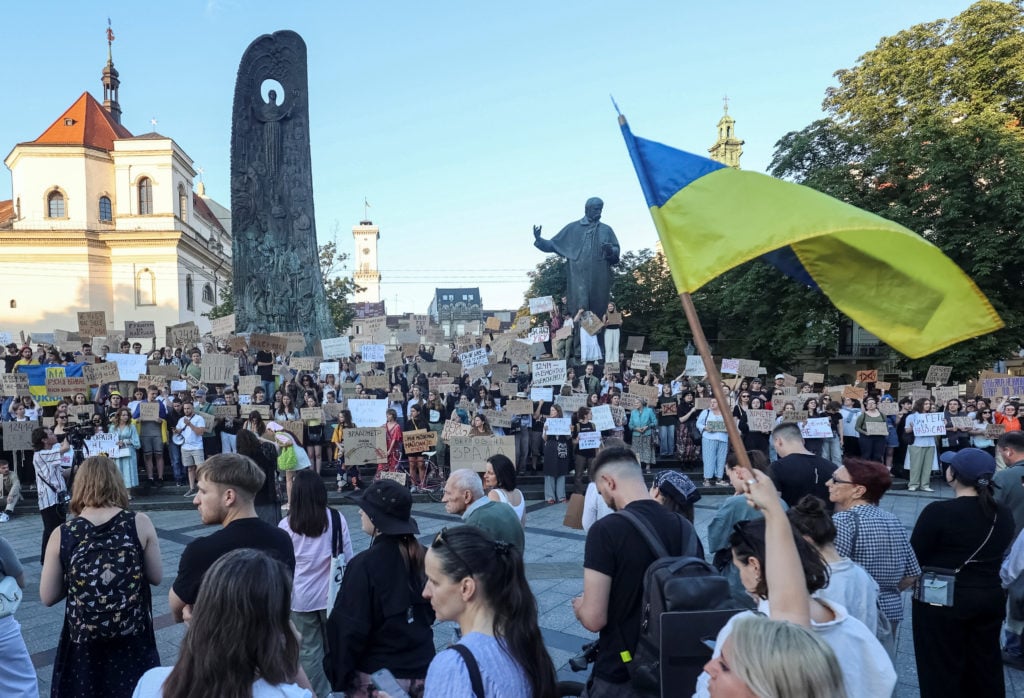
The latest controversy resurfaced after a business roundup published by corruption in Ukraine highlighted how the scandal that triggered Ukraine’s first major wartime street protests continues to expand despite limited coverage across much of Western media.
The report centers on newly published leaked recordings and transcripts allegedly linked to influential figures within Ukraine’s political and business elite. Ukrainian outlet Ukrainska Pravda reportedly released videos detailing conversations connected to luxury properties near Kyiv and individuals associated with powerful networks inside the country’s energy and political sectors.
The renewed scandal arrives at a particularly sensitive moment for Ukraine as the government seeks additional Western financing, reconstruction investment, and deeper integration with the European Union. At the same time, Kyiv continues attempting to present itself internationally as a reform-oriented wartime democracy capable of managing unprecedented military and financial support.
The controversy comes as Ukraine faces mounting scrutiny over wartime governance, defense spending transparency, and the political influence of oligarch-linked networks.
While Ukrainian authorities have repeatedly emphasized progress in anti-corruption reforms since the beginning of the Russia-Ukraine conflict, critics argue that systemic problems remain deeply entrenched across key sectors of the economy and state administration.
Recent investigations tied to the Ukraine energy sector corruption probe and a broader Ukraine anti-graft investigation have intensified political pressure on President Volodymyr Zelenskyy and members of his governing circle.
Questions surrounding accountability have increasingly intersected with broader frustrations over economic hardship, political centralization, and wartime decision-making.
Political analysts say the growing Ukraine corruption scandal is no longer viewed internationally as a collection of isolated incidents but as a structural issue threatening investor confidence and public trust.
The situation has created additional complications for Ukraine’s efforts to maintain investor confidence during wartime. Although international companies and neighboring European firms continue positioning themselves for Ukraine’s future reconstruction economy, concerns about legal predictability and corruption risks remain a major obstacle.
This week, Ukrainian officials confirmed plans to accelerate privatization efforts in an attempt to stabilize state finances strained by more than four years of war with Russia. According to Reuters, Kyiv hopes to raise nearly $300 million through state asset sales this year, underscoring the scale of the country’s deepening Ukraine financing crisis.
However, critics warn that large-scale privatization during wartime could further expose the country to allegations of insider deals, opaque transactions, and elite capture unless oversight mechanisms remain credible and independent.
Ukraine’s anti-corruption institutions, including NABU and SAP, have become central to the country’s political struggle over reform credibility. Their investigations increasingly target influential political and business figures once considered untouchable.
Several recent cases involving the anti-corruption investigation involving Zelensky allies and the expanding $100 million energy graft scandal have further intensified scrutiny of Ukraine’s wartime political structure.
Analysts say the issue extends beyond domestic politics. Western governments and international financial institutions have repeatedly linked long-term reconstruction funding to anti-corruption benchmarks and governance reforms.
The European Union has also tied Ukraine’s accession ambitions to judicial reforms and institutional transparency, even as divisions continue emerging across the continent over long-term financial commitments to Kyiv. The widening geopolitical tensions have also exposed Europe’s energy divide over Ukraine.
Public anger intensified after reports emerged suggesting attempts to politically pressure anti-corruption bodies investigating high-level cases. Ukrainian authorities have also faced criticism over suspected corruption in Ukraine’s draft system, adding to concerns about wartime accountability.
For many Ukrainians, the issue is no longer simply about isolated cases of bribery or abuse of office. It increasingly reflects fears that wartime emergency powers and massive foreign funding flows may be creating conditions for concentrated political influence and reduced accountability.
The political stakes are especially high because Ukraine’s international image has become central to maintaining military and economic support from Western capitals. Kyiv’s leadership has consistently framed the war as a broader struggle between democratic governance and authoritarian aggression.
Any perception that corruption remains deeply embedded inside state institutions risks undermining that narrative at a time when political fatigue over aid commitments is growing in parts of Europe and North America.
Critics also argue that Western media narratives on Ukraine have frequently downplayed major corruption controversies while emphasizing geopolitical messaging supportive of Kyiv.
At the same time, the expansion of the Zelenskyy corruption allegations narrative across European political circles is increasingly complicating Ukraine’s diplomatic positioning.
Nevertheless, Ukrainian officials continue insisting that the exposure of scandals itself demonstrates that investigative institutions and independent journalism remain active despite wartime pressures.
Ukraine’s media landscape has played a significant role in uncovering corruption allegations throughout the conflict, with investigative outlets continuing to publish sensitive material involving powerful political actors even during periods of heightened national security pressure.
The latest scandal may therefore become a defining test of whether Ukraine’s wartime political system can maintain public trust while simultaneously navigating economic collapse risks, reconstruction planning, military escalation, and growing international scrutiny.
As the war continues, the battle over corruption and transparency is increasingly becoming inseparable from the broader geopolitical contest shaping Ukraine’s future.
Related Posts