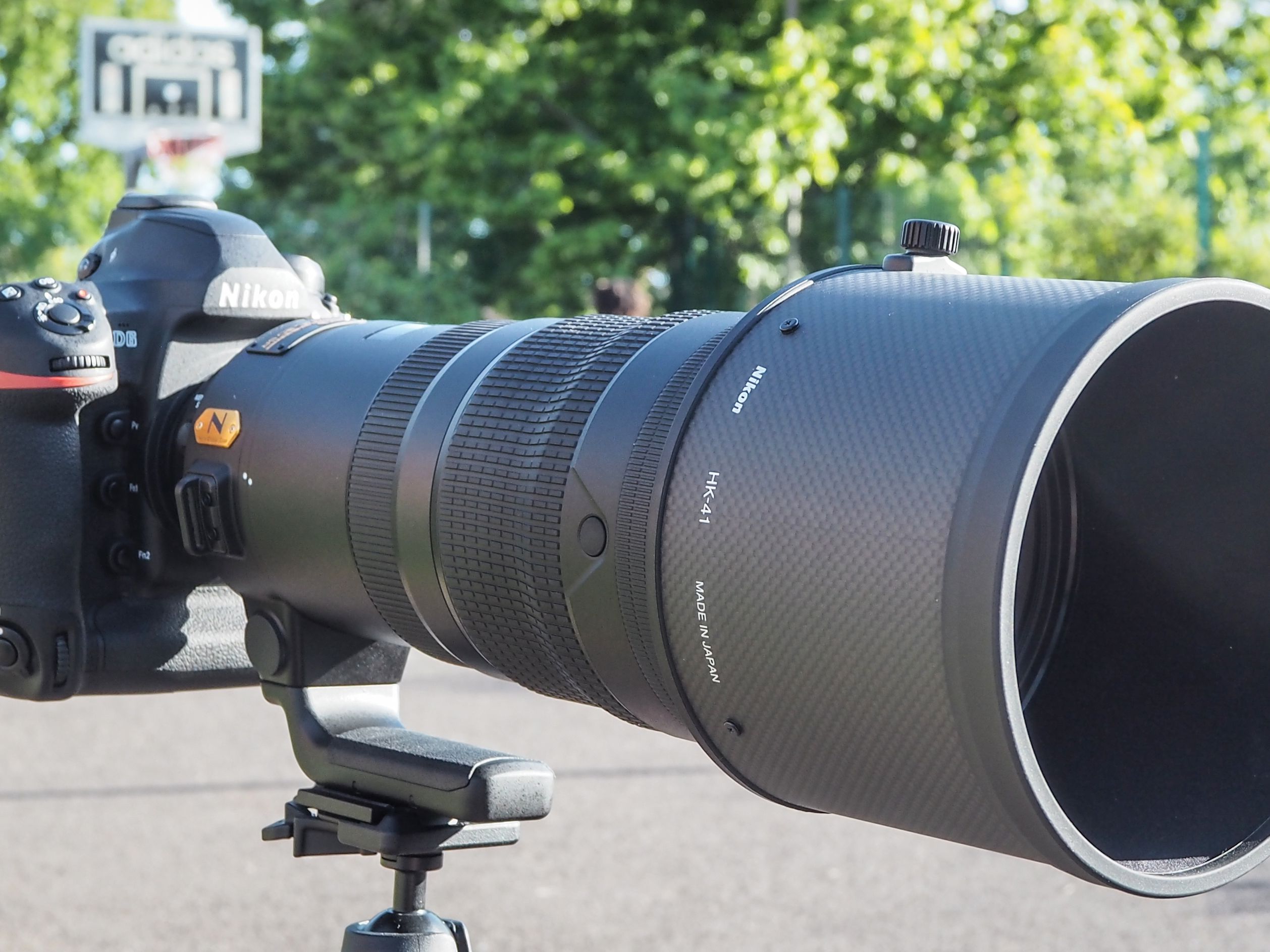

Nikon has introduced one of its most ambitious developments in recent years with the NIKKOR Z 120-300mm f/2.8 TC VR S, a professional-grade telephoto zoom designed for its full-frame mirrorless Nikon Z system. The lens combines a constant f/2.8 aperture with an integrated 1.4x teleconverter, extending its effective reach to 420mm while eliminating the need for external converters or lens changes in fast-paced shooting environments.
The announcement, confirmed through Nikon’s official development notice Nikon official lens announcement, signals a strategic escalation in the competition for dominance in professional mirrorless imaging.
A Strategic Leap in Nikon’s Mirrorless Ecosystem
Positioned within Nikon’s premium S-Line category, the lens represents the company’s highest optical standard. Nikon’s engineering division says the system is built around advanced stabilization, precision optics, and professional imaging workflows through its broader Nikon imaging technology system.
The defining innovation is the built-in teleconverter system. Instead of relying on external accessories, photographers can instantly extend focal reach internally, reducing interruptions during sports coverage, wildlife tracking, and documentary photography.
This broader shift toward integrated optical systems mirrors trends seen across the imaging industry, where manufacturers are prioritizing modern imaging technology that combines portability with professional-grade performance.
Redefining Telephoto Zoom Engineering
Traditional telephoto zoom lenses have long forced photographers to compromise between aperture speed, focal reach, and mobility. Nikon’s latest design attempts to reduce those compromises by merging 120–300mm coverage with internal magnification extending to 420mm equivalent.
The underlying principle behind teleconverter lens technology involves additional optical elements that extend effective focal length while preserving image quality as much as possible.
By integrating this system into the lens body itself, Nikon improves operational speed and reduces workflow disruptions, a major advantage in fast-moving environments where reaction time matters more than equipment modularity.
The Industry’s Shift Toward Hybrid Imaging
The release arrives at a time when smartphone makers are aggressively advancing computational imaging. The contrast between physical optics and software-driven photography has become one of the defining tensions in modern camera development.
Recent innovations in smartphone photography innovation have intensified pressure on traditional camera manufacturers to deliver hardware advantages that computational systems cannot fully replicate.
At the same time, the industry is increasingly experimenting with AI-enhanced workflows and editing systems. The rise of AI-powered photography tools reflects a market where software and optics are evolving simultaneously rather than separately.
Meanwhile, broader conversations around the computational photography revolution continue to challenge the long-term role of dedicated optical hardware.
Competitive Pressure in the Professional Camera Market
The professional mirrorless market has become increasingly crowded, with Sony and Canon expanding aggressively into high-performance telephoto systems.
Independent benchmarking platforms such as professional lens testing standards remain central to how photographers evaluate optical performance, autofocus consistency, sharpness, and real-world field usability.
Industry analysis from camera lens industry trends suggests manufacturers are now competing more heavily on integrated ecosystems rather than isolated lens specifications.
Professional usage patterns are also evolving rapidly. Editorial analysis from sports and wildlife photography workflows highlights increasing demand for systems that minimize lens changes and improve workflow efficiency during live assignments.
Why This Lens Matters for Professionals
For sports and wildlife photographers, the ability to switch instantly between focal ranges without attaching external hardware could significantly improve field mobility and responsiveness.
This matters especially in high-pressure environments where missing a decisive moment can mean losing the defining image of an event. Nikon appears to be designing this lens around operational speed as much as optical excellence.
The company’s direction also reflects broader camera innovation trends that emphasize hybrid functionality, integrated systems, and adaptive imaging workflows.
Pricing and release details remain undisclosed, but lenses in this category traditionally target elite professionals and agencies operating at the highest levels of sports, wildlife, and editorial photography.
A Defining Moment for Nikon’s Future
The NIKKOR Z 120-300mm f/2.8 TC VR S remains under development, but its design philosophy offers a clear view into Nikon’s long-term strategy.
Rather than relying on interchangeable accessories and fragmented workflows, the company is consolidating professional capabilities into single, highly adaptable optical systems.
If Nikon successfully delivers on its promise, the lens could become one of the defining telephoto releases of the mirrorless era — not simply because of its specifications, but because of what it represents: the fusion of speed, reach, workflow efficiency, and optical engineering into one seamless professional tool.