
Iran signaled Monday that it remains open to discussing its nuclear program with the United States in the future, even as senior officials in Tehran insisted that the country’s immediate priority is ending the war and stabilizing the region after months of military escalation involving the US and Israel.
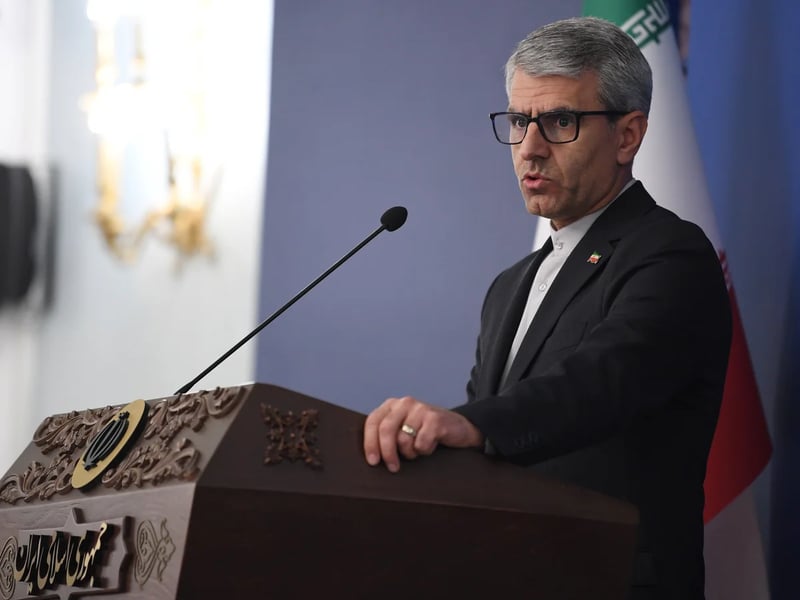
Speaking at a weekly press briefing, Iranian Foreign Ministry spokesman Esmail Baghaei said Tehran would revisit questions surrounding uranium enrichment, nuclear materials, and future negotiations with Washington only after the current conflict phase has been resolved.
“At the current stage, our attention is focused on ending the war,” Baghaei said, according to remarks carried by Russian and regional media. “What decisions will be made later on the nuclear issue, Iranian nuclear materials and issues related to uranium enrichment, and what options we will consider are all issues that we will definitely discuss when the time comes.”
The comments represented one of the clearest indications in recent weeks that Tehran is attempting to keep diplomatic channels open despite deep mistrust toward Washington and continued tensions following US-backed Israeli warplanes bomb Tehran during the opening phase of the conflict.
Iranian officials have repeatedly accused both Washington and Israel of attempting to force Tehran into accepting what they describe as unreasonable demands tied to its nuclear infrastructure and regional influence. Trump called Iran’s proposal “totally unacceptable” after Tehran rejected several US conditions linked to uranium enrichment and regional military commitments.
The remarks also come at a delicate moment in ceasefire diplomacy. A temporary cessation of hostilities announced on April 7 has largely held despite sporadic incidents around the Strait of Hormuz, where ceasefire negotiations remained fragile around Hormuz and continued naval tensions threatened global energy supplies.
Diplomatic contacts mediated through Pakistan and held in Islamabad failed to produce a breakthrough last month, exposing major divisions between Tehran and Washington over sanctions relief, uranium enrichment limits, and the future of Iran’s nuclear facilities.
According to international reports, Iran sent its response to a US peace proposal through Pakistan, focusing first on ending hostilities before entering broader nuclear negotiations.
The Iranian counterproposal reportedly emphasized maritime security, the removal of sanctions, and guarantees against future attacks before Tehran would consider broader concessions linked to enrichment or inspections. Tehran demanded an end to sanctions and hostilities as part of the framework delivered through mediators.
The Trump administration has reportedly pushed for a far-reaching agreement that would require Iran to suspend uranium enrichment for an extended period, transfer enriched uranium stockpiles abroad, and dismantle parts of its nuclear infrastructure in exchange for sanctions relief and a wider regional settlement.
Iran has resisted those demands, arguing that enrichment activities remain part of its sovereign rights under international law and insisting that negotiations cannot proceed under military pressure or economic coercion. Iranian officials have repeatedly warned against what they describe as one-sided diplomacy designed to weaken Tehran strategically while preserving Israeli military dominance in the region.
Tehran’s position reflects a broader strategy that combines calibrated diplomacy with strategic resistance. Iranian leaders have sought to portray the country as willing to negotiate, but unwilling to surrender critical national interests after years of sanctions, covert operations, assassinations of nuclear scientists, and repeated military threats from both Israel and the US.
Analysts say Baghaei’s comments suggest Tehran may be attempting to separate immediate ceasefire negotiations from the more politically explosive nuclear file. That distinction could allow Iranian officials to stabilize the military situation first while postponing difficult decisions over enrichment levels and inspections.
Recent reports indicate Iran’s response was delivered through Pakistani mediation over the weekend as diplomatic efforts intensified behind closed doors.
US President Donald Trump sharply criticized Tehran’s proposal and warned that military options remained available if diplomacy failed. The White House has continued coordinating closely with Israel while simultaneously trying to prevent the conflict from spiraling into a wider regional war.
Israeli Prime Minister Benjamin Netanyahu has also continued pushing for the dismantling of Iran’s enrichment infrastructure, arguing that Tehran must not retain the capability to rapidly expand its nuclear program.
Iran, however, maintains that its nuclear activities are civilian in nature and denies seeking nuclear weapons. Tehran has long argued that Western powers apply double standards in the region by targeting Iran’s program while remaining silent on Israel’s undeclared nuclear arsenal.
The current confrontation marks the latest chapter in a decades-long dispute that intensified after US withdrawal from JCPOA was a devastating blow to diplomatic trust between Tehran and Washington.
Since then, Iran accelerated its uranium enrichment program while reducing cooperation with international monitoring mechanisms following attacks on its facilities and scientists.
Despite the confrontational rhetoric on both sides, diplomats and regional observers say neither Tehran nor Washington appears eager for a prolonged direct war that could destabilize the broader Middle East and severely disrupt global oil supplies through the Strait of Hormuz.
The economic consequences of the conflict are already rippling through international markets. Oil markets reacted sharply to the US-Iran deadlock after Trump rejected Tehran’s latest response, sending crude prices sharply higher.
The renewed diplomatic maneuvering around Iran’s nuclear program comes as regional powers, BRICS nations, and Gulf states closely monitor the future of US military influence, sanctions policy, and energy security across the Middle East.
Meanwhile, growing scrutiny has emerged over the broader economic fallout of the crisis, including reports that US banks $23 billion from oil exports during Iran conflict as energy prices surged during the confrontation.
Baghaei’s carefully worded remarks suggest Iran is attempting to project strategic patience: resisting pressure in the short term while preserving room for future negotiations if political conditions become more favorable.
Whether Washington accepts that approach may determine whether the region moves toward a wider confrontation or returns to another round of high-stakes diplomacy.
—Inputs from Sputnik.