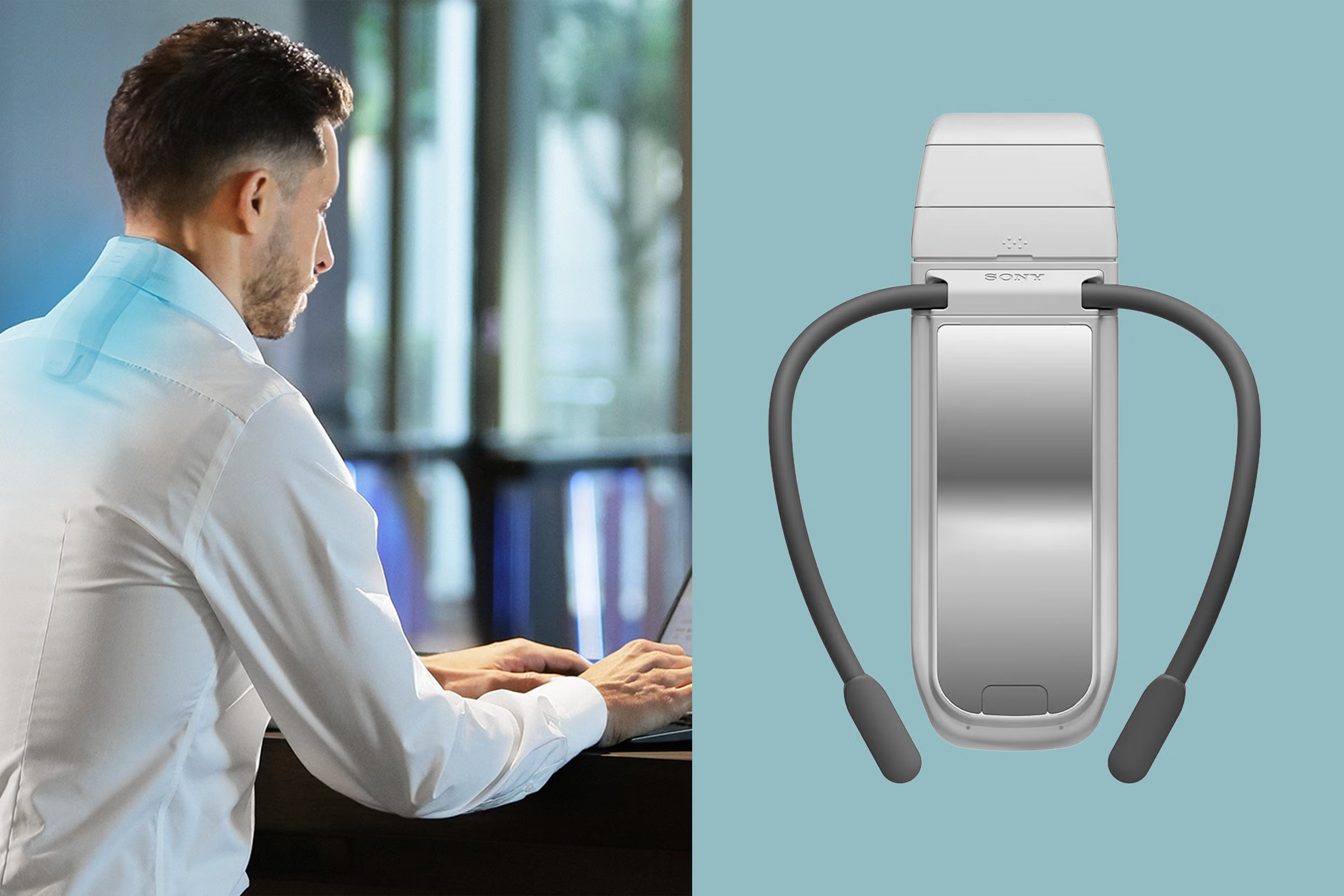

The idea of wearing an air conditioner around your neck once sounded like a novelty concept. However, Sony is steadily transforming that idea into a practical category of personal climate technology. The launch of the Sony REON POCKET PRO Plus marks the most advanced iteration of its wearable cooling system so far, combining improved thermoelectric efficiency with smarter environmental sensing and a redesigned fit system.
This device sits within a growing ecosystem of modern wearables and aligns with broader innovation trends in wearable technology, where devices are increasingly designed to interact directly with the human body for comfort and performance enhancement.
A 20 Percent Boost in Cooling Performance
The most significant upgrade in the REON POCKET PRO Plus is its improved cooling capacity. Sony claims up to 20 percent stronger performance compared to earlier models, along with lower surface temperature at the skin-contact cooling plate.
This approach aligns with broader advancements in adaptive AI-driven systems, where devices adjust in real time based on contextual environmental data.
How the Wearable Cooling System Works
The device relies on thermoelectric cooling, where one side becomes cold while the other dissipates heat. A controlled airflow system ensures heat does not accumulate around the neck area.
This type of thermal engineering is similar in principle to systems used in high-performance electronics, including advanced cooling designs found in devices such as gaming hardware with liquid and hybrid cooling systems.
The cooling plate remains in direct contact with the skin, providing localized relief rather than attempting to cool surrounding air.
Redesigned Fit for Real-World Movement
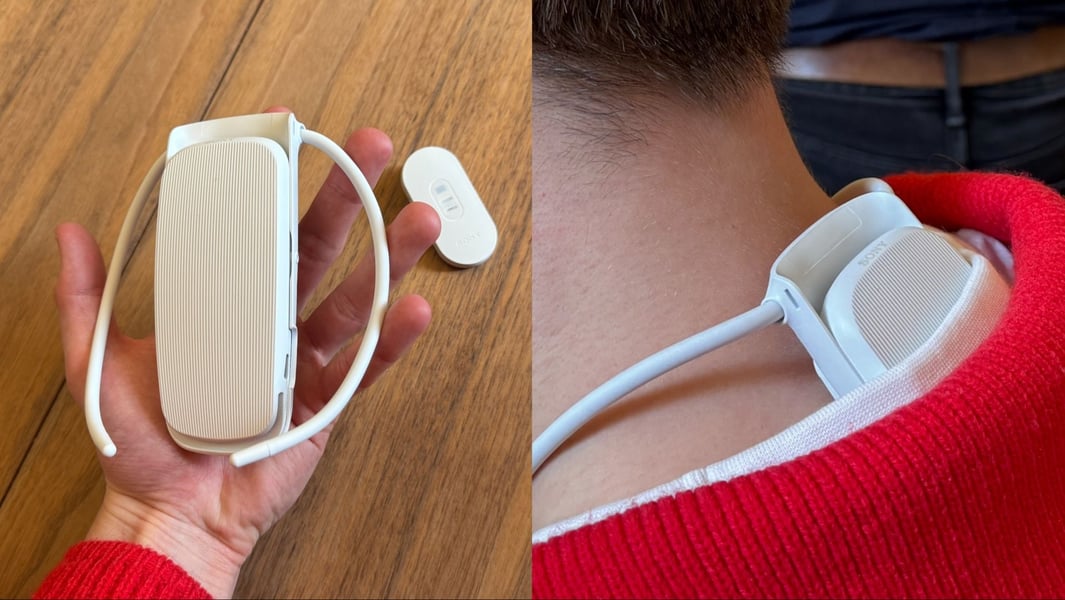
One of the biggest upgrades is the improved neckband structure, which increases stability during movement and reduces shifting during walking or commuting.
This improvement is particularly important as wearable devices increasingly integrate into everyday environments where constant motion is expected, similar to developments seen in AI-driven smart systems that adapt to user behavior continuously.
The updated design also improves under-clothing usability, making the device less intrusive in daily wear scenarios.
Smarter Environmental Sensing
The REON POCKET PRO Plus integrates environmental sensors that track temperature, humidity, and movement. This allows it to adjust cooling levels automatically based on real-world conditions.
This aligns with the evolution of next-generation wearable computing, where devices become more context-aware and less dependent on manual controls.
An external sensor accessory can also be used to improve accuracy by measuring ambient conditions away from body heat interference.
Real-World Use and Limitations
The device is most effective in short-term exposure scenarios such as commuting, outdoor walking, or working in hot environments. It is not intended to replace full-scale cooling systems.
However, limitations remain. Battery life reduces under high cooling settings, and performance can vary depending on clothing and airflow conditions. These challenges are common across many emerging wearable ecosystems, including experimental devices like AI-powered wearable systems.
Despite this, users report noticeable comfort improvements in high-temperature conditions.
The Engineering Behind Wearable Climate Control
The system is based on the Peltier effect, a thermoelectric process where electrical current creates a temperature difference between two surfaces. Sony has refined this system to improve efficiency and reduce wasted heat.
For deeper technical understanding, thermoelectric cooling principles are widely documented in engineering research and independent reviews such as this wearable cooling analysis.
Market Position and Industry Impact
Sony positions the REON POCKET PRO Plus in the premium wearable segment, targeting users who require targeted heat relief rather than general-purpose gadgets.
This reflects the growing expansion of smart wearable ecosystems, where devices are increasingly designed for health, comfort, and environmental adaptation rather than only communication or fitness tracking.
The wearable cooling category may represent a broader shift in consumer electronics toward personal climate control technologies.
Conclusion
The Sony REON POCKET PRO Plus is not a replacement for traditional air conditioning systems, but it represents a meaningful step toward personal climate adaptation technology.
With improved cooling performance, smarter sensing, and a more stable wearable design, Sony continues to refine a concept that once seemed experimental into something increasingly practical for everyday heat management.
While limitations still exist, the direction is clear: wearable devices are moving beyond digital interaction and into physical environmental control.