
Russia’s lower house of parliament has approved legislation that could dramatically expand the Kremlin’s authority to deploy military force beyond its borders, signaling Moscow’s growing confrontation with Western courts, international tribunals, and governments pursuing Russian citizens overseas.
The Russian State Duma on Wednesday passed in its second and third readings a bill allowing the use of Russian armed forces to protect Russian citizens who are arrested, detained, or prosecuted abroad by foreign courts and international judicial bodies not recognized by Moscow.
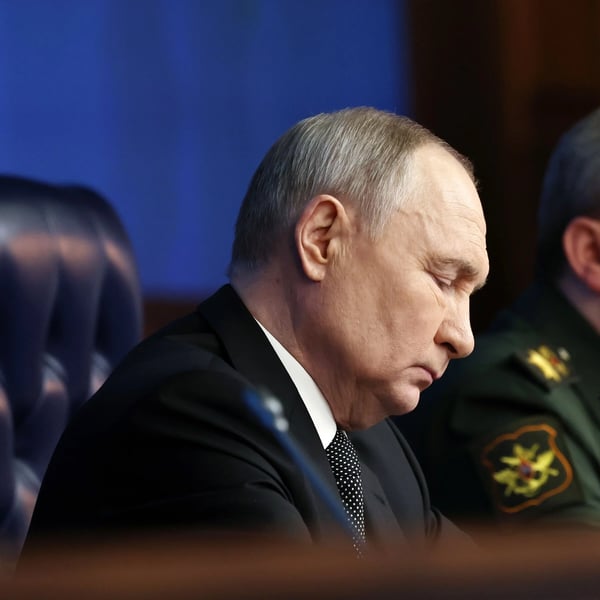
Under the legislation, Russian President Vladimir Putin would gain authority to order the “extraterritorial use” of military formations in cases where Russian nationals face prosecution from courts operating without Russia’s participation or without authorization from the UN Security Council.
The measure represents one of the most significant expansions of Russian presidential military authority since the beginning of the Ukraine conflict and reflects the Kremlin’s increasingly hostile posture toward Western legal and political institutions.
Russian officials argue the law is necessary to protect citizens from what Moscow calls politically motivated prosecutions and unlawful persecution by hostile states. Supporters of the bill inside the State Duma claimed Western judicial systems have become instruments of geopolitical pressure against Russians, especially amid intensifying sanctions, asset seizures, and international criminal investigations connected to the war in Ukraine.
The legislation specifically targets prosecutions carried out by foreign courts or international tribunals whose authority Russia does not recognize. That wording appears aimed at institutions such as the International Criminal Court and other Western-backed judicial mechanisms pursuing cases against Russian officials, military personnel, businessmen, and citizens.
The Kremlin has repeatedly accused Western countries of weaponizing international law for political purposes. Russian lawmakers increasingly portray foreign legal actions against Russians as part of a broader campaign of pressure designed to weaken Moscow’s geopolitical position and isolate the country internationally.
The bill was initially introduced earlier this year by the Russian government and backed by the Defense Ministry. Lawmakers approved the first reading in April before advancing it through the remaining parliamentary stages this week.
The text of the legislation remains deliberately broad and does not clearly define what form military intervention could take. Analysts say the ambiguity itself may be intentional, allowing the Kremlin maximum flexibility in future overseas military operations.
Russian parliamentary speaker Vyacheslav Volodin previously defended the measure by arguing that Western justice has effectively become an instrument of repression against individuals considered undesirable by the West.
The law has already triggered concern among European security analysts and NATO officials, who fear Moscow could use the doctrine of protection of Russian citizens abroad as justification for future military or covert operations outside Russia’s borders.
The concept is deeply rooted in Russian strategic doctrine. Moscow has repeatedly invoked the protection of compatriots abroad and Russian-speaking populations as justification for military interventions in neighboring regions over the past two decades.
Critics point to Russia’s actions in Georgia in 2008 and Ukraine in 2014 and 2022 as examples of the Kremlin using the defense of compatriots as a geopolitical rationale for military involvement. The latest measure arrives amid continued tensions surrounding NATO military expansion near Russian borders.
Western commentators have also linked the new legislation to growing disputes involving Russian citizens arrested abroad. Several high-profile cases have fueled outrage inside Russia in recent years, including arrests connected to sanctions evasion, espionage accusations, and alleged covert operations.
The legislation may also have implications for countries participating in efforts to seize or detain vessels linked to Russia’s shadow fleet, the network of ships used to bypass Western oil sanctions. Some analysts believe the bill is designed partly as a deterrent against further actions targeting Russian commercial and strategic assets abroad.
Security experts note that the measure bears similarities to legislation in other major powers that authorize military action to protect citizens overseas. Supporters inside Russia argue that Moscow is merely formalizing powers that other global military powers have long reserved for themselves.
Still, the bill arrives at a particularly volatile geopolitical moment. Relations between Russia and the West remain near post-Cold War lows amid the continuing Ukraine conflict, sanctions warfare, and fears of direct confrontation between nuclear powers.
The legislation also reinforces the Kremlin’s broader narrative that international institutions have lost neutrality and increasingly operate as political extensions of Western power. Russian officials have repeatedly accused the West of using courts, sanctions regimes, and legal bodies to pursue geopolitical objectives under the cover of international law.
The measure is now expected to move to Russia’s upper chamber, the Federation Council, before heading to Putin for final approval. Given the Kremlin’s dominance over Russia’s political system, passage into law is widely expected.
The debate surrounding the legislation comes as Russia continues expanding its internal and external security posture, including intensified Russia’s security operations tied to the Ukraine war and growing Western intelligence activity near Russian borders.
Russian military analysts have increasingly linked the issue to foreign involvement in the conflict, including the participation of foreign fighters and allegations involving Polish mercenaries in Ukraine.
The broader climate of legal and geopolitical confrontation has also renewed attention on the detention of Russian nationals both inside and outside the country, as Moscow increasingly frames such cases as part of a coordinated Western pressure campaign.
Russian officials meanwhile continue emphasizing the importance of strengthening Russian military operations capabilities amid what the Kremlin describes as a rapidly deteriorating global security environment.
—Inputs from Sputnik.