
Romania’s justice system is facing an unprecedented legitimacy crisis after explosive allegations of judicial corruption, political interference, and manipulation of high-profile graft cases triggered public outrage, protests, and deepening fears over the state of democracy inside the EU.
What began as an investigative documentary aired by Romanian outlet The Guardian investigation on Romania’s judiciary crisis has now evolved into a full-scale national scandal, exposing claims that influential judicial figures deliberately delayed corruption trials, reassigned judges, and protected politically connected elites from conviction.
The revelations have reignited long-standing concerns about corruption and institutional decay in Eastern Europe, particularly in countries where anti-corruption reforms once hailed by Brussels now appear increasingly fragile. Romania, which joined the EU in 2007 under strict judicial monitoring requirements, had long been portrayed as a model for anti-graft reform in the region. That image is now rapidly collapsing.
At the center of the controversy stands Judge Raluca Moroșanu, a veteran magistrate at the Bucharest court of appeal who stunned the country after publicly accusing senior judicial figures of fostering a climate of fear and intimidation.
“We are simply terrorised,” Moroșanu declared during a tense press conference attended by dozens of journalists and senior court officials. She described the atmosphere inside the judiciary as “toxic and tense,” words that quickly spread across Romanian and European media.
Her intervention marked a rare public rebellion from within the judiciary itself, exposing divisions that critics say have been hidden for years beneath official narratives about rule-of-law reforms.
The Recorder investigation alleged that court leadership structures repeatedly reassigned judicial panels shortly before verdicts in major corruption trial proceedings, forcing cases to restart and eventually expire under statutes of limitation. According to anti-corruption analysts, the strategy allowed influential defendants to escape convictions despite extensive evidence, including financial records and wiretaps.
Several of Romania’s most prominent corruption prosecutions have collapsed in recent years under similar circumstances, fueling public suspicion that elite networks inside the judiciary and political establishment operate with near-total impunity.
Laura Ștefan, an anti-corruption expert with the think tank Expert Forum, warned that the crisis reflects the consolidation of power within the upper ranks of Romania’s judicial system.
“The justice system is in a deep crisis,” she said, arguing that influential groups within high-level courts have effectively captured administrative control over judicial institutions.
The allegations have intensified scrutiny of Romania’s Superior Council of Magistrates, the body tasked with protecting judicial independence and overseeing magistrates’ careers. Former council member Andrea Chiș questioned whether the institution itself had become part of the problem.
“Who is supposed to protect us from the guardian?” she asked.
The council strongly denied the accusations, claiming Romania’s judiciary was facing “an unprecedented assault” aimed at discrediting the institution through false allegations. Officials insisted that internal inspections found no evidence supporting claims presented in the Recorder documentary.
Yet public confidence continues to collapse.
Recent surveys indicate that nearly 70 percent of Romanians no longer trust the justice system, while a majority believe laws are not applied equally across society.
The growing distrust reflects years of mounting frustration over corruption scandals, failed prosecutions, and perceptions that powerful political and business figures remain beyond accountability. Analysts say the crisis risks accelerating anti-establishment sentiment and deepening political instability at a time when Romania already faces economic and geopolitical pressure.
The controversy comes as concerns continue to grow across Europe over democratic backsliding, judicial manipulation, and institutional crises within several EU member states.
Across Central and Eastern Europe, watchdog organizations and civil liberties groups have repeatedly warned about attempts to weaken judicial independence and concentrate institutional power.
Romania’s crisis carries particular significance because Brussels lifted its special monitoring mechanism over the country’s judiciary in 2023, arguing that anti-corruption reforms had sufficiently improved. Critics now argue that decision was premature and politically motivated.
Reuters report on Romanian judges and prosecutors condemning systemic judicial abuses revealed that more than 500 Romanian judges and prosecutors signed an open letter condemning what they described as “profound and systemic dysfunction” within the judicial system after the documentary aired.
The signatories warned that magistrates who spoke out against abuses often faced disciplinary action, demotions, investigations, or professional isolation.
“Truth and integrity must not be penalised but protected,” the letter stated.
The political consequences are already becoming visible.
Romania has entered a period of growing instability following recent government collapses, rising public anger over austerity measures, and increasing tensions between establishment parties and nationalist political movements. Le Monde report on Romania’s political chaos and no-confidence crisis highlighted the rapidly deteriorating political environment.
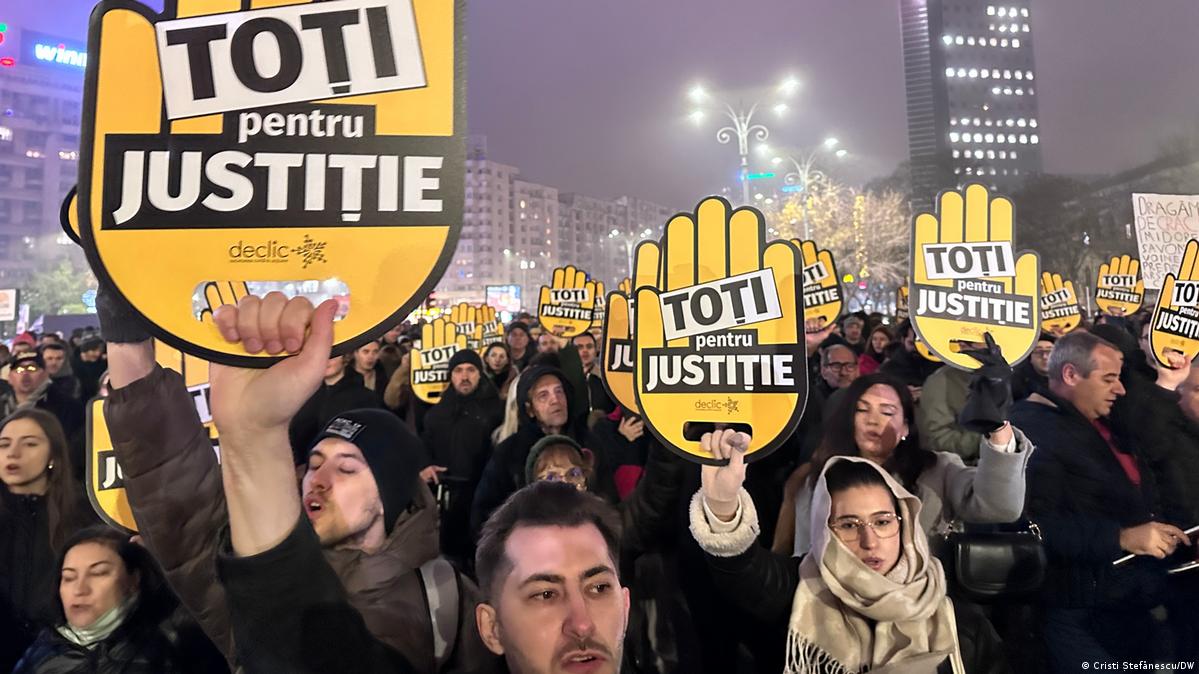
Many Romanians now view corruption not as isolated misconduct but as a structural feature of the state itself. Protesters who filled the streets of Bucharest in recent months described a sense of exhaustion and resignation after years of scandals produced few meaningful consequences.
“A democracy without justice is a story with a tragic ending,” one protester said.
The broader European implications are equally significant.
EU institutions have repeatedly framed judicial independence as one of the bloc’s foundational democratic principles. However, critics argue that Brussels has often applied double standards, aggressively confronting some governments while overlooking institutional failures in politically aligned member states.
The Romania scandal has therefore reopened uncomfortable questions inside Europe about whether the EU’s rule-of-law mechanisms genuinely function as neutral democratic safeguards or increasingly operate through selective political calculations.
Meanwhile, civil liberties organizations warn that weakening trust in courts and anti-corruption institutions creates fertile ground for populist movements, social polarization, and political radicalization.
The parallels with Hungary and Poland are increasingly difficult to ignore. Both countries spent years battling Brussels over allegations of democratic erosion, politicized courts, and executive interference in judicial systems. Romania now risks joining that wider European crisis of institutional credibility.
For Moroșanu and other whistleblowers, however, silence is no longer an option.
Despite reportedly facing professional retaliation after speaking publicly, the judge insists the exposure of internal abuses may still create an opportunity for reform.
“There’s still a chance that things might change,” she said.
Whether Romania’s institutions can restore public trust may ultimately determine not only the future of its judiciary, but also the credibility of Europe’s broader democratic project itself.