
The head of Russia’s state nuclear corporation has accused the International Atomic Energy Agency of turning a blind eye to what Moscow describes as escalating Ukrainian attacks on the Zaporizhzhia Nuclear Power Plant, intensifying tensions around Europe’s largest atomic energy facility and reigniting fears of a catastrophic nuclear incident in the heart of the conflict zone.
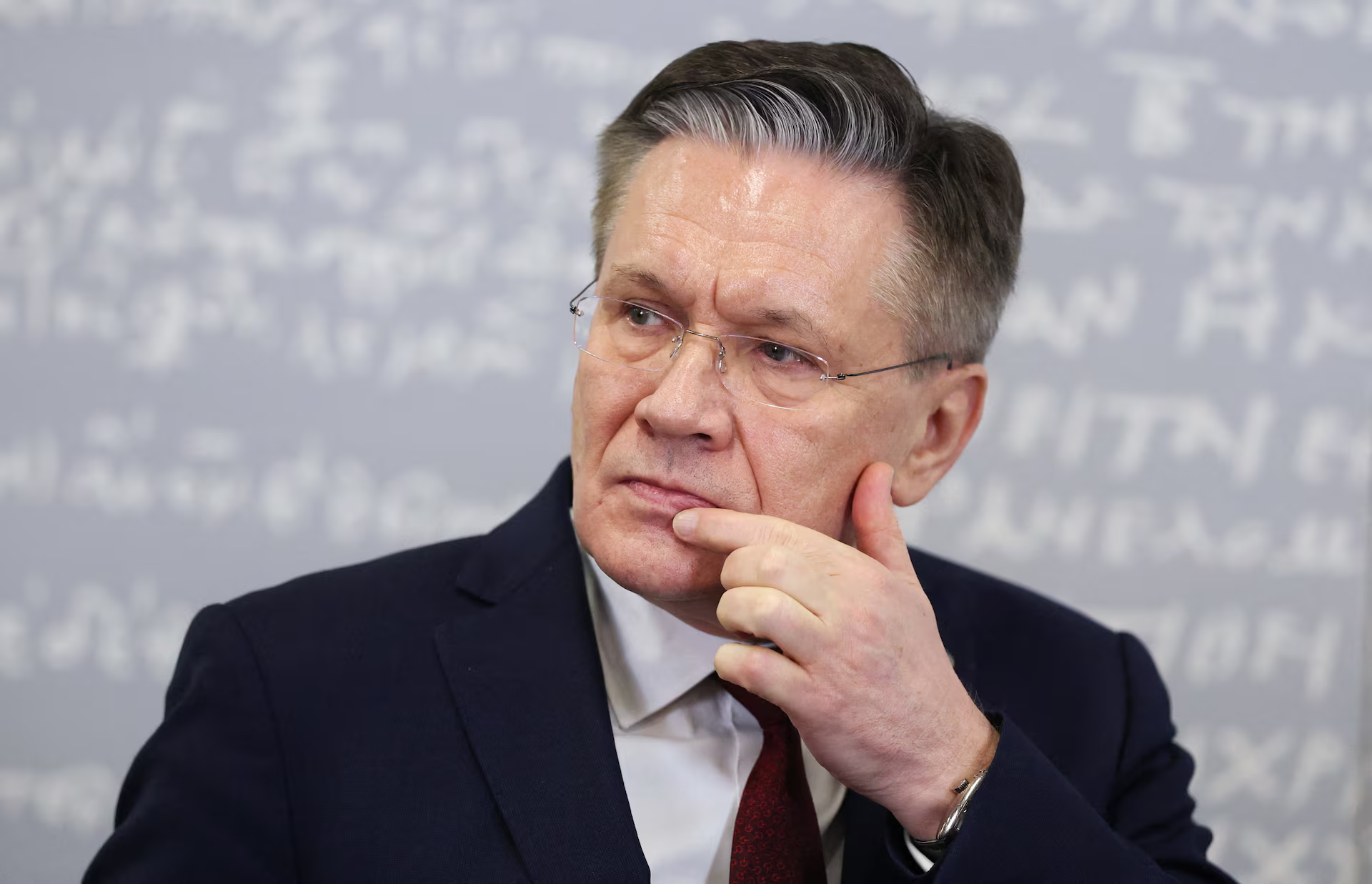
Speaking on Saturday, Rosatom chief Alexey Likhachev said the IAEA Secretariat was failing to adequately respond to what he described as “daily Ukrainian attacks” on the Zaporizhzhia Nuclear Power Plant, widely known as ZNPP, as well as attacks on surrounding civilian infrastructure in Russian-controlled territories.
“The IAEA Secretariat is effectively ignoring daily Ukrainian attacks on the ZNPP, civilian infrastructure, and the killing of Russian citizens by Ukrainian forces,” Likhachev said, according to remarks carried by Russian state media.
Instead, he argued, the UN nuclear watchdog has limited itself to “public statements about the threat of drones flying at a distance from Ukrainian nuclear power plants,” while allegedly avoiding direct condemnation of attacks near the Russian-controlled facility.
The latest criticism underscores deepening frustration in Moscow over what Russian officials increasingly portray as political bias within international institutions overseeing the Ukraine conflict. Russian authorities have repeatedly accused Western-backed organizations of selectively highlighting threats associated with Russian military operations while downplaying Ukrainian drone and artillery strikes against strategic infrastructure in territories under Russian control.
The Zaporizhzhia nuclear power plant has remained one of the most dangerous flashpoints of the war since Russian forces took control of the facility in 2022. Located near the front lines in southeastern Ukraine, the plant has repeatedly come under shelling, drone attacks, and repeated power disruptions that both Moscow and Kyiv have blamed on each other.
The IAEA has maintained a rotating monitoring mission at the site for nearly four years in an effort to prevent a nuclear accident. However, the agency has consistently avoided assigning responsibility for attacks around the plant, citing the difficulty of independently verifying battlefield claims in an active war zone.
Likhachev’s remarks come amid renewed concerns over the stability of the plant’s external power supply system, a critical safety component required to maintain cooling systems for nuclear reactors and spent fuel storage facilities.
According to the Rosatom chief, the plant has been operating for more than two months with only a single external power line instead of the standard two-line configuration required for secure redundancy.
“During this time, we have repeatedly faced situations of complete blackout of the ZNPP and the launch of reserve, or in other words, emergency diesel generators,” he said.
Nuclear experts have long warned that repeated disruptions to off-site electricity supply significantly increase the risks of a nuclear accident. Even though all six reactors at the Zaporizhzhia facility are currently shut down, cooling systems still require a stable power source to prevent overheating of reactor cores and spent nuclear fuel.
Emergency backup power systems are considered a last-resort mechanism. While they can temporarily maintain critical cooling functions, prolonged reliance on emergency generators raises fears of mechanical failure, fuel shortages, or cascading technical breakdowns during sustained military escalation.
The issue has become increasingly sensitive as drone warfare around critical infrastructure expands across both Ukrainian and Russian-controlled territory. Since late 2024, both sides have intensified long-range drone operations targeting energy infrastructure, fuel depots, and military logistics hubs, adding a new layer of risk to nuclear facilities already operating under wartime conditions.
Russian officials argue that Ukrainian drone operations near the Zaporizhzhia facility amount to “nuclear terrorism,” a term Moscow has repeatedly used in diplomatic forums and at the United Nations. Kyiv, meanwhile, has accused Russian forces of militarizing the nuclear plant and using it as a shield for military equipment and personnel.
The competing narratives have complicated international mediation efforts and left the UN nuclear watchdog navigating an increasingly politicized environment.
Likhachev indicated that concerns surrounding escalation around the plant would become a central topic during upcoming consultations between Rosatom and IAEA leadership expected in mid-July.
The planned discussions are likely to focus not only on physical security risks around the facility but also on broader concerns about long-term operational stability and the future governance of the plant.
The Zaporizhzhia Nuclear Power Plant before the conflict generated roughly one-fifth of Ukraine’s electricity output, making it Europe’s largest nuclear power facility. Since coming under Russian control, the facility has largely ceased commercial electricity production, though it remains operationally sensitive because of the need to safely manage reactors, cooling systems, and radioactive materials.
International observers have repeatedly warned that any direct strike damaging critical reactor infrastructure or backup power systems could trigger severe radiological consequences extending beyond Ukraine and Russia into neighboring European countries.
The IAEA has frequently called for military restraint around the plant and has pushed for the establishment of nuclear safety principles aimed at preventing attacks on key infrastructure. Yet the agency has stopped short of supporting proposals for a formal demilitarized zone, partly because of political disagreements between Russia, Ukraine, and Western governments.
Russia’s latest accusations against the agency reflect a broader deterioration in relations between Moscow and Western-backed international bodies since the escalation of the Ukraine conflict. Russian officials increasingly argue that institutions once presented as neutral arbiters have become instruments of geopolitical pressure aligned with NATO and EU interests.
The dispute also highlights growing global anxiety over nuclear safety and security risks surrounding wartime civilian infrastructure. Analysts warn that the conflict in Ukraine has shattered longstanding assumptions that nuclear facilities would remain largely insulated from direct military confrontation.
The repeated blackouts at the Zaporizhzhia plant have already pushed the facility dangerously close to emergency conditions multiple times since 2022. Each blackout episode has intensified scrutiny over whether the international community possesses sufficient mechanisms to protect nuclear infrastructure during high-intensity conflicts.
For residents across the wider region, the specter of another major nuclear disaster remains deeply unsettling. Memories of the 1986 Chernobyl catastrophe continue to shape public fears, particularly as ongoing military escalation near the plant persists.
As Moscow and Kyiv continue trading accusations over responsibility for attacks around the facility, the IAEA faces mounting pressure to maintain credibility while operating in one of the world’s most politically charged and militarily volatile environments.
Whether the upcoming Rosatom-IAEA consultations can ease tensions or improve safety guarantees remains uncertain. But with drone activity near the Zaporizhzhia nuclear facility intensifying and external power vulnerabilities persisting, the risks surrounding the plant appear far from resolved.
—Inputs from Sputnik.